






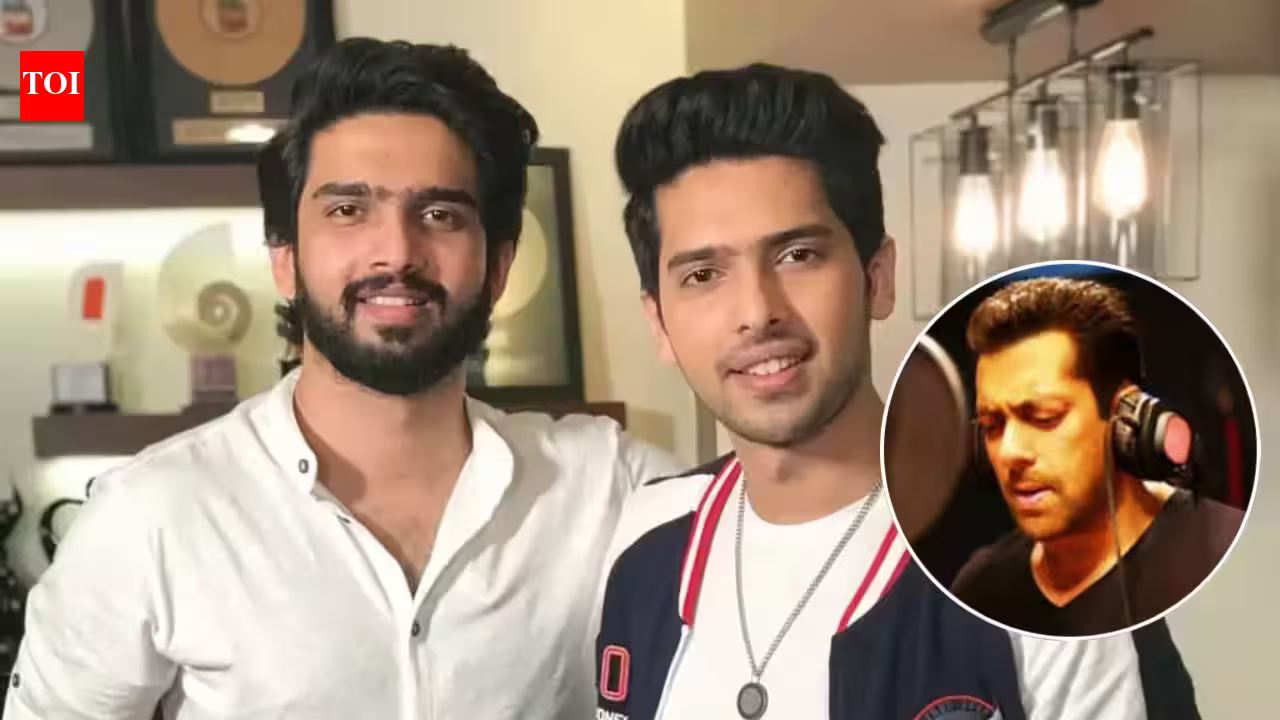
In the high-stakes world of Bollywood, where loyalty is often treated as a currency, a minor social media oversight has snowballed into a major industry debate. When Salman Khan Films (SKF) recently took to Instagram to commemorate the 11th anniversary of the 2015 film Hero, they expected the usual wave of nostalgia. Instead, they were met with a pointed critique from the very people who helped define the movie’s musical legacy: composer Amaal Mallik and singer Armaan Malik.
The incident has reignited a conversation about the often-invisible labor of music creators in the Indian film industry, forcing fans and critics alike to ask: does gratitude mean accepting silence when your work is being celebrated without your name?
The Spark: A Digital Oversight or Disrespect?
The controversy began when the official handle of Salman Khan Films shared a celebratory post for Hero. The track “Main Hoon Hero Tera” is undeniably the film’s crown jewel, a song that propelled the musical careers of the Malik brothers to new heights. Yet, in the celebratory post, the production house failed to tag or credit the composer, Amaal Mallik, and the lyricists.
Amaal, never one to shy away from speaking his mind, didn’t let the omission slide. He took to the comments section to call out the page managers for what he perceived as a gross lack of professionalism. “Whoever is handling the page or the social media of @skfilmsofficial, I love the audacity you have shown by leaving out the composer & the lyricist of the song lol!” he wrote.
His frustration was palpable. He went on to assert that the song was crafted with “pain, blood, sweat and tears,” emphasizing that such a product should not be celebrated while ignoring the architects of its sound. He ended his comment with a direct appeal for accountability: “Don’t delete my comment; let Salman sir see it as well so that he knows you guys screwed up.”
The Trolls and the “Ungrateful” Narrative
In the ecosystem of celebrity fandom, questioning a superstar or a major production house is often treated as an act of betrayal. Almost immediately after Amaal’s comment went viral, a segment of social media users—ardent fans of Salman Khan—labeled the brothers “ungrateful.”
The logic of these keyboard warriors is simple, if not reductive: because Salman Khan provided them with a massive platform and the opportunity to work on a high-profile project, they owe him, and by extension his production house, a lifetime of subservience. One user on X (formerly Twitter) summarized this sentiment harshly, stating, “What a shameful behaviour from the two brothers… the support they got should have gone to more grateful and worthy people.”
This “gratitude narrative” is a common tool used to silence artists in India. It implies that once an actor or producer gives an artist a “break,” that artist loses the right to demand fair credit, equitable pay, or basic acknowledgement in the future. It frames creative collaboration as a charitable transaction rather than a professional partnership.
Armaan Malik Steps Into the Fray
While Amaal ignited the conversation, it was Armaan Malik’s response that gave the issue its intellectual teeth. Defending his brother against the toxic “ungrateful” tag, Armaan took to the platform to dismantle the assumption that success equates to a lack of agency.
“I’d be curious to hear how that feels 🙂 Don’t talk about gratitude,” Armaan shot back at critics. His argument shifted the focus from personal loyalty to the fundamental rights of creators. “I’ve always been grateful for my beginnings, but I also know how hard it has been to reach where I’ve reached. If we don’t fight for our right, no one will.”
Armaan’s retort serves as a stark reminder that talent, while nurtured by mentors, is not owned by them. By standing by his brother, Armaan signaled a shift in how younger-generation Bollywood musicians view their position in the industry. They are no longer content with being “background noise” in the success stories of larger-than-life stars; they are demanding to be recognized as integral components of the creative process.
The Broader Struggle for Credit in Bollywood
This row is merely a symptom of a much larger, systemic issue in the Hindi film industry: the erasure of the music creator. While directors, actors, and producers enjoy the limelight, those responsible for the sonic landscape often find themselves relegated to the footnotes of press releases and social media campaigns.
In the streaming era, where a song can go viral on Instagram Reels overnight, credit is everything. It determines an artist’s brand value, their bargaining power for future projects, and their legacy. When a major production house like SKF omits the names of the very people who created their most iconic chart-toppers, it reinforces a power dynamic where the producer is the “giver of favors” and the artist is merely a “beneficiary.”
By forcing the production house to edit the post and add the credits, the Malik brothers achieved a small, tangible victory. But the cultural battle remains.
The Path Forward: Professionalism Over Persona
The aftermath of this row is a case study in modern PR. Following the backlash, the post was indeed updated to include the necessary credits. While some might dismiss this as a minor victory, it is significant. It proves that public accountability still works—even against giants.
If the Indian film industry wants to cultivate true, long-lasting partnerships with its creative talent, it must move beyond the archaic idea that mentorship requires silence. A healthy relationship between an A-list star and a music composer should be built on mutual respect, not enforced gratitude.
As Armaan Malik wisely noted, fighting for one’s rights is a necessary part of the climb. If we want to see a music industry that is both sustainable and ethical, we must normalize the idea that creators deserve credit, regardless of who provided them the stage. The “gratitude” of the past is being replaced by the “professionalism” of the future, and for that, the industry should be grateful.
Disclaimer: This content is auto-generated for informational purposes only.
Source: Read Original News