







Turbulence at CINTAA: Allegations of “Illegal” Document Removal Spark Fresh Crisis
The hallowed halls of the Cine and TV Artistes’ Association (CINTAA)—a body historically viewed as the bedrock of support for Indian performers—have become the theater of an increasingly volatile power struggle. What was once a professional dispute over governance has spilled into the streets, marked by police intervention, allegations of document tampering, and a bitter war of words between industry veterans.
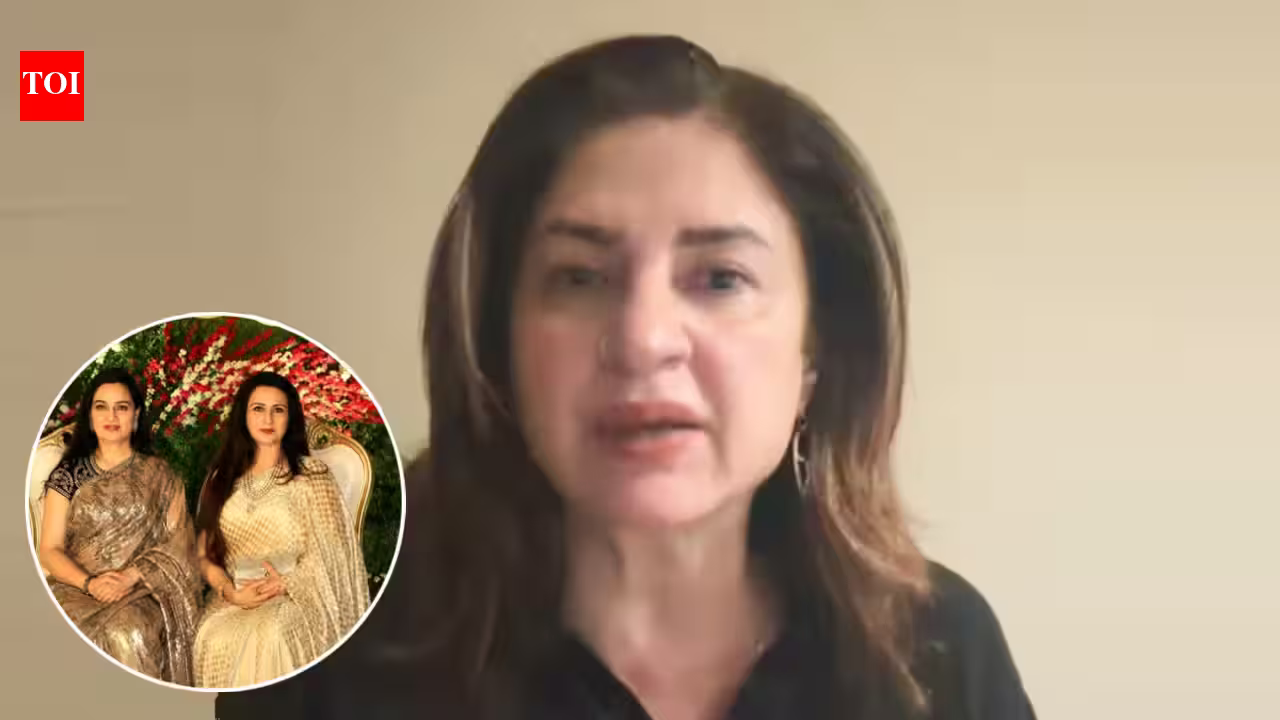
Actress Kunickaa Sadanand, a seasoned member with four decades of ties to the association, has stepped into the spotlight to voice her dismay over the current administration. Her recent account of a chaotic scene at the CINTAA office suggests that the internal legal deadlock has officially moved beyond the courtroom and into a state of physical confrontation.
A Distressing Turn of Events
The situation reached a boiling point when Sadanand, acting on urgent reports from colleagues Manish Chaturvedi and Preeti, rushed to the CINTAA office upon hearing that sensitive documentation was being rapidly cleared from the premises.
“I am very saddened to see the state of CINTAA today. I have never seen such behavior from any committee in the last 40 years,” Sadanand stated in an emotional video address. For a veteran like Sadanand, the sight of official archives being funneled out of the building during a period of legal uncertainty was not just a breach of protocol—it was an existential threat to the association’s integrity.
The Police Standoff and the “Safekeeping” Defense
The drama unfolded as members allegedly attempted to load boxes of papers into vehicles, including one linked to actress Poonam Dhillon. When members of the Federation of Western India Cine Employees (FWICE) arrived to intercept the transport, local police were called to mediate.
The impasse that followed highlights the ambiguity of the current administrative vacuum. According to Sadanand, when the group urged the police to halt the removal of documents, officers cited a lack of specific directives from the Charity Commissioner. This technicality provided a temporary window for the departing committee to justify their actions under the guise of “safeguarding” the assets.
Sadanand, however, remains unconvinced by the explanation offered by Padmini Kolhapure. “Padmini ji said, ‘I am taking the papers for safeguarding.’ Who are you safeguarding them from?” Sadanand questioned. “There are so many people sitting here. Will they let anyone steal?”
Allegations of Aggression
The tension escalated from a document dispute to a personal confrontation. Sadanand alleges that during the heated attempt to record the incident on mobile devices, Poonam Dhillon attempted to physically intervene.
“Poonam ji tried to snatch his phone and break it. We held her hand. Poonam ji was not allowing us to take a video,” Sadanand claimed. This alleged altercation serves as a stark illustration of how deep the animosity has run within the leadership. The involvement of such high-profile figures in a physical scuffle over recording devices marks a new, low point for the association’s public image, which has long prided itself on upholding the dignity of its members.
The Constitutional Crisis: Is the Committee Dissolved?
While the immediate physical standoff was temporarily managed by locking the contentious files, the underlying legal question remains unresolved. Former General Secretary Upasana Singh has poured further fuel on the fire by asserting that the current committee is essentially defunct.
Singh maintains that following the resignation of 11 members, the committee reached a threshold where, according to the association’s own constitution, it should have been considered dissolved. The formation of a new body in the wake of these resignations is, by her account, a violation of CINTAA’s foundational rules. This claim has fueled calls for the immediate restoration of democratic processes through transparent, court-monitored elections.
The Legacy Under Threat
For the old guard of the industry, this infighting represents more than just a struggle for a seat at the table. It is seen as a betrayal of the icons who built the association to protect the interests of the common artist.
“The great artists who established CINTAA could never have imagined that this day would come,” Sadanand lamented. She argues that the current behavior of the office-bearers contradicts every principle of professional conduct that the association was designed to foster.
As the legal proceedings continue toward the next court date on the 16th, the mood within the acting community remains grim. The reliance on police intervention to secure documents that should be safely managed under administrative oversight is a troubling indicator of the collapse of mutual trust.
Whether these developments lead to a total restructuring of the CINTAA committee or further entrench the existing divisions remains to be seen. However, one thing is clear: the credibility of the association is currently on trial, and the membership is watching closely to see if the institution can survive the very people who were meant to lead it. As Sadanand noted, serious action is likely on the horizon, as the dissenting voices demand a return to constitutional norms and a complete overhaul of the current leadership’s mandates.
Disclaimer: This content is auto-generated for informational purposes only.
Source: Read Original News