








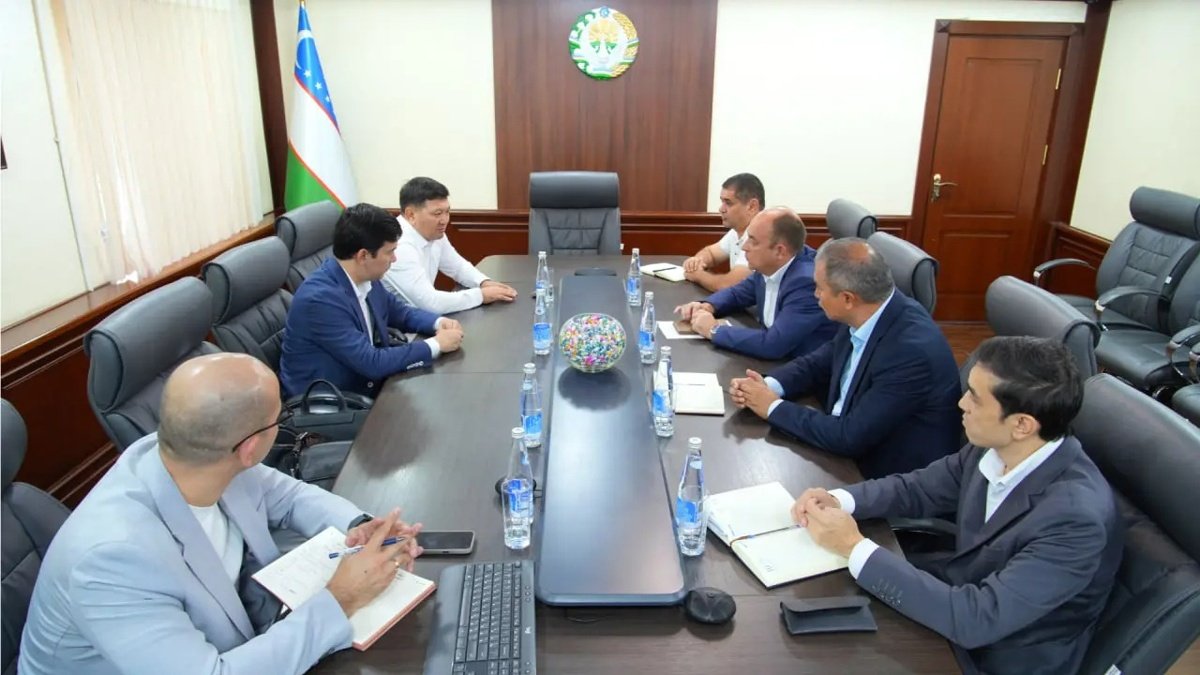
TASHKENT — In a significant move to harmonize industrial standards and accelerate ecological reform, environmental experts from Uzbekistan and Kazakhstan recently convened in Tashkent to explore the implementation of Best Available Techniques (BAT). The meeting, hosted at Uzbekistan’s State Centre for Environmental Expertise under the National Committee on Ecology and Climate Change, marked a strategic step toward adopting advanced regulatory frameworks aimed at minimizing industrial environmental impact across Central Asia.
The Kazakh delegation, led by Kairat Masenov, Managing Director of the Bureau of BAT at the International Green Technologies and Investment Projects Centre, and Abilaikhan Talgatov, Head of the Department for Monitoring, Analysis and Integrated Environmental Permits, brought extensive regional experience to the table. Their presentation centered on the practical application of industrial audits and the systematic collection of sector-specific data. By detailing their progress in developing BAT reference documents, the Kazakh experts provided a roadmap for transitioning from traditional, end-of-pipe pollution controls to more sustainable, preventative industrial practices.
The discussions underscored the importance of establishing rigorous technological and environmental performance indicators. These metrics serve as the foundation for modernizing aging industrial enterprises, ensuring that both nations can reconcile economic development with stringent environmental safeguards. Uzbekistan, currently undergoing a period of significant reform, utilized the platform to outline its progress in updating its environmental impact assessment processes. The nation’s current efforts are focused on integrating state environmental expertise with a robust, national BAT mechanism that can withstand the demands of a modernizing economy.
A centerpiece of the collaborative dialogue was the proposal for a joint digital platform. This initiative seeks to consolidate technological data from across the region, digitize existing BAT reference documents, and provide regulators and industrial operators with shared tools for benchmarking various production technologies. By digitizing these processes, both countries aim to create a transparent, accessible environment for monitoring progress in emissions reduction and resource efficiency.
The discourse extended to the Green University, where the focus shifted toward the broader systemic implications of BAT adoption. Experts emphasized that the transition is not merely a regulatory requirement, but a transformative economic strategy. When properly applied, BAT serves as a catalyst for industrial modernization, driving improvements in energy efficiency, water conservation, and a drastic reduction in waste generation. This shift toward resource efficiency is viewed as essential for long-term industrial competitiveness in the global market.
For Uzbekistan, the partnership represents a crucial shortcut in its environmental evolution. By leveraging Kazakhstan’s tested solutions—particularly their frameworks for technical standardization—Uzbekistan seeks to expedite its shift toward a technology-driven, preventative model of regulation. This proactive approach is expected to significantly lower the ecological footprint of the nation’s manufacturing and energy sectors.
This regional collaboration occurs against a backdrop of broader environmental engagements in Central Asia, including Kazakhstan’s recent efforts to boost cooperation with the World Health Organization regarding the Aral Sea’s environmental restoration and public health outcomes. As the two nations align their industrial policies with international environmental standards, the emphasis remains on fostering a regional synergy that prioritizes sustainability and health. By formalizing these technical exchanges, Uzbekistan and Kazakhstan are positioning themselves to lead the transition to a greener, more technologically integrated industrial landscape in the region.
Disclaimer: This content is auto-generated for informational purposes only.
Source: Read Original News