








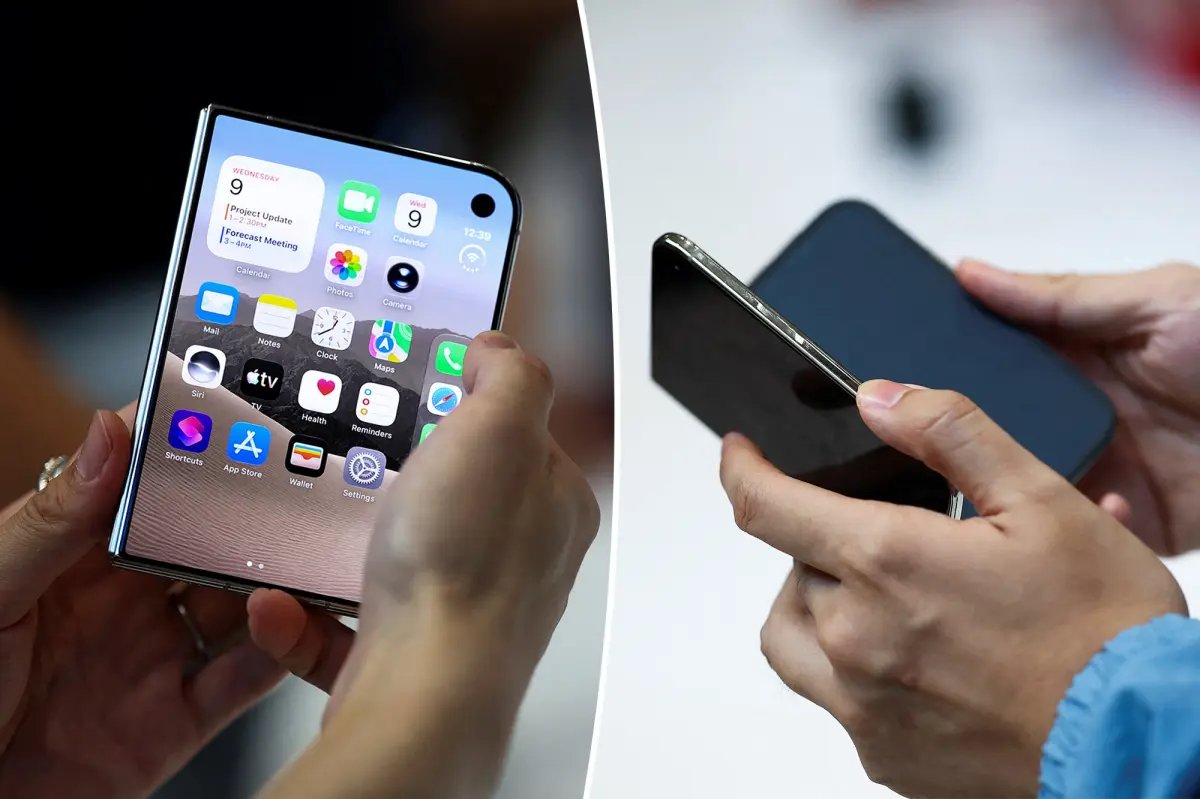
The Evolution of Hardware: Introducing the iPhone Duo
Apple recently unveiled the iPhone Duo, representing a paradigm shift in the company’s hardware design language. As the first foldable device to carry the Apple brand, the Duo features a primary 7.6-inch flexible inner display paired with a 5.4-inch outer cover screen. This configuration allows users to transition between a standard smartphone form factor and a tablet-like experience. Built from lightweight titanium, the device boasts a compact profile when folded, measuring just over 3 inches in width, which aims to address the common complaint that large-screen phones are cumbersome to carry.
The engineering behind the device focuses on portability and refined ergonomics. By integrating advanced hinge technology, Apple has managed to reduce the device’s thickness significantly. Despite its premium price point of $1,999, the device aims to push the foldable category, which currently constitutes less than 2% of global mobile sales, toward mainstream adoption. However, the hardware shift has introduced complex user-interface challenges that are now being scrutinized by the global user base.
Ergonomics and the Controversy of Side-Mounted Controls
A central feature of the iPhone Duo is the migration of critical controls to a single side of the chassis. Apple has replaced Face ID with a physical Touch ID sensor embedded directly into the side-mounted power button. While this design choice preserves the clean aesthetic of the primary display surface, it has triggered a backlash from left-handed users.
In standard smartphone design, navigation is often handled by software gestures or bottom-aligned bars. By anchoring the physical hardware controls, including the biometric authentication sensor, to one side, Apple has effectively created a “right-hand dominant” hardware architecture. Left-handed users contend that reaching for the biometric sensor and side-mounted buttons requires an awkward repositioning of the hand, potentially affecting one-handed usability and stability. This physical constraint is impossible to rectify through software updates alone, as the hardware sensor remains fixed on the right frame of the device when held in its default orientation.
Accessibility Concerns and Hardware Constraints
The debate regarding the iPhone Duo has elevated the discussion surrounding accessibility. Critics of the design point out that a hardware-fixed orientation can create significant barriers for individuals with limited mobility in their right hand, including those recovering from medical conditions or injuries. Although Apple maintains a robust suite of accessibility software—such as Voice Control, Switch Control, and AssistiveTouch—these features are designed to supplement existing hardware, not compensate for a lack of physical parity.
The technical community notes that to achieve true accessibility in a foldable device, hardware placement would ideally be mirrored or symmetrical. For a left-handed user, the current configuration necessitates a change in grip or the use of a second hand, which contradicts the goal of one-handed efficiency. While some users suggest that “left-handed mode” could theoretically flip the screen content, such a solution would force the user to hold the phone upside down, causing the cameras and volume rockers to be incorrectly positioned for standard interaction.
Market Impact and Consumer Adaptation
Despite the concerns regarding handedness, early industry analysis suggests that the iPhone Duo will stimulate the foldable market. The device offers a unique value proposition for power users who demand tablet-grade screens that still fit into a pocket. Market researchers anticipate that Apple’s entry into this segment will normalize foldable technology, leading to increased investment from software developers to optimize apps for the Duo’s unique aspect ratio.
Handedness on smartphones has long been a factor in design, but it rarely dictates the fundamental operation of the phone as strictly as it does with the Duo. Some users remain optimistic, suggesting that muscle memory is malleable. Similar to how left-handed users adapted to mouse and keyboard layouts or earlier generations of smartphones, the consumer base may eventually adjust to the Duo’s physical requirements. Nonetheless, the conversation highlights a broader issue in consumer electronics: the tension between sleek, minimal industrial design and the diverse physical requirements of a global user base.
Looking Ahead: The Preorder Horizon
As of late September 2026, the discussion remains largely theoretical as consumers await the physical release of the hardware. With preorders scheduled to commence on October 16 and a retail rollout on October 23, the market will soon gain tangible evidence of how the device performs in real-world scenarios. Apple has not yet commented on potential software-based workarounds, such as remappable buttons or display orientation toggles, that might mitigate some of these physical hurdles.
For Apple, the success of the iPhone Duo will depend not only on its technical specifications and build quality but also on how it manages user expectations regarding long-term ergonomics. If the device is perceived as inherently exclusionary, it may prompt future iterations to adopt more symmetrical hardware placements. Until that time, the Duo stands as a testament to the ambitious, albeit polarizing, future of mobile technology—a device that prioritizes a new form factor while testing the limits of traditional human-computer interaction.
Disclaimer: This content is auto-generated for informational purposes only.
Source: Read Original News