





Prominent Shia Cleric Advocates for Deepened Indo-Iran Ties in Meeting with President Pezeshkian
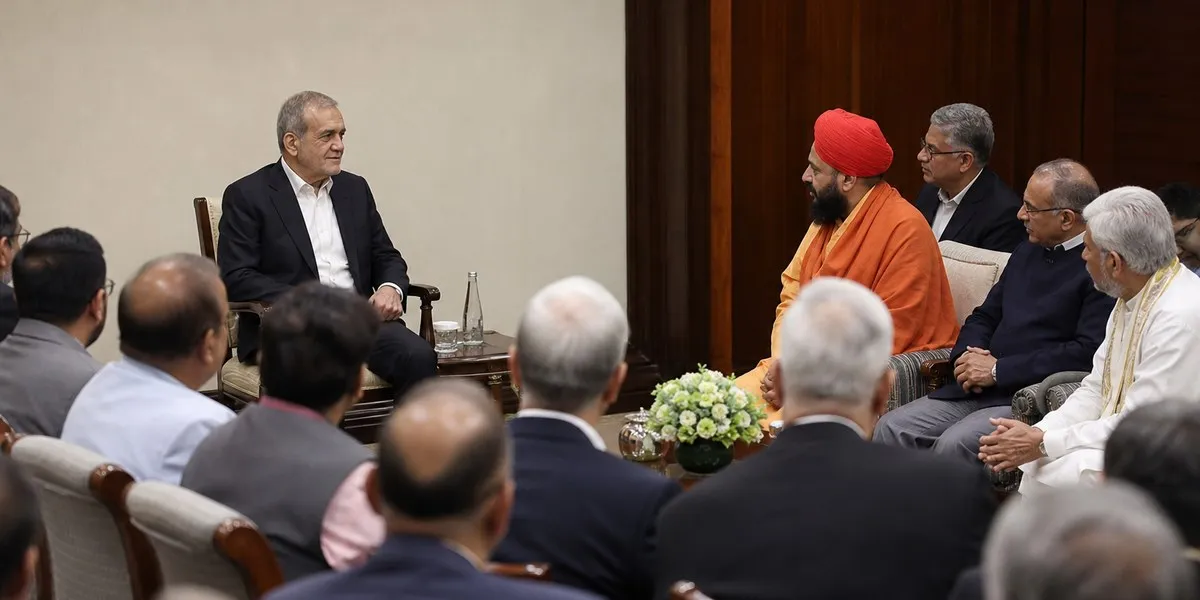
NEW DELHI — In a significant diplomatic engagement on the sidelines of the lead-up to the 18th BRICS summit, Maulana Yasoob Abbas, the secretary-general of the All India Shia Personal Law Board, met with Iranian President Masoud Pezeshkian in New Delhi. The discussion centered on the enduring historical and cultural commonalities between India and Iran, with the Lucknow-based cleric advocating for a more robust strategic partnership between the two nations.
A Legacy of Shared Heritage
During the meeting, which took place on September 11, Maulana Abbas underscored the deep-rooted connections that have defined the relationship between New Delhi and Tehran for centuries. He noted that the two civilizations share profound ties spanning culture, spirituality, and intellectual pursuits, alongside a historical legacy of trade that has bolstered their regional influence.
“India and Iran are bound by a shared history that transcends mere political boundaries,” Abbas remarked, reflecting on the meeting. He emphasized that the intellectual exchange between the two regions has been a cornerstone of their long-standing friendship, and that these foundations remain as relevant today as they were in previous eras.
Championing Broader Cooperation
Beyond the discussion of historical ties, Maulana Abbas presented a formal letter to President Pezeshkian, outlining a vision for future bilateral cooperation. His proposal focuses on diversifying the current framework of engagement to include a wider array of sectors essential for modern development.
Abbas explicitly identified education, science, technology, and energy as critical domains where India and Iran could synergize their efforts. He argued that increased collaboration in transport connectivity—specifically highlighting the potential of the Chabahar Port initiative—would serve as a catalyst for economic growth not just for the two nations, but for the stability and prosperity of the broader region.
“Expanding our interaction in these fields is vital for regional and global progress,” Abbas stated. He stressed that both countries possess unique strengths in research and technological innovation, and by bridging these capabilities, they could achieve significant milestones in sustainable development.
Standing in Solidarity
The meeting also served as a platform for the cleric to address the current geopolitical landscape. According to reports, the letter delivered by Maulana Abbas contained a formal condemnation of recent attacks against Iran. By voicing his support for the Iranian administration amidst rising international tensions, the cleric signaled the importance of diplomatic solidarity.
The dialogue between the religious leader and the Iranian President highlights the unique role that civil society and religious figures occasionally play in reinforcing formal state diplomacy. As India continues to navigate its multi-aligned foreign policy, particularly within the context of the BRICS grouping, the emphasis on cultural and trade-led diplomacy—as championed by stakeholders like the All India Shia Personal Law Board—adds a distinct layer to the India-Iran narrative.
As the international community watches how these bilateral ties evolve, the call from Lucknow for a more integrated and cooperative approach between New Delhi and Tehran stands as a reminder of the historical weight that continues to shape modern Indian diplomacy.
Disclaimer: This content is auto-generated for informational purposes only.
Source: Read Original News