









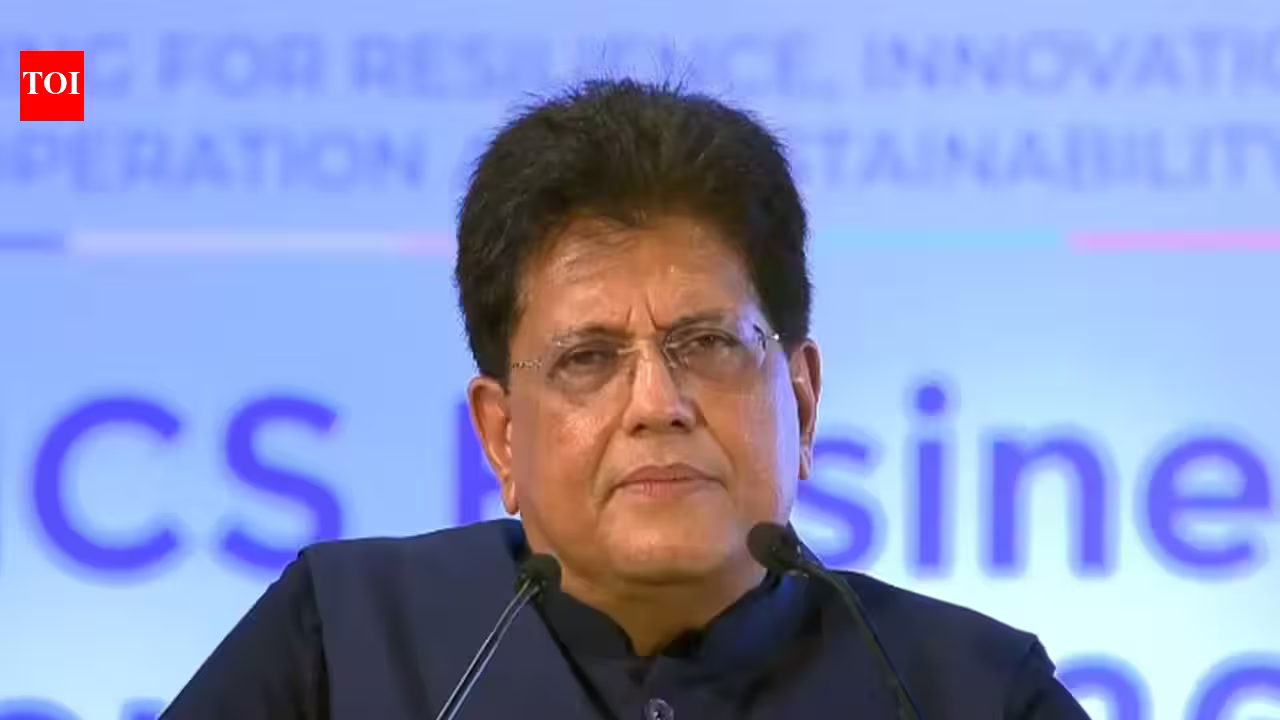
The Strategic Significance of the New Delhi Declaration
The unanimous adoption of the New Delhi Declaration at the 18th BRICS Summit represents a pivotal shift in the trajectory of the bloc. For India, hosting this summit and driving the consensus around the declaration signals a maturation of its foreign policy, positioning the nation as a bridge between established economic powers and the emerging markets of the Global South. Commerce Minister Piyush Goyal’s emphasis on the “collective resolve” of member nations highlights a transition from mere geopolitical posturing to a focused, results-oriented framework for economic cooperation.
The declaration serves as a blueprint for multilateral integration, addressing the complexities of the current global economic landscape. By prioritizing resilience, innovation, and equitable development, BRICS is moving to redefine its purpose. For India, this is not merely a diplomatic milestone; it is an industrial imperative. The commitment to shared digital standards and supply chain security aligns perfectly with the national agenda of self-reliance and the integration of the Indian manufacturing sector into global value chains. As the global economic order continues to face volatility, the New Delhi Declaration provides a framework for member nations to hedge against external shocks while fostering intra-bloc trade.
Digital Public Infrastructure and the Technology Frontier
A standout element of the declaration is the explicit focus on Digital Public Infrastructure (DPI), an area where India has demonstrated global leadership through initiatives like the Unified Payments Interface (UPI) and Aadhaar. The inclusion of DPI in the BRICS agenda suggests that member nations are looking to replicate the successful Indian model of inclusive digital growth. By establishing common standards for information and communication technologies (ICTs), the BRICS nations aim to bridge the digital divide that persists across the Global South.
The focus on artificial intelligence, quantum technologies, and digital research signifies a transition toward an innovation-led economic model. For Indian tech firms and startups, this development opens a vast market of potential collaborators and consumers. When countries agree on interoperable digital systems, the cost of market entry drops significantly, and the speed of technology transfer accelerates. The declaration does not merely promote academic research; it encourages the commercial application of high-end technologies, creating a roadmap for MSMEs in India to leverage advanced tools that were previously accessible only to large-scale enterprises in the West.
Strengthening the New Development Bank and Financial Security
The commitment to a stronger New Development Bank (NDB) remains a cornerstone of the New Delhi Declaration. Historically, developing nations have often struggled with the restrictive lending conditions imposed by traditional international financial institutions. The NDB, as envisioned by the BRICS members, provides a mechanism for infrastructure and sustainable development funding that is more sensitive to the local economic requirements of the Global South.
For the Indian corporate sector, particularly those involved in infrastructure and green energy, the revitalization of the NDB is a positive development. Enhanced capitalization and streamlined lending processes mean that large-scale domestic projects can secure financing that aligns with the bloc’s collective development goals. Furthermore, the emphasis on food, health, and energy security implies a focus on stable supply chains. By coordinating policy in these critical sectors, BRICS nations are aiming to reduce dependency on volatile global commodity markets. For an energy-importing nation like India, this coordination is essential for maintaining macro-economic stability and ensuring that industrial growth remains insulated from global inflationary pressures.
Scaling Startups and MSMEs through Collaborative Ecosystems
The New Delhi Declaration places a renewed focus on startups and Micro, Small, and Medium Enterprises (MSMEs), the dual engines of the Indian economy. By fostering an environment where startups can scale across borders, the declaration addresses one of the primary constraints of the digital economy: market fragmentation. Through the exchange of best practices, regulatory harmonization, and collaborative research, BRICS countries are creating a broader ecosystem for innovation.
Indian MSMEs, which form the backbone of the domestic manufacturing sector, stand to benefit from the proposed resilient supply chains. The declaration encourages member nations to share insights on overcoming logistical hurdles and adopting modern production techniques. This is particularly relevant as India seeks to expand its manufacturing footprint under programs like the Production Linked Incentive (PLI) schemes. Integration with BRICS markets provides a hedge against the current slowdown in demand from traditional Western markets, offering Indian manufacturers a diverse base of trading partners that share a similar stage of economic development and consumption growth.
The Global South and the Future of Economic Multilateralism
The broadening scope of BRICS, as highlighted by Piyush Goyal, signifies that the grouping is no longer a peripheral alliance but a central pillar of the emerging multi-polar world order. By amplifying the voice of the Global South, the bloc is challenging the historical concentration of economic influence. The New Delhi Declaration acts as a catalyst for this shift, articulating a clear preference for consensus-based, inclusive growth over the exclusionary trade policies seen elsewhere.
For India, the task ahead lies in the operationalization of the declaration. While the policy intent is strong, the tangible success of this summit will be measured by the speed at which member states implement the proposed technological and financial frameworks. The alignment on science and research, in particular, offers an opportunity for India to lead in specialized fields like biotechnology, space applications, and green energy solutions. By positioning itself as a leader in these sectors, India not only strengthens its internal industrial capabilities but also reinforces its role as the intellectual and commercial hub of the BRICS grouping.
Ultimately, the 18th BRICS Summit has set a high bar for collaborative development. The New Delhi Declaration provides the necessary structural support to ensure that economic cooperation is grounded in reality rather than rhetoric. As the bloc continues to evolve, its impact on global trade policy will likely intensify, forcing both established powers and market incumbents to take note of the collective economic weight of the BRICS nations. For businesses operating in India, the declaration provides a clear signal: the next decade of growth will be defined by strategic partnerships within the Global South, supported by digital integration and a firm commitment to sustainable, resilient development.
Disclaimer: This content is auto-generated for informational purposes only.
Source: Read Original News