









Declassified CIA Files Reveal Osama bin Laden’s Early Plot to Target India
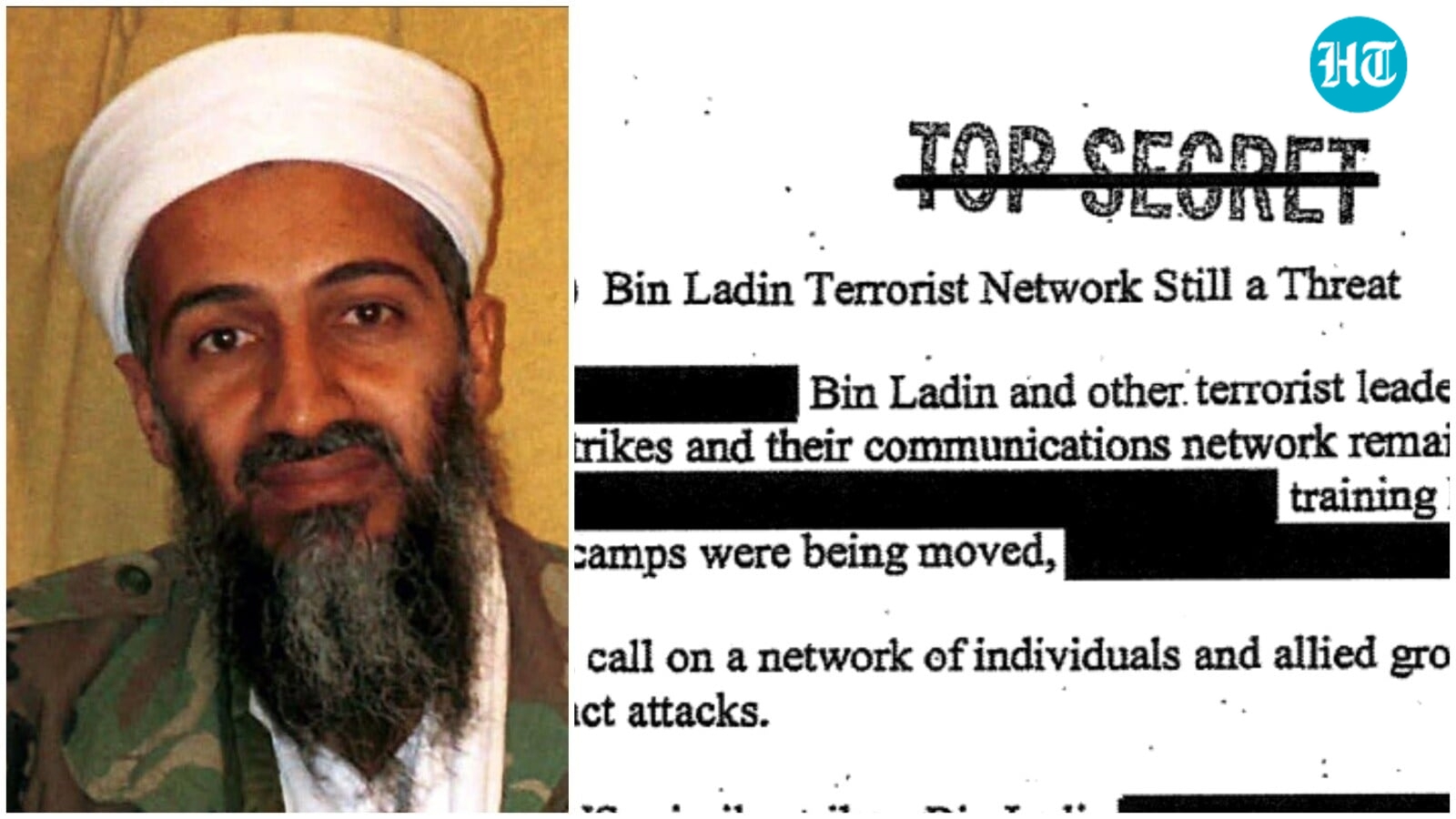
A long-buried chapter of global terror history has surfaced following the release of 71 intelligence reports by the Central Intelligence Agency (CIA) on the 25th anniversary of the September 11 attacks. Among the thousands of pages declassified, a specific intelligence brief from 1998 highlights that al-Qaeda leader Osama bin Laden had set his sights on India and Pakistan as potential theaters for terrorist operations years before the catastrophic events of 2001.
A Global Network of Targets
The document, titled “Bin Ladin Terrorist Network Still a Threat” and presented to then-US President Bill Clinton on August 28, 1998, paints a chilling picture of al-Qaeda’s expansive reach. US intelligence analysts at the time warned that the terror outfit was actively strategizing to destabilize a wide array of nations. Beyond India and Pakistan, the brief identified Egypt, Yemen, Saudi Arabia, Kuwait, Uganda, and possibly Nigeria as countries vulnerable to bin Laden’s aggression.
This assessment emerged during a turbulent period for US counterterrorism, occurring just weeks after the devastating twin bombings of American embassies in Nairobi and Dar es Salaam. Those attacks, which claimed 224 lives, served as a grim catalyst, forcing Washington to sharpen its focus on the burgeoning threat posed by bin Laden’s organization.
The Indian Context and Growing Threats
While the 1998 briefing lacked granular details regarding specific strike plots within Indian borders, its existence serves as a historical marker, proving that India was identified as a primary target of the global jihadi movement well before the turn of the millennium.
The concern proved prescient. Just three years after the CIA warning—and a mere three months after the 9/11 attacks in the United States—India faced a direct hit on the heart of its democracy. On December 13, 2001, terrorists linked to Lashkar-e-Taiba and Jaish-e-Mohammed breached the Parliament complex in New Delhi. The resulting gun battle claimed the lives of nine people, including security personnel. Though the attackers were ultimately neutralized, the incident left an indelible mark on India’s national security architecture.
The Pakistan Connection and Final Pursuit
The declassified documents also offer a glimpse into the complex geopolitical landscape of the era. Records from June 2000, titled “Pakistan pressing Bin Ladin network,” indicate that American intelligence remained deeply preoccupied with bin Laden’s activities and his tenuous relationship with the Taliban and local entities in Pakistan.
History eventually proved the depth of this overlap. After evading capture for a decade, the al-Qaeda founder was discovered residing in a secure compound in Abbottabad, mere kilometers from the Pakistani capital. In a landmark operation on May 2, 2011, US special forces conducted a raid that resulted in the death of the world’s most wanted man.
The massive release of intelligence archives provides a sobering look at how US authorities tracked the evolution of al-Qaeda. From early warnings about potential aircraft hijackings in 1998 to the fateful August 6, 2001, memo titled “Bin Ladin Determined To Strike in US,” the files illustrate a decade of intelligence gathering that struggled to stop a catastrophe that claimed nearly 3,000 lives in New York, the Pentagon, and Pennsylvania. For India, the release serves as a reminder that the shadow of terrorism, often plotted in secret global corridors, has been a persistent reality in the region for over a quarter-century.
Disclaimer: This content is auto-generated for informational purposes only.
Source: Read Original News