






Staff at the St. Louis Zoo in Missouri recently received a unique and high-stakes delivery: an overnight shipment containing 500 adult Partula snails. This arrival marks a crucial middle step in an ambitious international conservation mission to reestablish wild populations of the small, tree-dwelling invertebrates in their native Tahiti.
The snails, which were bred at the Detroit Zoological Society in Royal Oak, Michigan, are being prepared for their final voyage to French Polynesia. To ensure the safety of the delicate cargo, the snails were transported using “priority overnight” shipping, carefully packed with insulating materials and specialized “phase change” packs to maintain a stable internal climate.
“Currently, the Detroit Zoological Society-bred snails are taking a pit-stop at St. Louis Zoo, where they will be fed a special diet in order to prepare them for the wild,” says Mark Vassallo, Curator of Amphibians at the Detroit Zoological Society.
The Partula snail holds significant cultural importance in Polynesia, where unique shell varieties are traditionally associated with specific islands. However, the species suffered a devastating decline after the introduction of the predatory rosy wolf snail—an invasive species brought to the region by humans to manage a different, unrelated snail population. This ecological imbalance pushed many Partula species to the brink of extinction.
For decades, the Detroit Zoo has been at the forefront of breeding these snails to combat their decline. This current shipment of 500 individuals is part of a larger, ongoing effort that has successfully returned over 17,000 snails to their natural habitat. The project has seen the reintroduction of 11 different Partula species that were once considered extinct in the wild. Other institutions, such as the Audubon Nature Institute in New Orleans, have also contributed to this effort, recently sending a cohort of 200 snails to join the rewilding program in Tahiti.
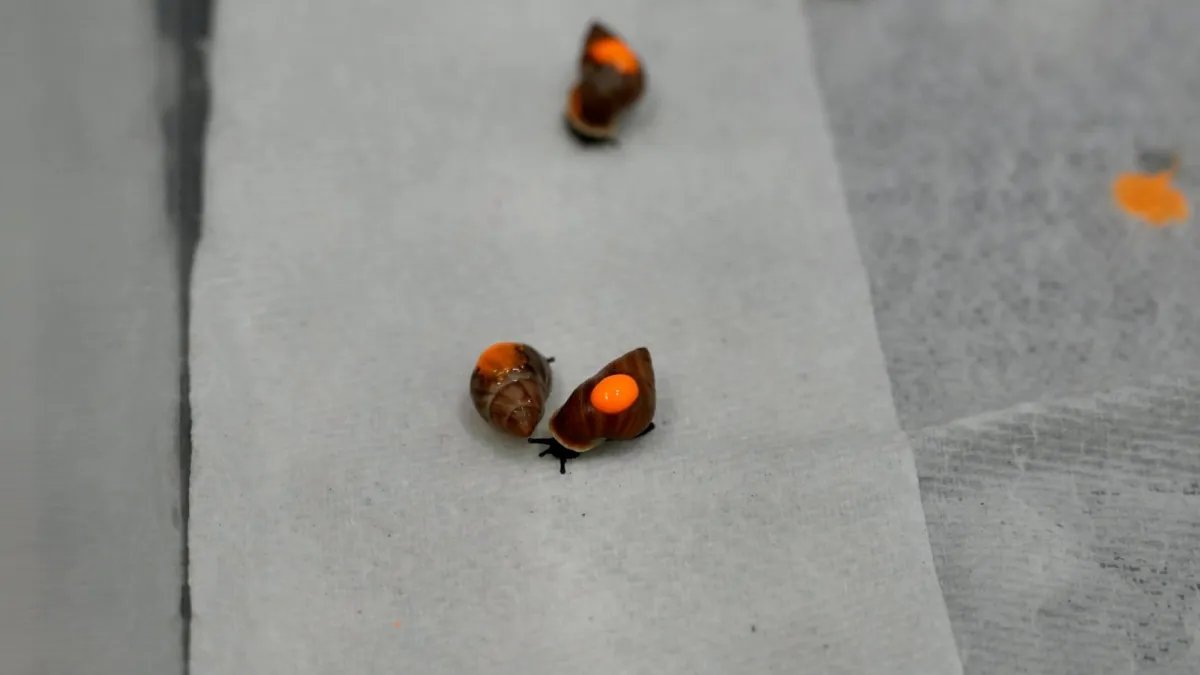
A distinct feature of this year’s release is the use of animal-safe, UV-reactive paint. Researchers have marked each shell with an orange dot; the color coding corresponds to the year of release, allowing conservationists to monitor the progress and survival of the 2026 cohort once they are released into the wild.
The ultimate benchmark for the program, according to Vassallo, is the development of a self-sustaining population that demonstrates consistent reproduction. Beyond the mere return of the animals, the success of the initiative relies heavily on the long-term protection and stabilization of the snails’ natural habitats.
Early indicators from previous release cycles have provided reasons for optimism. In areas where species like Partula nodosa—which is extinct in the wild—were reintroduced, experts have observed the encouraging signs of new generations being born in their natural environment. As these 500 snails complete their final preparation in St. Louis and move toward their release in Tahiti, they represent a significant step forward in restoring the biodiversity of the Polynesian ecosystem and ensuring that these iconic snails remain a part of their native landscapes.
Disclaimer: This content is auto-generated for informational purposes only.
Source: Read Original News