






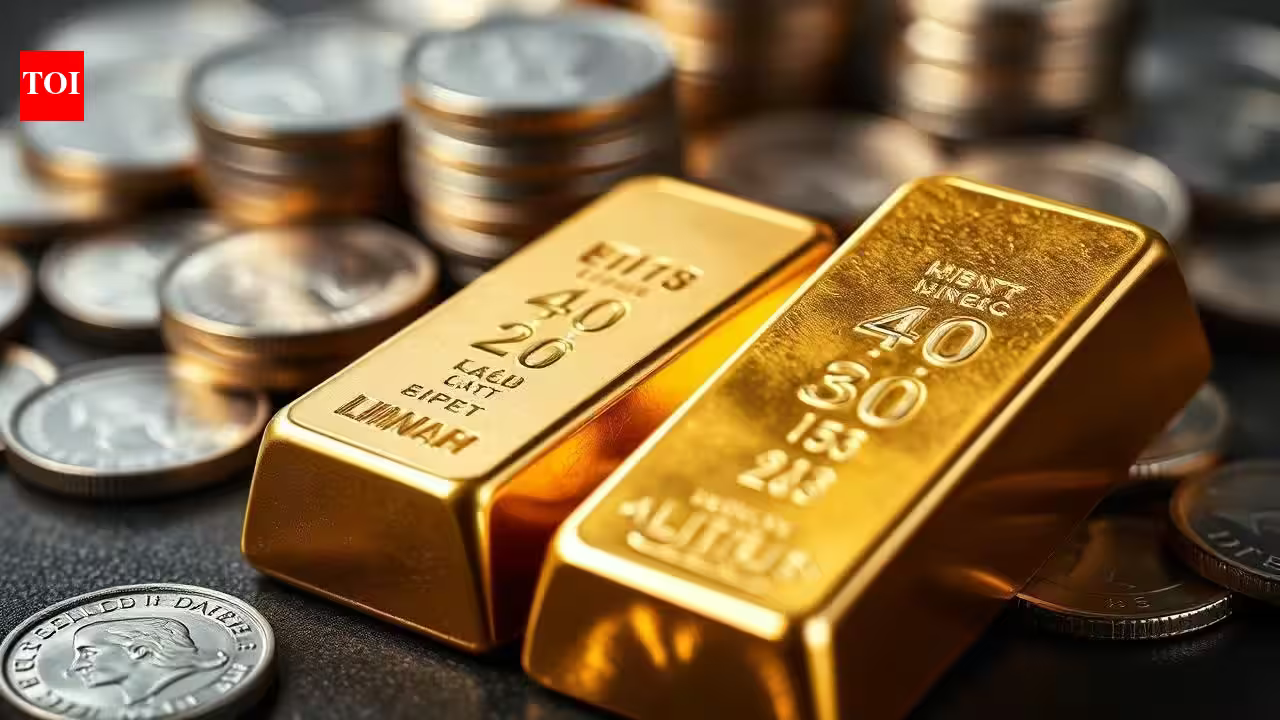
The Global Economic Nexus: Understanding Bullion Market Dynamics
The precious metals sector is currently navigating a complex confluence of macroeconomic variables that are redefining investor behavior. Gold and silver, traditionally viewed as safe-haven assets, are facing heightened sensitivity to global liquidity trends, geopolitical instability, and central bank policy shifts. As investors prepare for a week of critical announcements, the interplay between the US Federal Reserve, crude oil price fluctuations, and currency strength has created a challenging environment for traders and institutional stakeholders alike.
For the Indian market, these global tremors are particularly significant. India remains one of the world’s largest consumers of physical gold, and domestic price discovery is heavily reliant on international spot prices and the exchange rate of the Indian Rupee (INR). When global markets face volatility, the domestic Multi Commodity Exchange (MCX) often mirrors these shifts, albeit with adjustments based on local demand patterns and currency depreciation. The upcoming Federal Open Market Committee (FOMC) meeting is not merely a US policy event; it serves as a bellwether for global capital flows, affecting everything from import costs for Indian jewelers to the performance of commodity-linked equities.
Impact of Central Bank Policy on Precious Metals
At the core of the current market uncertainty is the path of monetary policy in developed economies. The anticipation surrounding the FOMC’s interest rate decision has placed gold in a state of suspended animation. Generally, there is an inverse relationship between interest rates and non-yielding assets like gold. When the Federal Reserve maintains a hawkish stance—signaling higher rates for longer—the opportunity cost of holding gold increases, often leading to liquidation in exchange-traded funds (ETFs) and futures contracts.
However, the current situation is complicated by the synchronicity of central bank actions. Beyond the US Federal Reserve, the Bank of England and the Bank of Japan are also under scrutiny. If these central banks follow a coordinated trajectory of 25-basis-point rate hikes, the global cost of borrowing will rise, potentially putting a floor under the US dollar. A robust dollar historically exerts downward pressure on bullion, as the commodity becomes more expensive for holders of other currencies. For Indian investors, this creates a dual-layered effect: global gold prices may soften due to the dollar’s strength, but the domestic price might remain elevated if the Rupee undergoes a parallel depreciation, illustrating the intricate balancing act required for risk management in the Indian commodities market.
The Geopolitical and Commodity Price Variable
Beyond central bank mandates, the persistent escalation in West Asian tensions, specifically concerning the US-Iran conflict, has introduced a significant risk premium into the commodity markets. Gold often acts as a hedge against geopolitical instability; yet, its effectiveness in this role is currently being tested by the volatility in crude oil prices. As crude oil remains sustained above the critical threshold of 100 dollars per barrel, the inflationary pressures are becoming difficult to ignore.
In the Indian business context, high crude oil prices are a major concern for the macroeconomy, as they widen the Current Account Deficit (CAD) and weaken the Rupee. Because India is a major importer of both gold and oil, the price of the latter serves as a proxy for the currency’s health. When oil prices spike, the Rupee frequently softens, which complicates the cost of gold imports. This creates a feedback loop: investors might seek gold for security amid geopolitical unrest, but they must simultaneously account for the potential for reduced physical demand in India if domestic prices rise beyond the affordability threshold of local consumers.
Data-Driven Trends and Industrial Metal Demand
While gold serves as a store of value, the performance of silver is inextricably linked to both monetary policy and industrial demand. Silver’s dual role as a precious and an industrial metal makes it a barometer for global economic health. Investors are closely monitoring manufacturing and inflation data emanating from major economies, including India, Germany, China, and the United States.
China’s factory activity data, in particular, is a crucial indicator. As a major manufacturing hub, China’s industrial demand influences the baseline pricing for silver and other base metals. Any slowdown in Chinese industrial output often leads to a recalibration of silver futures. In the domestic Indian landscape, this industrial link is equally pertinent. With the Indian government focusing on domestic manufacturing through various incentives and supply chain integration, the demand for industrial metals—and by extension, silver—has become increasingly tied to the nation’s industrial expansion. Traders in India must therefore balance the macroeconomic news from the West with localized factory output data from the East, navigating a market where sentiment shifts rapidly based on quarterly fiscal releases.
Risk Management in a Volatile Trading Environment
For participants in the Indian commodity market, the current climate necessitates a disciplined approach to risk management. The sensitivity of gold and silver to shifting central bank narratives means that short-term positions are highly susceptible to sudden reversals. Analysts suggest that the market is in a “wait-and-watch” phase, where the primary objective is to identify directional triggers—such as clear guidance on future inflation targets—rather than chasing temporary momentum.
The mixed performance seen recently on the MCX, where gold futures experienced marginal gains while silver faced significant corrections, highlights the decoupling of these two metals under specific market pressures. This divergence suggests that investors should avoid treating the entire precious metals complex as a homogenous category. Instead, a nuanced strategy that factors in the cost of currency hedging, the specific inflationary triggers in the Indian economy, and the global macroeconomic environment is essential. As the market enters a period of intense policy scrutiny, the ability to interpret the Fed’s commentary while accounting for local geopolitical risks will separate informed participants from those caught on the wrong side of high-volatility events.
Ultimately, while the short-term outlook for gold and silver remains volatile, the medium-term trajectory will likely be determined by whether the world enters a period of synchronized cooling or renewed inflationary heat. For the Indian stakeholder, staying abreast of these global variables while maintaining a keen focus on domestic economic stability remains the most prudent path forward.
Disclaimer: This content is auto-generated for informational purposes only.
Source: Read Original News