









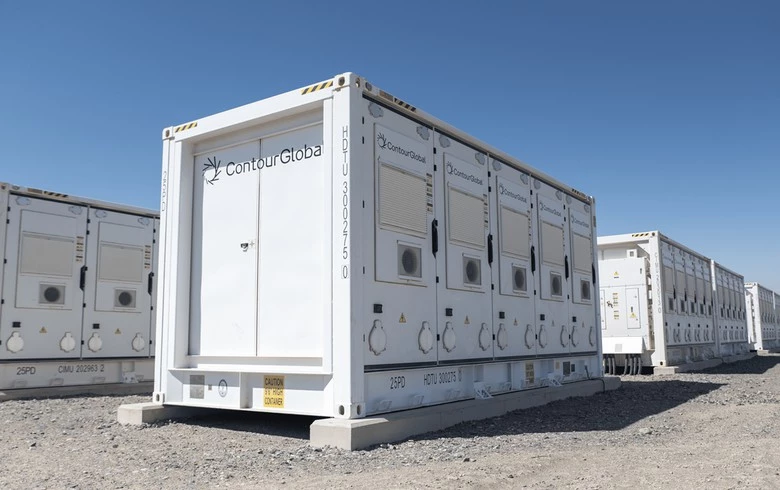
India’s Battery Storage Capacity Skyrockets: 8.2 GWh Added in H1 2026
India has reached a monumental milestone in its energy transition, recording a staggering 8.2 GWh of new Battery Energy Storage Systems (BESS) commissioned during the first half of 2026. According to the latest market intelligence report from Mercom India Research, this figure represents an unprecedented 84-fold surge compared to the 98.4 MWh installed during the corresponding period last year. This rapid scaling of storage infrastructure marks a pivotal shift in how the nation manages its increasingly green power grid.
A Massive Leap in Grid Stability
The exponential growth in BESS capacity is largely attributed to the Indian government’s aggressive push toward integrating intermittent renewable energy sources, such as solar and wind, into the national power network. As the country moves closer to its ambitious net-zero targets, the ability to store excess power generated during peak production hours and deploy it during periods of high demand has become a national priority.
Industry analysts suggest that the deployment of these large-scale storage systems is crucial for smoothing out the volatility inherent in renewable power. By stabilizing the grid and reducing the reliance on traditional fossil-fuel-based peaking plants, India is effectively laying the groundwork for a more resilient and sustainable energy ecosystem.
Policy Catalysts and Investment Drivers
The surge in BESS deployment is not a spontaneous development but rather the result of targeted policy interventions. Government initiatives, including the Viability Gap Funding (VGF) scheme for BESS projects, have played a critical role in de-risking investments and attracting private sector participation. These financial incentives have successfully bridged the cost gap for developers, making large-scale battery projects commercially viable.
Furthermore, the introduction of mandates for distribution companies (DISCOMs) to fulfill energy storage purchase obligations has created a guaranteed market for developers. This regulatory push, combined with falling global lithium-ion battery prices and advancements in local manufacturing capabilities, has created the “perfect storm” for rapid industry growth.
Impact on the Renewables Sector
The implications for India’s renewable energy sector are profound. With substantial storage now coming online, solar and wind farm operators can provide “round-the-clock” power, a feat that was previously difficult due to the intermittent nature of these energy sources. This evolution is expected to increase the utilization factor of renewable plants and provide more predictable pricing for industrial and commercial consumers.
As the country continues to witness this rapid capacity expansion, the supply chain for battery components—ranging from cell manufacturing to power conversion systems—is also maturing. The localized production of BESS hardware is expected to gain further momentum under the Production Linked Incentive (PLI) schemes, positioning India not just as a major consumer of storage technology, but potentially as a key global hub for the battery supply chain.
Looking Ahead
While the growth recorded in the first half of 2026 is transformative, industry experts anticipate that this is only the beginning. As technology matures and economies of scale continue to drive costs down, the deployment of battery storage is likely to accelerate across both grid-scale and distributed levels.
For a nation striving to balance energy security with environmental sustainability, the successful rollout of these 8.2 GWh of capacity serves as a clear indicator that India’s energy landscape is undergoing a structural and permanent shift toward a cleaner, storage-integrated future.
Disclaimer: This content is auto-generated for informational purposes only.
Source: Read Original News