









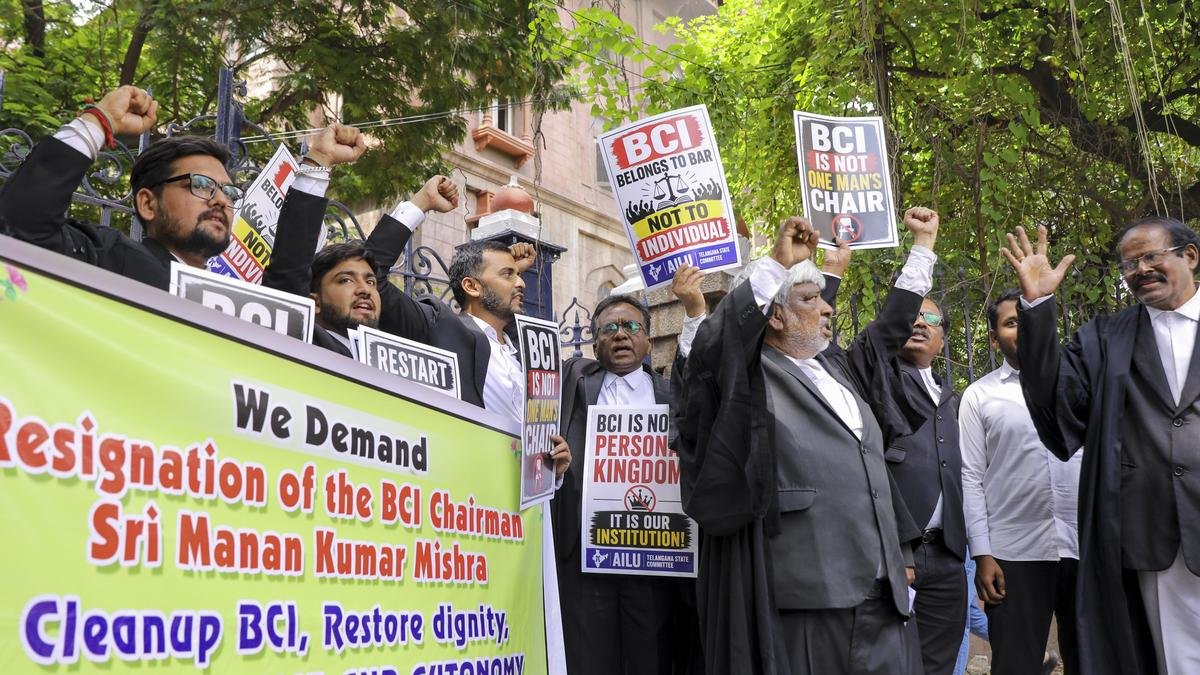
The recent Supreme Court ruling involving the Bar Council of India (BCI) and NALSAR University, Hyderabad, serves as a significant legal landmark, clarifying the limits of regulatory power over law students. When the BCI attempted to prevent graduating students from enrolling as advocates, a Bench led by Chief Justice of India Surya Kant intervened, ruling that the BCI lacks the statutory authority to take disciplinary action against students. The court underscored a vital distinction: while the BCI is empowered to set standards for legal education, its formal jurisdiction over individuals begins only after they graduate and seek enrollment as advocates.
The Evolution of Regulatory Friction
Established by the Advocates Act of 1961, the BCI was designed with two core mandates: regulating the standards of the legal profession and overseeing the institutions that train future lawyers. However, the boundary between “institutional oversight” and “student regulation” has been the subject of nearly six decades of litigation.
Historically, the BCI has attempted to impose various hurdles for entry into the profession. In the late 1990s, the council attempted to reintroduce mandatory pre-enrollment training—a requirement that Parliament had previously repealed in 1973. The Supreme Court struck down this move, noting that the BCI cannot bypass legislative intent. Similarly, the introduction of the All India Bar Examination (AIBE) in 2010 was initially met with intense student protests. While the court eventually upheld the examination as a valid measure of professional “hygiene,” the ongoing struggle to define who is eligible to sit for the exam—specifically whether final-year students should be included—remains a flashpoint for litigation.
The Quality vs. Access Paradox
A recurring theme in the BCI’s regulatory history is the tension between maintaining academic rigor and ensuring student access. Efforts to phase out evening and distance education programs have frequently been challenged by students who rely on these pathways to enter the profession while working.
Furthermore, the BCI’s emphasis on strict attendance mandates—often citing the need for classroom engagement—has led to tragic consequences and protracted court battles. The debate over whether an institution can bar a student from exams due to an attendance shortfall has seen conflicting judicial views, with the Supreme Court currently reviewing the Delhi High Court’s position that such punitive measures may be excessive.
Institutional Accountability and Student Agency
Interestingly, the relationship is not always adversarial. Students have, at times, campaigned for the BCI to exert *more* control over university administrations. When law colleges have failed to renew their BCI affiliations, leaving graduates’ degrees in limbo, students have frequently protested, demanding that the BCI step in to protect their futures. From Delhi University to RML NLU Lucknow, the list of institutions facing accreditation lapses is extensive. In these instances, the BCI acts as a guarantor of last resort, ensuring that students’ careers are not derailed by administrative negligence.
However, when the BCI shifts its focus from academic standards to administrative regimentation—such as prescribing dress codes, demanding biometric surveillance, or issuing directives on internal disciplinary matters—it frequently invites pushback. These interventions are often perceived by students as an overreach, transforming the BCI from a standard-setter into a micromanager of student life.
Defining the Future of Legal Education
The underlying concerns of the BCI regarding the commercialization of legal education and the proliferation of understaffed, substandard law colleges are valid. India faces a genuine quality crisis in legal training, and the responsibility of regulating entry into a profession tasked with protecting liberty and property is immense.
The NALSAR episode serves as a reminder that regulation must remain within the bounds of the law. While the BCI plays an essential role in ensuring that legal education remains robust, the recurring clashes suggest that the current model of oversight requires a more balanced approach—one that respects institutional autonomy and student agency while maintaining the high professional standards required for the practice of law.
Disclaimer: This content is auto-generated for informational purposes only.
Source: Read Original News