









The Indian higher education landscape is currently navigating a period of unprecedented transformation. At the center of this evolution are voices like that of Rajeev Kumar, whose four-decade-long journey across the corridors of IIT Kharagpur, IIT Kanpur, BITS Pilani, and the JNU offers a masterclass in institutional integrity. As a former scientist at the DRDO and DST, Kumar’s perspective bridges the gap between raw scientific research and the systemic hurdles that often stifle academic progress. His work, particularly in reforming high-stakes admission processes, serves as a blueprint for how policy must evolve to ensure meritocracy and transparency in a digital age.
Reforming the Gatekeepers: The Admission Paradigm
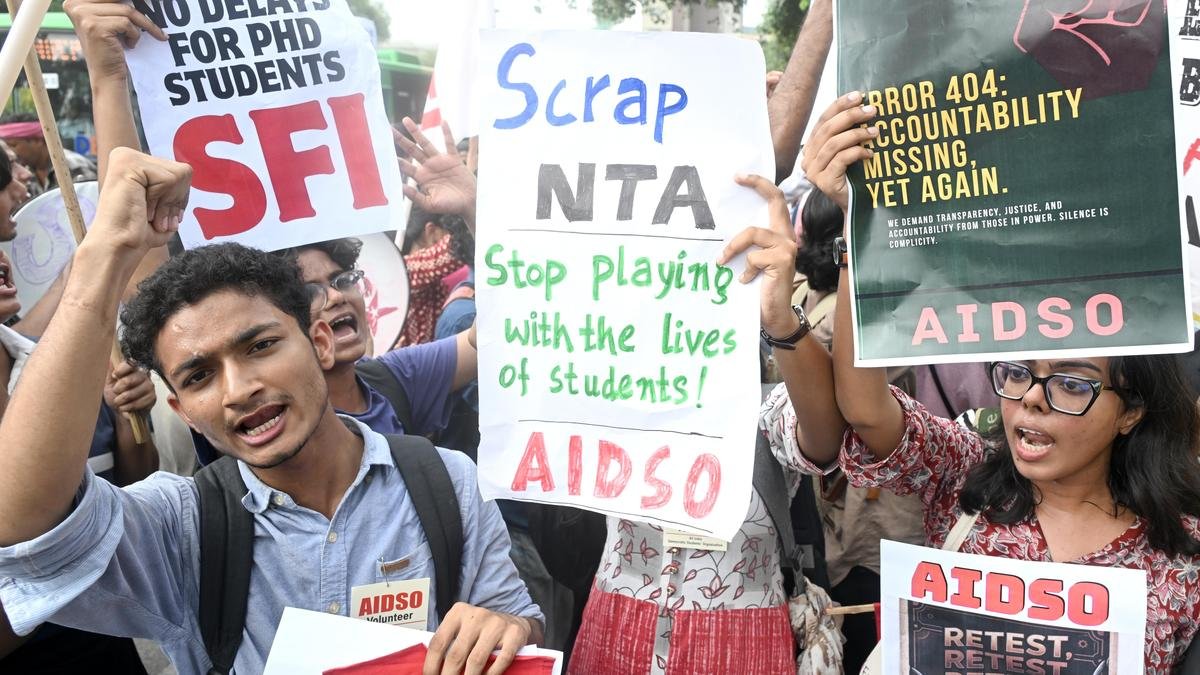
For decades, Indian competitive exams have been viewed as the ultimate arbiters of potential. However, these systems have historically been prone to opacity, logistical bottlenecks, and external influence. Rajeev Kumar’s contribution to admission reform is not merely technical; it is ethical. By streamlining procedures and championing well-defined, objective processes, he demonstrated that institutional trust is built upon the reliability of its gatekeeping mechanisms.
The Supreme Court’s recognition of Kumar as an “unsung hero” highlights a crucial reality: the health of an educational institution is intrinsically linked to the integrity of its entry point. As we move toward larger, centralized entrance models, the lessons from Kumar’s tenure—prioritizing transparency, auditability, and fairness—are more relevant than ever. For students, this means a shift from navigating a black-box system to participating in a verifiable process where merit remains the sole currency.
Bridging Academia, R&D, and Industry
The silos between academia and industry have long been a point of contention in Indian education. Throughout his forty-five-year career, Kumar has consistently advocated for a more fluid exchange between the laboratory and the boardroom. In an era where technology evolves at an exponential rate, the ivory tower model of higher education is increasingly obsolete.
Policy must encourage faculty to move beyond traditional pedagogical constraints, fostering environments where students are not just consumers of existing knowledge, but active contributors to technological development. By integrating the rigorous research culture of organizations like the DRDO with the dynamic demands of the global tech industry, educational institutions can transform from theoretical training grounds into hubs of innovation. This requires a systemic policy pivot: providing faculty with the autonomy to engage in real-world problem-solving while ensuring that academic research outputs remain relevant to national and societal needs.
Governance and the Future of Learning
The intersection of science, technology, and governance is where the most significant educational battles are currently being fought. As a commentator on these intersections, Kumar underscores that policy-making in education cannot be a top-down exercise. It requires a deep understanding of the grassroots challenges faced by researchers, professors, and students alike.
“Transparency” is often used as a buzzword in educational policy, but in practice, it requires rigorous governance structures that can withstand political and social pressures. True reform lies in digitizing workflows, reducing the discretionary power of administrators, and ensuring that institutional policies are subjected to public scrutiny. When institutions are governed with the same precision and accountability required for scientific research, the entire ecosystem benefits.
A Legacy of Objective Inquiry
As we look toward the future of learning in India, the path forward must be paved with the principles of evidence-based policy. The synthesis of experience across prestigious institutions—from the technical depth of the IITs to the intellectual rigor of JNU—provides a roadmap for sustainable change.
Education is not just about producing graduates; it is about cultivating a society that values the intersection of technology and ethical governance. By learning from the systemic reforms led by figures like Rajeev Kumar, the next generation of policy-makers can ensure that our institutions remain resilient, transparent, and, above all, centers of genuine intellectual progress. The task ahead is clear: move beyond the status quo and build an educational framework that treats every student and researcher with the transparency they deserve.
Disclaimer: This content is auto-generated for informational purposes only.
Source: Read Original News