







India’s Inflation Edges Higher Amid Global Energy Instability
India’s annual consumer price inflation maintained an upward trajectory in August, climbing to 4.82% from 4.45% in July. This marks the tenth consecutive month of rising prices, slightly outpacing the 4.80% forecast predicted by economists in a recent Reuters survey. As the cost of living continues to climb, policymakers are closely monitoring the dual pressures of global supply chain disruptions and domestic food volatility.
Food and Fuel Drive Price Pressures
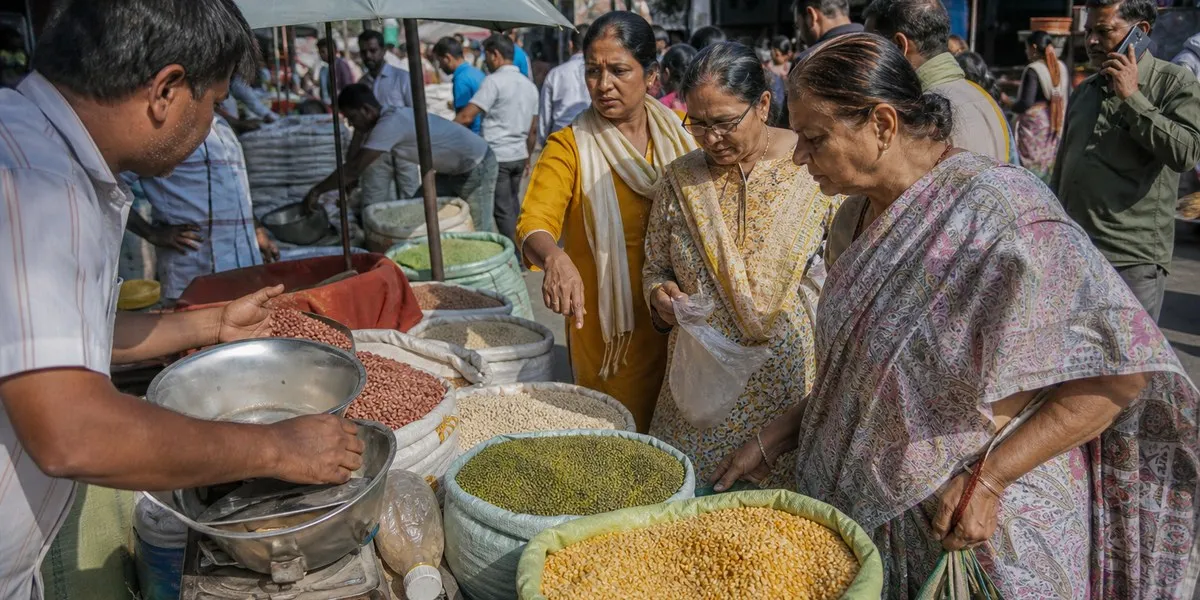
The primary engine behind this inflationary surge remains the rising cost of essential goods. According to data released by the Ministry of Statistics and Programme Implementation, food inflation jumped to 5.95% in August, up from 5.52% the previous month. This upward movement in the food basket, combined with a steady climb in fuel costs, has solidified the headline inflation figure’s recent rise.
External factors are significantly compounding these domestic challenges. India, which relies on imports for nearly 85% of its fuel requirements, is particularly sensitive to fluctuations in the global energy market. Much of India’s energy supply passes through the volatile Strait of Hormuz. Recent geopolitical tensions have sent shockwaves through the market; global oil prices recently surpassed $100 per barrel following a drone strike that forced Saudi Arabia to temporarily shut down a major east-to-west pipeline. These logistical hurdles are placing immense strain on India’s import bill, further fueling inflationary sentiment.
Economic Growth Amidst Uncertainty
Despite the cooling effects of persistent inflation, the Indian economy has demonstrated remarkable resilience. Growth reached 7.8% in the quarter ending in June, soundly beating analyst expectations. This robust performance has prompted major financial institutions, including Morgan Stanley and Citi, to revise their growth forecasts for the fiscal year ending March 2027 upward to 7.3%, a notable increase from earlier sub-7% projections.
However, the outlook is not without its skeptics. Analysts at HSBC have cautioned that the current growth momentum may face headwinds in the coming quarters. Key concerns include a high base effect from previous years, mandatory reductions in government capital expenditure aimed at meeting strict budget deficit targets, and the negative impact of insufficient rainfall on the current sowing campaign. These factors combined may restrain industrial and agricultural output in the near term.
Central Bank Strategy
The Reserve Bank of India (RBI) continues to navigate a delicate balance between curbing inflation and supporting economic expansion. The central bank has forecasted headline inflation to settle at 5% for the financial year ending March 2027, with core inflation projected at 4.3%.
In a move that diverged from several other Asian central banks—many of which have aggressively hiked interest rates to combat rising costs—the RBI opted to keep its key interest rates unchanged in August. This measured approach suggests that the central bank remains committed to sustaining the domestic growth cycle, provided that the inflationary spikes remain within manageable corridors. For now, the Indian economy remains a study in contrasts: strong growth performance countered by the unrelenting pressure of global commodity price volatility.
Disclaimer: This content is auto-generated for informational purposes only.
Source: Read Original News