






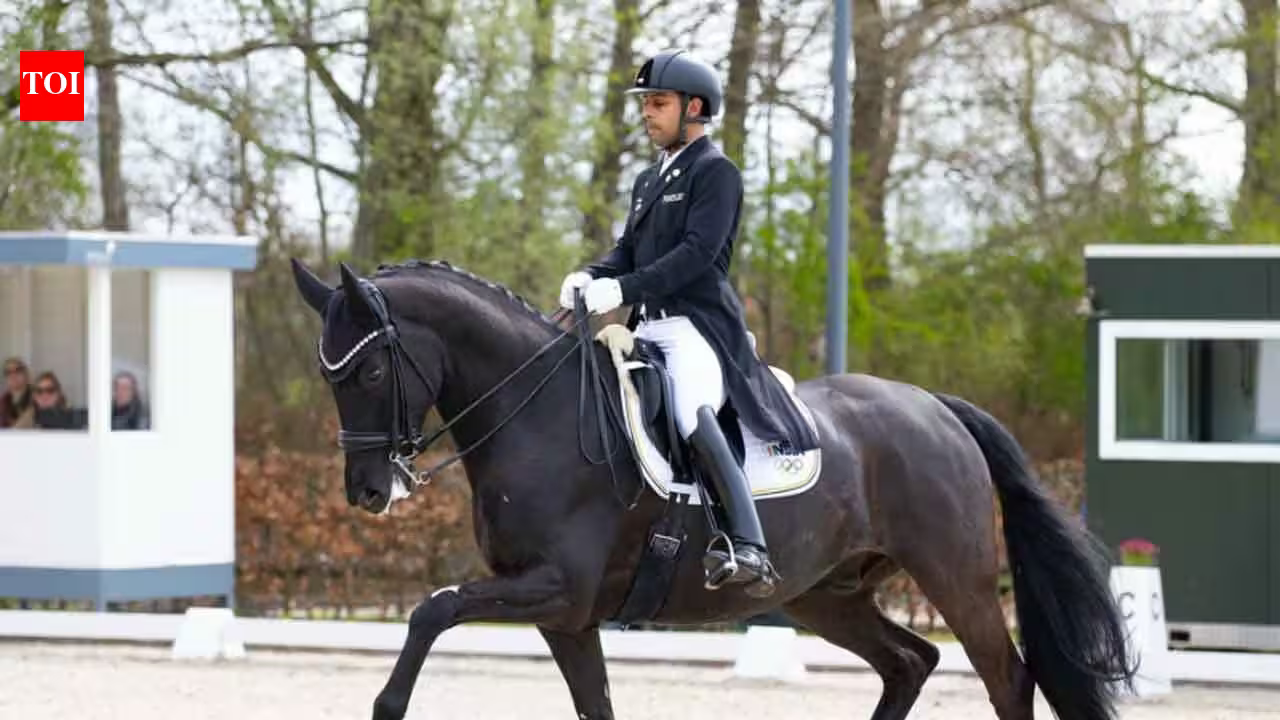
DEVASTATION has echoed through the Indian equestrian community as one of its brightest stars, Anush Agarwalla, officially shuttered his campaign for the 2026 Asian Games. The rider, a decorated medalist with a proven pedigree, has announced his withdrawal from contention, citing a profound sense of betrayal by the very institutions tasked with fostering his success: the Equestrian Federation of India (EFI), the Indian Olympic Association (IOA), and the Union Sports Ministry.
For an athlete of Agarwalla’s stature—a two-time Asian Games medalist who has previously brought glory to the nation—the decision is not merely a tactical retreat but a poignant protest against a system he describes as opaque and unresponsive.
## A Dream Deferred: The End of the Road
The 2026 Asian Games in Aichi-Nagoya, Japan, were meant to be another crowning chapter in Agarwalla’s burgeoning career. However, as the clock ticks toward the September 19 opening ceremony, Agarwalla finds himself on the outside looking in.
“The dream of Asian Games 2026 is officially over,” Agarwalla stated in a heartfelt social media post. “Words cannot explain the pain and emptiness I feel right now. I have always represented India with immense pride, and always will. But this time, I am deeply hurt—not because I lost, but because I was never given the chance to compete.”
His frustration stems from a protracted battle to be included in the dressage squad—a battle that saw him knock on the doors of the judiciary and the ministry, only to be met with bureaucratic inertia.
## The Legal and Administrative Deadlock
The conflict traces back to June, when the EFI’s ad-hoc committee announced its selection list for the dressage event. Agarwalla, along with fellow rider Sudipti Hajela, found themselves relegated to the status of “reserve riders.” Ahead of them were Shruti Vora, Gaurav Pundir, Jai Sud, and Hriday Chheda.
Challenging the decision, Agarwalla and Hajela took their case to the Delhi High Court, arguing that the selection process lacked transparency. When that plea was rejected, the matter escalated to the Supreme Court. However, in a blow to the athletes, a bench comprising Justices PS Narasimha and Alok Aradhe dismissed the petition in July. The court maintained a firm stance of judicial restraint, noting a deep reluctance to interfere in the technical and individual selection processes of sports federations.
## The Conflict of Philosophy: ‘Realistic Chances’ vs. Performance History
At the heart of the standoff is a contentious policy shift enacted by the Sports Ministry in 2025. In an effort to optimize resources, the Ministry declared that only athletes deemed to have a “realistic chance of winning a medal” would be considered for multi-sport events like the Asian Games. These determinations were to be made through videographed selection trials overseen by independent observers.
The Ministry held firm on these criteria, even as mounting pressure from the riders suggested that the methodology used to assess “realistic chances” was flawed or biased. For Agarwalla, who has already proven his mettle on the continental stage, the irony is not lost. Having won gold in the 2022 Asian Games, he argues that the current system prioritizes administrative convenience over proven merit.
“I can accept defeat on the field. That is sport,” Agarwalla noted. “You fight, you win, you lose, and you come back stronger. But this feels less like defeat and more like betrayal.”
## A Call for Systemic Reform
The impact of this controversy stretches beyond a single rider’s disappointment. Agarwalla’s public declaration serves as a clarion call for transparency within Indian sports governance. He expressed hope that by documenting his struggle, he might spare future athletes the trauma of fighting their own federation for a fair shot at representing their country.
“I fought until the very last moment, and I am proud of that,” he added. “A fight against the system may never yield a medal, but at least it leaves a record of who stood in the way between me, Floriana, my horse, and the medal we worked for. If India wants to become a true sporting nation, athletes deserve a system that is fair, transparent, and respects the years of work behind every opportunity.”
## Looking Ahead
As the Indian equestrian team prepares to depart for Aichi-Nagoya, the absence of a proven medalist like Agarwalla will undoubtedly be a talking point. While the EFI and the Ministry maintain that their selection processes were conducted in accordance with the 2025 guidelines, the narrative of “betrayal” voiced by one of India’s top riders suggests a widening gap of trust between the governing bodies and the athletes they represent.
For Agarwalla, the immediate future involves recalibrating his path away from the Asian Games. His message remains consistent: he is willing to lose to the best in the world, but he refuses to lose to a process he believes failed him. As the sporting world turns its attention to Japan this September, the controversy serves as a sobering reminder of the hurdles—both on and off the field—that Indian athletes continue to face.
Disclaimer: This content is auto-generated for informational purposes only.
Source: Read Original News