






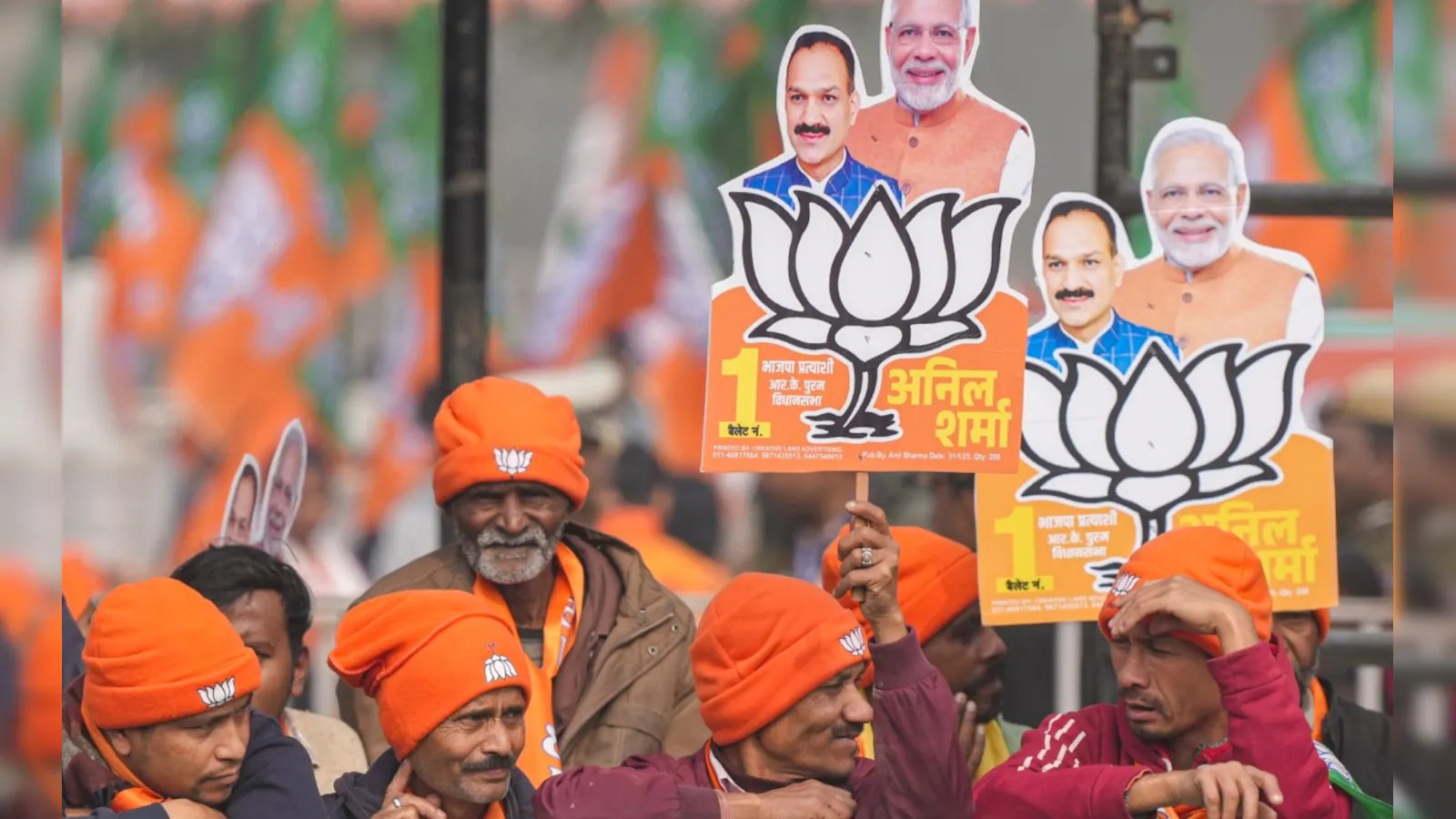
Internal Revolt Brews as Punjab BJP Cadre Protests ‘Congressification’ of Party
Chandigarh: The Bharatiya Janata Party’s (BJP) ambitious quest to broaden its electoral appeal in rural Punjab has triggered a severe existential crisis within its ranks. A mounting internal rebellion, marked by high-profile resignations and vocal protests, has laid bare the deepening friction between the party’s long-standing, ideologically driven base and a central leadership increasingly reliant on political turncoats to steer its state agenda.
The Shift Toward ‘Turncoat’ Leadership
At the heart of the unrest is the party’s strategic pivot to court agrarian Jat Sikh voters—a departure from its traditional identity as an urban-centric Hindu party. This transition has been punctuated by the elevation of former Congress leaders to top organizational roles. Following the replacement of veteran Ashwani Sharma with former Congress chief Sunil Jakhar in 2023, the party’s decision to appoint another Congress defector, Kewal Dhillon, as state president in May 2026 served as the final straw for many loyalists.
The move has prompted an exodus of dedicated workers who feel their decades of grassroots service have been discarded. Notable figures, including former party stalwarts and district-level office-bearers, have either resigned or been conspicuously sidelined from the state executive lists.
A Legacy of Resignations
The discontent has reached a boiling point across various districts. Sukhminder Pal Singh Grewal, who dedicated 34 years to the party, resigned in August 2026, delivering a scathing indictment of the current leadership. In his resignation, Grewal accused the state unit of becoming a “Congress-dominated apparatus” that systematically disregards the values of sacrifice and ideological loyalty.
“The values of commitment, respect, sacrifice, and ideological loyalty appear to be steadily losing their place,” Grewal wrote in his letter to the party’s national leadership. His sentiments are echoed by retired IAS officer and state general secretary Jagmohan Singh Raju, who stepped down immediately following Dhillon’s appointment.
In districts like Hoshiarpur, Sangrur, and Faridkot, the unrest has manifested as open revolt. The removal of local leaders, often replaced by those perceived as outsiders, has led to mass resignations and the launching of protest movements, such as the “BJP Bachao Yatra” in Sangrur, directly challenging the influence of central observers and state appointees.
The Sidelining of Stalwarts
The reshuffle has essentially rendered the “old guard”—leaders who built the party during its most challenging years—as peripheral figures. Veterans such as Manoranjan Kalia, Avinash Rai Khanna, and Shwait Malik find themselves largely excluded from active decision-making. Even prominent Dalit leader Vijay Sampla has seen his influence wane, failing to secure a place in the current organizational hierarchy.
Critics within the party point to the irony of the current situation: veterans who survived the turbulent farmer protests and years of building the party from the ground up are now being marginalized. As one senior leader remarked, the foundational cadre is being treated like “a museum of past service—useful for speeches, but useless for power.”
Strategic Gamble vs. Internal Morale
Political observers view this turmoil as the cost of a high-stakes demographic gamble. By importing leaders with deep-rooted rural and agrarian ties, the BJP leadership aims to break the hold of traditional regional parties in Punjab’s rural heartland. However, this aggressive pursuit of electoral expansion appears to be cannibalizing the party’s foundational urban support base.
As the central high command maintains its current course, the BJP faces a difficult balancing act. It must decide whether the potential for rural electoral gains is worth the irreparable loss of its original, battle-hardened cadre, whose morale is currently at an all-time low. For now, the “Congress culture” imported into the saffron fold continues to alienate the very people who defined the party’s presence in Punjab for decades.
Disclaimer: This content is auto-generated for informational purposes only.
Source: Read Original News