








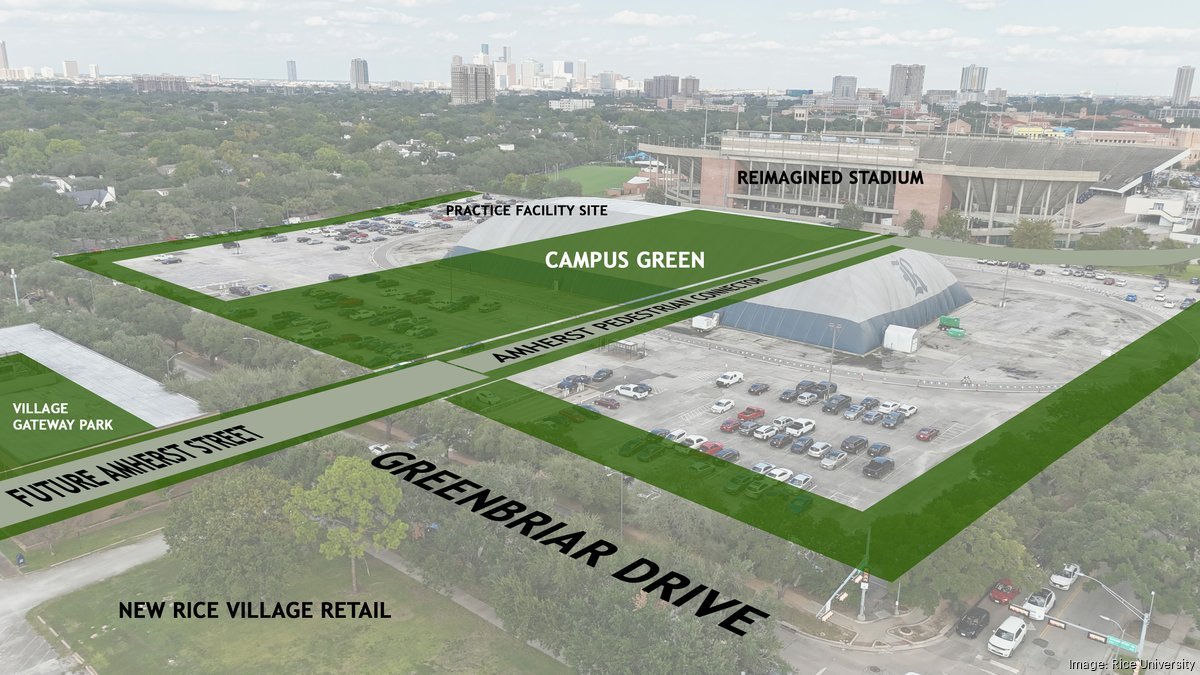
Rice University’s development arm, Rice Management Co., is pushing forward with a high-profile expansion that promises to bridge the gap between the vibrant commercial landscape of Rice Village and the university’s expansive athletic district. As the institution looks to modernize its campus footprint, the project is leveraging advanced urban planning techniques and data-driven insights to reshape the Houston skyline.
## Digital Twins and the Future of Urban Development
The planning phase of this new tower represents a growing trend in the commercial real estate sector: the use of “Digital Twins” and high-fidelity mapping technology to optimize building performance. By integrating sophisticated data sets—much like the mapping layers found in Google Earth Pro—developers are able to simulate how these new structures will affect local traffic flow, environmental shading, and wind patterns in the Rice Village corridor.
This technological approach is increasingly mirroring the capabilities of Google Cloud’s geospatial analysis tools. By utilizing AI-powered modeling, Rice Management Co. can predict how the new tower will interact with the existing urban fabric, ensuring that the intersection of academia and retail remains fluid. For tech-savvy residents in Houston, this means a development that is not merely aesthetic, but engineered for efficiency and long-term sustainability.
## Connectivity Through AI and Smart Infrastructure
The core mission of this project is to reimagine the “Gateway” between the residential shopping district and the university. To achieve this, the project team is leaning into “smart campus” initiatives that echo the connectivity goals of modern tech hubs. As urban centers become more digitized, the integration of IoT sensors and automated traffic management systems—often powered by AI-driven predictive algorithms—is becoming standard practice for large-scale university developments.
The ambition here is to create a seamless pedestrian experience that feels as intuitive as navigating a high-end software interface. By tracking peak-hour foot traffic and utilizing machine learning to analyze pedestrian patterns, the university aims to foster an environment where technology supports the physical movement of students, faculty, and local shoppers. This data-backed strategy ensures that the new tower serves as a central hub, effectively reducing the friction between the university’s academic heart and its athletic facilities.
## Leveraging Data for Long-Term Growth
Beyond the steel and glass, the project underscores a broader shift in the tech industry: the move toward data-centric urban renewal. Real estate firms are now treating physical construction projects with the same rigor as product launches, utilizing collaborative software suites—comparable to the integrated ecosystems of Google Workspace—to manage complex stakeholder communications, architectural blueprints, and environmental compliance documentation in real-time.
As this tower begins to take shape, the influence of modern tech infrastructure will be evident in its design. The project aims to incorporate energy-efficient systems that leverage smart grids, potentially allowing the university to monitor energy consumption via centralized dashboards. This level of granular control is emblematic of how institutions are now managing their carbon footprint.
For the Houston community, the upcoming construction is more than just a new building; it is a manifestation of how high-tech planning can successfully revitalize aging academic boundaries. By prioritizing connectivity, sustainability, and data-driven site selection, Rice University is setting a new precedent for how private-sector real estate can integrate with institutional history. As the project breaks ground, it stands as a testament to the fact that whether in the cloud or on the ground, the future is built on a foundation of precision-engineered connectivity.
Disclaimer: This content is auto-generated for informational purposes only.
Source: Read Original News