








In an industry that thrives on high-octane publicity cycles and red-carpet spectacles, there is something profoundly grounding about seeing a global sensation step away from the strobe lights to embrace the quiet sanctity of a temple. Rishab Shetty, the creative force behind the cultural phenomenon Kantara, has been living life at breakneck speed since the world took notice of his visceral, rooted storytelling. Yet, this past Ganesh Chaturthi, the actor-filmmaker chose a different rhythm, trading the roar of the box office for the serene, ancient corridors of Kerala’s Sree Padmanabhaswamy Temple.
Accompanied by his wife, Pragathi Shetty, the couple’s visit to the Thiruvananthapuram landmark served as a quiet reminder that even amidst meteoric success, the roots of tradition remain firmly planted.
A Spiritual Pause in Thiruvananthapuram
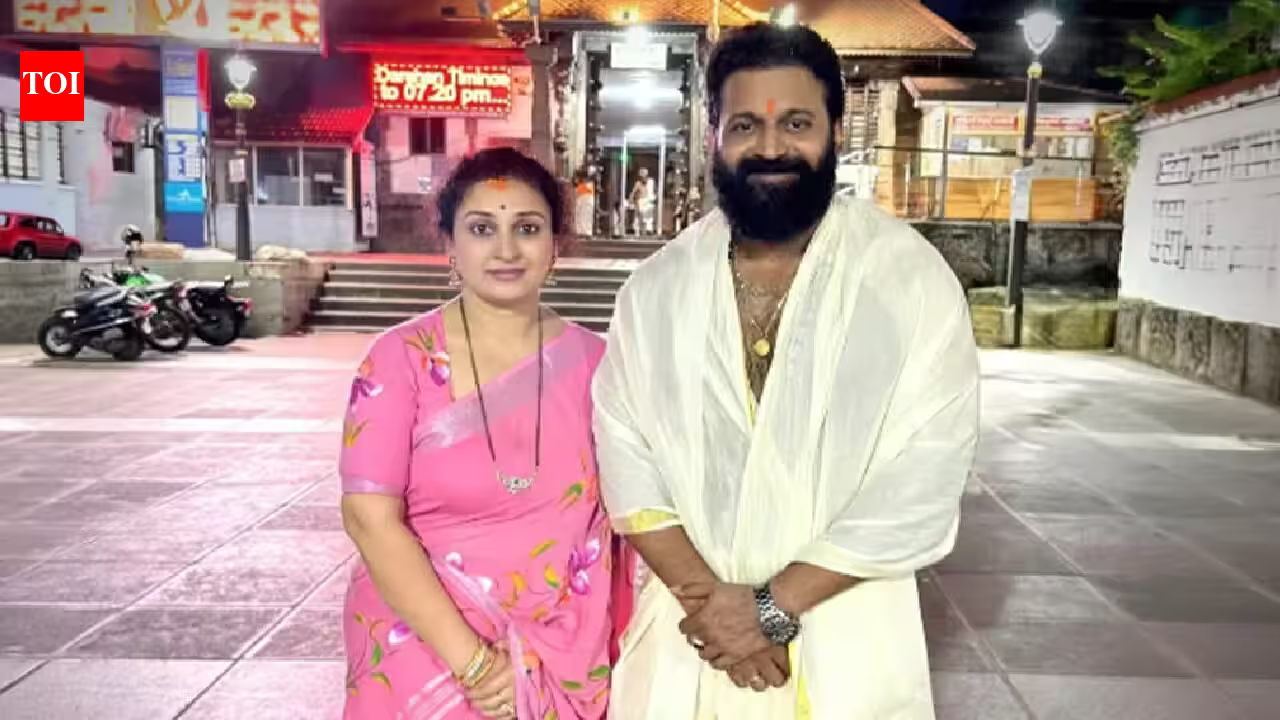
The atmosphere at the Sree Padmanabhaswamy Temple is one of profound gravitas, a place where time seems to fold in on itself. Arriving in the late afternoon, around 5:00 PM, Rishab and Pragathi sought to immerse themselves in the deeparadhana, the rhythmic evening ritual where oil lamps illuminate the inner sanctum. Dressed with a simplicity that stands in stark contrast to his on-screen persona, Shetty moved through the temple complex with the humility of a devotee.
Pragathi Shetty, often the custodian of the couple’s most candid moments, shared a glimpse of their visit on her Instagram stories. The image—devoid of the typical trappings of celebrity—captured the duo standing in the temple courtyard, looking serene. For fans who have watched Shetty evolve from a Kannada regional talent to a pan-India icon, seeing him in this meditative state offers a glimpse into the man behind the myth.
Bridging Worlds: The Political and the Cinematic
The spiritual visit took a diplomatic turn shortly after the couple stepped out of the sanctum. In a pleasant surprise for onlookers, Rishab and Pragathi were joined by Kerala MLA and senior Congress leader P.C. Vishnunath. The meeting was less a formal engagement and more a meeting of minds, with Vishnunath later taking to social media to express his genuine warmth toward the filmmaker.
This isn’t the first time Shetty has navigated the cultural landscape of Kerala. His affinity for the state is well-documented; he previously made headlines for a visit to the historic Mookambika Temple alongside Malayalam star Jayasurya. These visits signal a deepening bond between the Kannada and Malayalam film industries, a cross-pollination of respect that transcends linguistic boundaries. As the South Indian film industry continues to dominate the global conversation, these interactions between its leading lights and regional stakeholders highlight a sense of community that feels increasingly rare in the modern entertainment sphere.
Stepping Into the Divine: The ‘Jai Hanuman’ Phenomenon
While the temple visit was a moment of personal reflection, it is impossible to ignore the weight of what is currently on Rishab Shetty’s plate. The news cycle has been electric since the announcement that he would be stepping into the role of Lord Hanuman in Prasanth Varma’s Jai Hanuman.
If Kantara showcased Shetty’s ability to tap into the primal, earthy energy of folklore, Jai Hanuman promises to take that intensity to a celestial, mythological level. As part of Varma’s ambitious cinematic universe—which gained massive momentum following the massive success of Hanu-Man—Shetty’s casting is widely viewed as a masterstroke. The first-look poster, which circulated with the speed of a wildfire, offered a haunting, powerful aesthetic that felt entirely in line with Shetty’s signature directorial lens.
With cinematographer Nimmish Ravi—a master of mood and visual texture—also on board, the project is positioning itself to be one of the most significant Indian cinematic events in years. For an actor who has built his reputation on the authenticity of the “Bhoota Kola” tradition, embodying such a monumental figure in Hindu mythology feels like a natural, albeit daunting, progression.
The Man Behind the Legend
Why do we care so much about where a star spends his holidays? Perhaps it’s because Rishab Shetty represents a specific kind of success—the kind that isn’t built on slick PR campaigns, but on the stubborn, unyielding belief in one’s own culture. By visiting ancient shrines, he isn’t just seeking blessings; he is reinforcing the connection between the stories he tells and the faith that inspires them.
In an era where “pan-India” is a buzzword used to describe big budgets and mass-market appeal, Shetty has redefined the term. For him, “pan-India” isn’t about diluting his content to suit a broader audience; it’s about making his specific, localized stories so compelling that the world has no choice but to listen. Whether he is directing his next epic or standing in the quiet corners of a temple in Thiruvananthapuram, he remains a rare breed of artist: one who understands that to fly high in the global market, you have to be firmly anchored in the traditions that made you.
As fans eagerly await his transformation into Hanuman, the sight of him with his wife at the Padmanabhaswamy Temple serves as a grounding intermission—a quiet, human chapter in an increasingly legendary career. If the energy he brings to his temple visits is any indication, his upcoming cinematic journey into the divine is poised to be something truly transcendental.
Disclaimer: This content is auto-generated for informational purposes only.
Source: Read Original News