









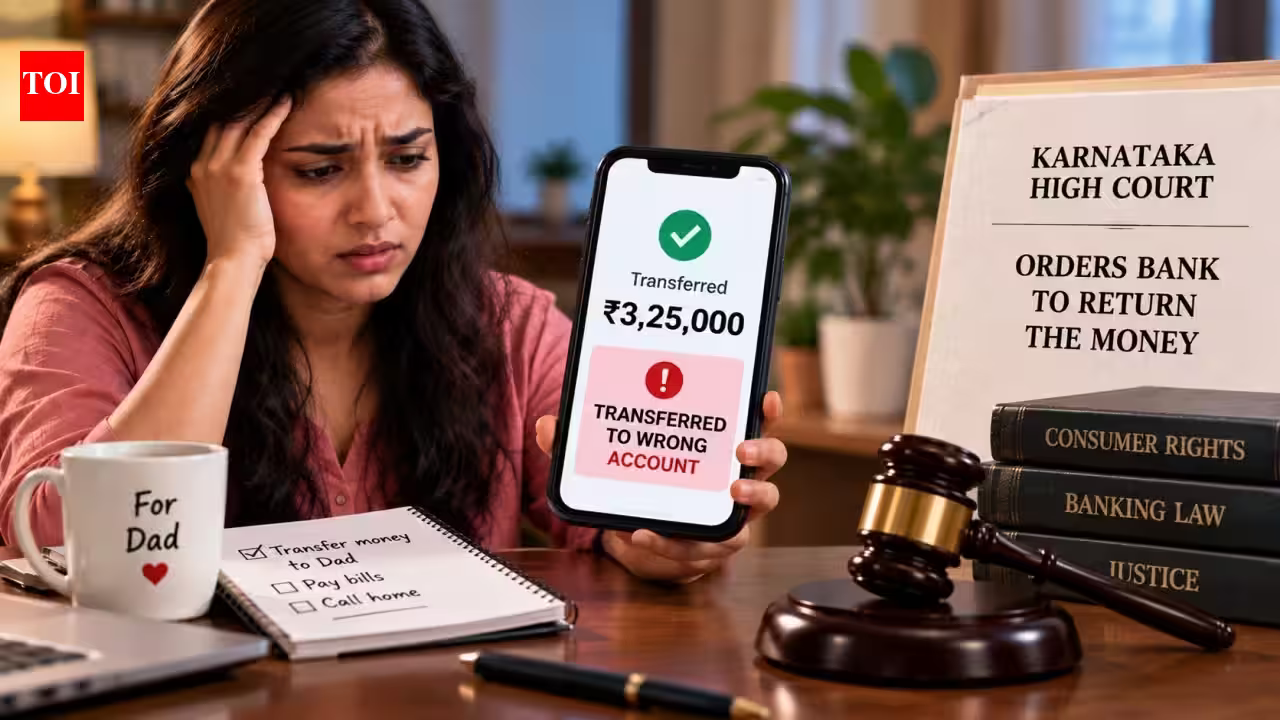
The Anatomy of a Digital Transaction Error
The landscape of Indian retail banking has been revolutionized by the proliferation of Unified Payments Interface (UPI) and Real-Time Gross Settlement (RTGS) systems. However, as the velocity of digital transactions increases, so does the risk of human error. A recent judgment by the Karnataka High Court highlights the systemic vulnerabilities inherent in digitizing financial transfers. In this instance, a petitioner inadvertently transferred Rs 3.25 lakh to an unintended beneficiary due to a slight numerical discrepancy—a transposition error involving the final four digits of an account number.
While banking platforms employ sophisticated security protocols, the onus of verifying the accuracy of recipient credentials often rests with the user. In the specific case heard by Justice C.M. Poonacha, the error was exacerbated by the fact that the funds were routed to a dormant account belonging to a third-party commercial entity, M/s Standard Engineering Works. This scenario presents a classic conflict between the efficiency of automated clearing houses and the legal protections afforded to individual account holders who face financial hardship due to clerical mistakes. The case serves as a critical reminder that while digital banking is instantaneous, the administrative recovery process for erroneous transfers remains complex, often requiring judicial intervention to resolve.
Navigating the Legal and Institutional Hurdles
When a user initiates an erroneous transfer, the immediate response from banking institutions is often constrained by internal policy and anti-money laundering (AML) regulations. In the Karnataka case, the petitioner faced a multi-layered challenge. First, she had to establish the bona fide nature of her mistake. Second, she had to contend with the fact that the receiving account was categorized as dormant, which typically triggers additional compliance scrutiny within the bank’s backend infrastructure.
The legal complexity grew when the unintended recipient could not be served, effectively rendering them absent from the proceedings. Under standard banking protocols, banks are hesitant to reverse transactions unilaterally to avoid potential liability for unauthorized access or regulatory non-compliance. By approaching the High Court under Articles 226 and 227 of the Constitution of India, the petitioner sought a directive that would indemnify the bank for reversing the transaction. The court’s intervention was pivotal because it provided the necessary legal authorization for the bank to bypass the standard requirement of recipient consent, which was impossible to obtain given the recipient’s unavailability. This ruling underscores that courts are increasingly willing to exercise their writ jurisdiction to rectify patent injustices caused by digital errors, particularly when the bank’s own records confirm the erroneous nature of the credit.
The Role of Banking Institutions in Transaction Recovery
The position taken by the bank in this litigation is illustrative of the broader institutional stance on transaction disputes. During the proceedings, the bank’s counsel signaled a willingness to comply with the court’s mandate, provided a formal order was issued. This highlights a significant operational reality in the Indian banking sector: banks prefer to operate under the shield of a judicial directive rather than risk the legal repercussions of reversing a transaction on their own accord.
For the banking sector, the primary challenge in such cases is maintaining the integrity of the ledger. When money enters a dormant account, it becomes subject to various liens, and in some instances, may even attract scrutiny from tax authorities—as seen in the petitioner’s request to have the lien over the funds lifted. The bank’s commitment to process the refund within a three-day window suggests that once the judiciary validates the claim of a technical error, the underlying technology is more than capable of executing the reversal. However, the institutional process remains reactive rather than proactive. Banks generally rely on customers to initiate these legal processes, leaving the burden of resolution on the individual rather than the service provider.
Regulatory Implications for the Future of Digital Payments
The Karnataka High Court’s ruling has broader implications for how the Reserve Bank of India (RBI) and financial institutions might evolve their dispute resolution frameworks. Currently, there is a lack of a streamlined, non-judicial mechanism for handling “fat-finger” errors where the recipient is unreachable or unresponsive. While the RBI provides ombudsman services for banking grievances, these are often designed for instances of fraud or service failure rather than user-induced clerical errors.
As the volume of digital transactions continues to grow in India, the necessity for a standardized policy on the recovery of wrongly credited funds becomes apparent. The current reliance on High Court writ petitions is unsustainable for the average citizen who may not have the resources to engage in protracted litigation for sums that are significant but perhaps not vast. Future policy developments could focus on a mandatory escrow period for large transactions, where funds remain “pending” for a brief window to allow for user verification, or the establishment of a specialized fast-track tribunal specifically for digital transaction disputes. Such a shift would alleviate the pressure on higher courts and provide a more accessible remedy for consumers who encounter similar technical mishaps.
Best Practices for Mitigating Transaction Risk
Despite the availability of judicial remedies, the primary defense against such risks remains preventive. For business owners and retail users alike, the lesson is clear: the convenience of modern banking does not absolve the user from the responsibility of rigorous verification. The case highlights that even a simple error in four digits can lead to months of legal, financial, and emotional strain.
To mitigate such risks, users should adopt the following practices:
1. Double-verification: Always cross-reference the account holder’s name with the account number, even if the mobile application shows a pre-filled beneficiary list.
2. Threshold testing: For large transfers, initiate a nominal “test” transaction before transferring the full amount. This confirms the identity and status of the beneficiary account.
3. Transaction Monitoring: Regularly check bank statements for dormant or suspicious accounts if an error is suspected. Early detection allows for a quicker freeze on funds before they are withdrawn or further complicated by existing liens.
4. Digital Hygiene: Maintain updated contact information with the bank so that if an error is flagged, the institution can communicate effectively.
The Karnataka High Court’s decision is a victory for the petitioner, but it also serves as a diagnostic tool for the Indian digital payment ecosystem. It reveals a clear gap where the speed of technology has outpaced the legal and institutional infrastructure required to handle inevitable user errors. By aligning the interests of the consumer with the risk-averse nature of banks, the industry can move toward a more resilient architecture that prioritizes both speed and error recovery. In the absence of such systemic changes, users must continue to operate with extreme caution, treating every digital transfer as a permanent commitment that requires meticulous oversight.
Disclaimer: This content is auto-generated for informational purposes only.
Source: Read Original News