








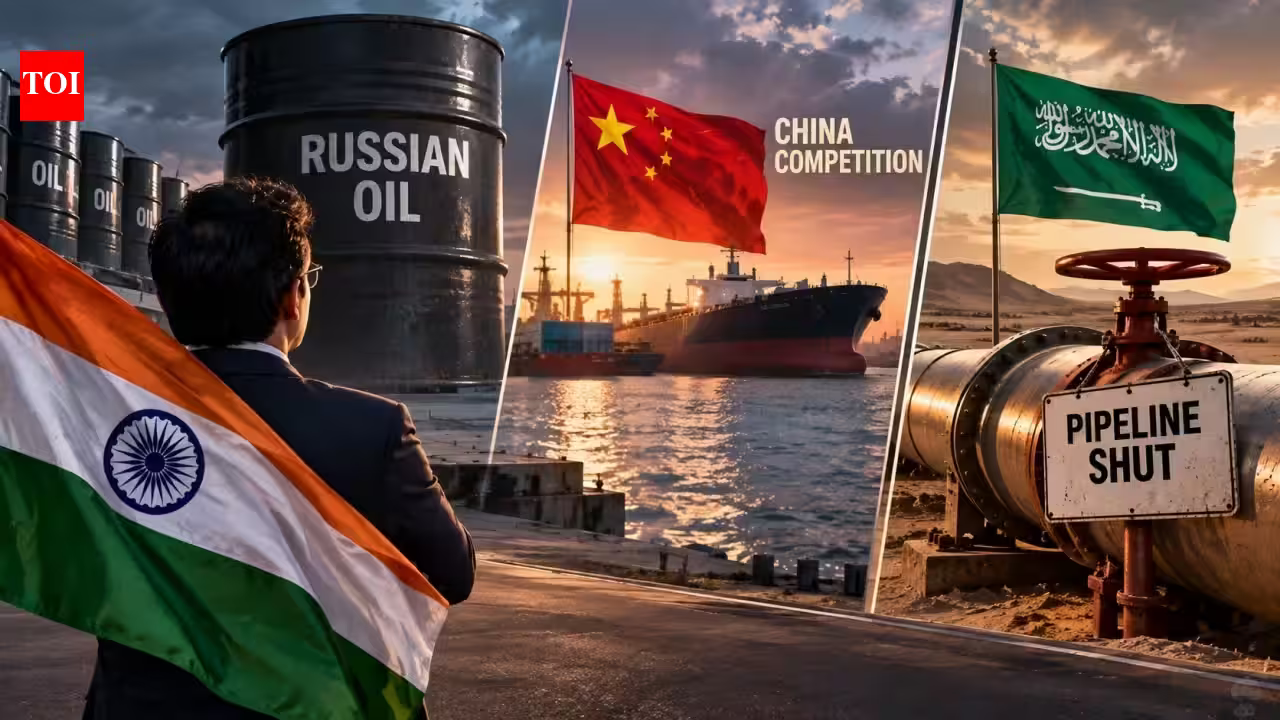
India’s energy security is currently navigating a period of profound uncertainty as global supply chains face a simultaneous convergence of geopolitical pressures. As a nation that relies on imports for approximately 90% of its crude oil requirements, India is particularly vulnerable to the systemic shocks currently rippling through the energy sector. The intersection of redirected trade flows, infrastructure vulnerabilities in the Middle East, and increasing competition from major Asian economies has created a “triple whammy” scenario that threatens to elevate the nation’s import bill and strain its macro-economic stability.
The Vulnerability of Middle Eastern Infrastructure
The security of the Middle East remains the cornerstone of global oil supply, and recent developments have highlighted the fragility of this dependency. The reported shutdown of Saudi Arabia’s vital East-West pipeline due to drone attacks underscores a significant risk to global energy transit. Historically, this infrastructure has been a reliable conduit for crude reaching the Red Sea, facilitating exports to international markets.
For India, the impact is tangible. The Red Sea port of Yanbu has been a consistent source of supply, accounting for nearly 9% of India’s crude imports since the start of regional hostilities. When combined with reduced flows through the Strait of Hormuz—the world’s most critical oil chokepoint—the reduction in throughput creates a supply contraction that forces refiners to seek alternatives. With global oil inventories already under pressure and anticipated to decline further, a prolonged outage in Saudi Arabia forces a scramble for replacement barrels. This competitive pressure on available spot cargoes invariably drives up crude prices, leaving Indian refiners to manage not only the physical shortfall but also the increased logistical costs associated with rerouting shipments to avoid conflict-prone zones.
The Shifting Economics of Russian Crude
For several years, Russian crude has served as the primary buffer for India’s energy requirements. By leveraging discounted prices that diverged from global benchmarks, India successfully shielded its domestic market from the full brunt of post-2022 global energy inflation. However, this strategy is encountering structural limitations.
The logistical architecture for exporting Russian oil is reaching a saturation point. Attacks on Black Sea terminals, coupled with rising insurance and freight premiums, have constrained the volume of oil that can reach the export market. Analysts indicate that Russia’s export infrastructure is now operating at near-maximum capacity. Furthermore, the reliance on older, “shadow” tanker fleets has increased the operational costs of transport. When combined with the high cost of freight—currently ranging between $13 and $20 per barrel depending on the loading region—the once-attractive price advantage of Russian crude is beginning to erode. The prospect of production declines within Russia, acknowledged by government officials, further suggests that the days of abundant, heavily discounted barrels may be coming to a close, forcing a reassessment of long-term sourcing strategies.
Rising Competition from China
A significant factor complicating India’s procurement strategy is the re-emergence of China as a dominant buyer of Russian crude. As China’s refining sector rebounds in response to improved fuel margins across Asia, its appetite for crude oil is expanding. Given the persistent constraints on Iranian oil supply, China is actively absorbing volumes of Russian crude that might otherwise have been destined for other markets.
This competition is moving beyond simple volume acquisition and is impacting the price discovery mechanism for Indian refiners. When Chinese demand surges, it provides Russian suppliers with greater leverage, leading to a contraction in discounts. Evidence of this shift is already visible, with certain Urals grade transactions moving to a premium against Dated Brent, a sharp reversal from the steep discounts witnessed in previous years. For India, this implies that the economic benefits of importing Russian oil are diminishing. While the volume of imports may remain steady, the landed cost is rising, necessitating a more rigorous approach to procurement economics and, in some cases, forcing a pivot back toward more traditional, albeit more expensive, suppliers.
Refining Economics and Domestic Impact
The broader implications for India go beyond the refinery gates. While India’s refiners possess sophisticated infrastructure capable of processing a wide variety of crude grades, the rising landed cost—driven by higher commodity prices, increased insurance rates, and longer transit times—poses a significant challenge to the national exchequer.
Each incremental rise in the price of crude oil has a direct, multiplicative effect on India’s trade deficit. A sustained increase in energy costs risks exerting upward pressure on domestic inflation, complicating the mandate of the Reserve Bank of India. Furthermore, there is a precarious balance regarding the fiscal health of Oil Marketing Companies (OMCs). If international prices continue to climb while domestic retail fuel prices remain relatively stable due to political or social considerations, the margins for these companies are compressed. This eventually necessitates a trade-off between the government’s fiscal deficit targets and the need to subsidize energy costs for the consumer.
A Strategic Portfolio Approach
Despite these challenges, India’s procurement strategy is characterized by a high degree of diversification, with the country sourcing oil from over 40 nations. This diversity serves as a vital safeguard against total supply disruption. Expert analysis suggests that Indian refiners are moving toward a portfolio-based approach rather than relying on a single, dominant supplier.
Iraq remains a logical candidate to replace Russian medium-sour grades due to its similar chemical profile and relative geographic proximity. Meanwhile, the UAE and other Gulf nations continue to provide stability to the supply chain. While producers in West Africa, Brazil, and Venezuela offer additional avenues for sourcing, they often come with higher freight costs due to the distance involved. The United States remains a source for lighter crude grades, though these are often less compatible with the technical configurations of refineries optimized for heavier, sourer crudes.
The path forward for India involves managing the tension between availability and cost. While a total shortage of crude is unlikely, the “triple whammy” of strained infrastructure, reduced discounts, and renewed competition suggests a transition toward a higher-cost environment. Successfully navigating this will require, at minimum, continued investment in logistical efficiency, refined hedging strategies to manage commodity price volatility, and a cautious calibration of domestic energy policies to ensure that the burden of these global shifts does not derail broader economic momentum.
Disclaimer: This content is auto-generated for informational purposes only.
Source: Read Original News