









India and Nigeria Forge New Economic Path with Renewed Focus on Energy and Technology
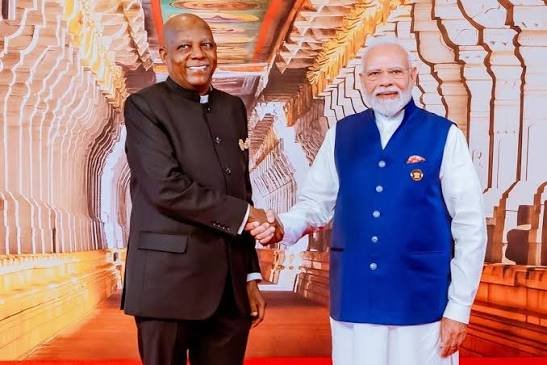
In a major push to revitalize bilateral economic ties, India and Nigeria have committed to a renewed strategic partnership aimed at scaling up trade volumes to pre-pandemic peaks. Following a high-level meeting between Prime Minister Narendra Modi and Nigerian Vice President Kashim Shettima on the sidelines of the BRICS Leaders’ Summit, both nations are signaling a transition from simple commodity exchanges to deeper industrial collaboration.
Restoring the Trade Momentum
The economic relationship between the two nations witnessed a significant contraction following the 2021-2022 financial year, when trade peaked at $14.95 billion. A subsequent decline in Indian purchases of Nigerian crude oil saw trade drop to $7.13 billion by 2024–2025. However, positive signs of recovery emerged in 2025–2026, with figures climbing back to $9 billion.
To bridge the remaining gap, Prime Minister Modi has advocated for a resurgence in crude oil imports from Nigeria. For New Delhi, securing stable energy supplies remains a top priority, while for Abuja, the move serves as a vital component of President Bola Ahmed Tinubu’s broader strategy to attract foreign investment and stimulate domestic production.
Beyond Commodities: A New Era of Collaboration
While energy remains the bedrock of the partnership, the Nigerian delegation emphasized a strategic pivot toward value-added sectors. Vice President Shettima highlighted pharmaceuticals, defense, digital technology, and the creative industries as core areas where Nigeria seeks Indian expertise.
“The President Tinubu administration is particularly interested in moving Nigeria’s relationship with India beyond the traditional exchange of commodities toward investments that support domestic production and value addition,” Shettima noted. The two leaders also held extensive discussions on expanding cooperation in renewable energy, healthcare, and financial technology, areas where both nations possess rapidly evolving digital economies.
Empowering the Grassroots
A unique facet of this bilateral engagement involves social engineering and financial inclusion. Nigeria is currently looking to replicate India’s success with women-led self-help groups. Hajiya Imaan Sulaiman-Ibrahim, Nigeria’s Minister of Women Affairs, stated that the country is adopting Indian models to strengthen the “Nigeria for Women Programme Scale-Up.” By organizing women into affinity groups, Nigeria aims to provide better access to finance, essential skills, and market linkages.
“Women’s economic empowerment is fundamental to our ambition of building a $1 trillion economy,” Sulaiman-Ibrahim explained, underscoring the government’s commitment to integrating millions of women into the formal economic fold.
A Future-Facing Partnership
Both leaders agreed that the next phase of India-Nigeria relations must be driven by the private sector. By leveraging the expertise of Indian firms in industries where Nigerian demand is surging, both nations hope to create sustainable job opportunities and facilitate essential technology transfers.
As they navigate the global economic landscape, both countries remain committed to sustaining high-level engagement through multilateral platforms like the India-Africa partnership framework. By focusing on skill development, digital public infrastructure, and strategic resource trade, New Delhi and Abuja are positioning themselves to transform their historical ties into a modern, robust economic alliance that serves the developmental goals of both nations.
Disclaimer: This content is auto-generated for informational purposes only.
Source: Read Original News