







The Evolution of Local AI on the Personal Computer
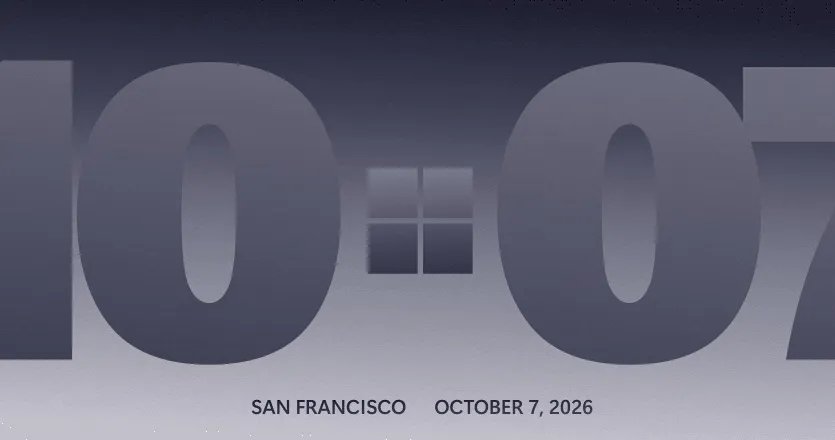
Microsoft has officially signaled a significant shift in its hardware and software roadmap, announcing a major event scheduled for October 7 in San Francisco. Following a two-year period of incremental updates, this gathering marks a pivot toward the integration of local artificial intelligence as the defining characteristic of the next generation of personal computing. Rather than focusing solely on cloud-based processing, the company intends to outline a framework where AI workloads are executed directly on the device, potentially changing the standard architecture for modern laptops and desktops.
This event carries significant weight due to the presence of top-tier industry leadership. CEO Satya Nadella will be joined by Pavan Davuluri, who currently leads the Windows and Surface divisions. Perhaps most tellingly, Nvidia CEO Jensen Huang is scheduled to appear. This participation suggests that the focus will be heavily skewed toward high-performance computing capabilities, specifically emphasizing the role of dedicated graphics processing units (GPUs) and neural processing units (NPUs) in managing complex machine learning tasks locally.
Hardware Innovation and the Surface Laptop Ultra
The presence of the Nvidia CEO strongly points to the advancement of RTX-powered systems. Industry observers anticipate that the event will provide clarity on the hardware specifications and market strategy for the rumored Surface Laptop Ultra. If this device adheres to the expected high-performance standards, it will likely feature specialized hardware acceleration designed to handle generative AI models, image processing, and high-fidelity video rendering without relying entirely on remote data centers.
For the end user, this transition toward local AI hardware means increased privacy and lower latency. By offloading tasks like real-time background noise suppression, advanced image editing, and predictive text generation to local hardware, Microsoft aims to minimize the lag associated with cloud processing. The Surface Laptop Ultra is expected to showcase the pinnacle of this integration, serving as a primary testing ground for Windows features that require substantial localized compute power to function fluidly.
Refining the Windows Experience
While hardware will take center stage, industry analysts anticipate a strong focus on the software environment. Despite recent speculation regarding a potential Windows 12 announcement, current signals suggest that Microsoft will prioritize stability and quality improvements for the existing Windows ecosystem. Rather than launching a new version of the operating system, the discourse will likely revolve around the maturation of the current architecture.
Microsoft’s commitment to refining Windows involves optimizing system-level processes to accommodate AI-driven tools. This includes improving power management, which is a critical concern when running intensive AI tasks on battery-powered mobile devices. By optimizing how Windows interacts with modern silicon, the company hopes to maintain the battery efficiency that consumers have come to expect from modern ultraportable devices, even when utilizing advanced onboard AI capabilities.
The Shift Toward Specialized Hardware Partnerships
The collaborative nature of this event highlights Microsoft’s strategy of deepening partnerships with silicon vendors. Earlier this year, Microsoft showcased a strong alignment with Qualcomm by introducing Arm-based Copilot Plus PCs. This move represented an attempt to challenge the dominance of x86 architecture in the power-efficiency space. By now shifting attention toward Nvidia, Microsoft is signaling a two-pronged strategy: pursuing high-efficiency mobile compute via Arm and high-performance, GPU-accelerated power via standard x86 and RTX platforms.
This hybrid approach allows the company to cater to a diverse user base. Developers, content creators, and enterprise users require high throughput for rendering and data analysis, while the general consumer market demands extended battery life and seamless portability. The upcoming event will likely detail how Microsoft plans to unify these two requirements under a single Windows software umbrella, ensuring that the software remains consistent regardless of the underlying hardware architecture.
Impact on the Future of Enterprise and Creative Workflows
The long-term implication of this focus on local AI is a fundamental change in how professional software operates on a PC. By providing developers with standardized APIs that access NPU and GPU resources directly, Microsoft is effectively democratizing access to high-performance AI. This impacts industries ranging from architecture and engineering, which rely on localized data security and rendering speeds, to creative fields that require fast iteration on media assets.
Security is another primary driver for this shift. By keeping data processing localized, companies can keep sensitive information within their own hardware perimeter, mitigating the risks associated with transmitting proprietary data to external cloud services. As Microsoft rolls out these advancements, the PC will transition from a simple productivity interface into a decentralized compute hub capable of autonomously handling complex logic and generative tasks.
Expectations for the Road Ahead
As October 7 approaches, the technology community is watching closely to see how these hardware and software components coalesce. The expectation is not merely the introduction of new products, but the outlining of a comprehensive vision that defines what a modern PC should be. If the event successfully demonstrates that local AI provides a distinct advantage in performance, privacy, and speed over traditional computing models, it could trigger a massive upgrade cycle in the enterprise and consumer sectors.
Microsoft is clearly moving toward a future where the hardware and software are tightly coupled to prioritize machine learning throughput. Whether through the lens of the Surface Laptop Ultra or through deeper system-level enhancements to the Windows experience, the conversation in San Francisco will likely establish the technical standards for the next several years. By focusing on the intersection of specialized silicon and a refined operating system, Microsoft aims to ensure that the personal computer remains the primary tool for high-level computation in an AI-driven economy.
Disclaimer: This content is auto-generated for informational purposes only.
Source: Read Original News