









The Evolution of Hardware: Snap’s Standalone AR Vision
Snap has long signaled its intent to pivot from being a software-focused social media platform to a leader in hardware-based augmented reality. After over five years of iterative development and limited hardware releases exclusively for developer ecosystems, the company is preparing to launch its latest iteration of Specs to the public this fall. Priced at $2,195, these augmented reality glasses represent a significant departure from previous versions by functioning as a fully standalone computer. Unlike many competitors that require tethering to a smartphone or an external compute module, the new Specs integrate all necessary processing power, battery, and optical hardware within the frame itself.
Design and Ergonomics
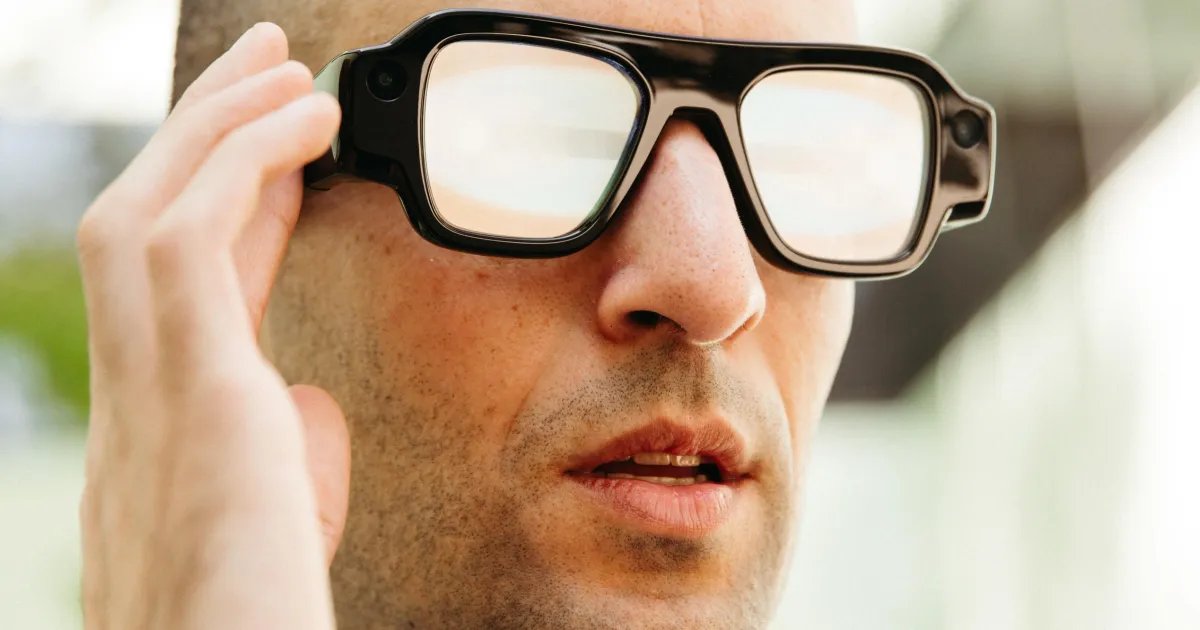
The physical footprint of the Specs is notably bold. The glasses are available in 47mm and 52mm lens sizes, and their chunky aesthetic is a necessity driven by the internal components required to operate as a self-contained device. While they lack the sleek, understated profile of standard optical eyewear, they avoid the extreme weight and bulk associated with traditional virtual reality headsets.
During testing, the build quality felt robust, maintaining a secure fit even during head movement. While they are heavier than conventional glasses, the weight distribution prevents the significant strain typically found in larger face-mounted tech. However, extended use, specifically approaching the limit of their four-hour battery cycle, may reveal long-term comfort issues regarding pressure on the ears and bridge of the nose.
Interface and Optical Performance
The core experience of the Specs relies on waveguide display technology embedded within both lenses. This allows the device to project high-resolution digital elements into the user’s real-world environment, supporting a wide color gamut of 16 million colors. The interface utilizes advanced hand-tracking, enabling users to interact with virtual objects through intuitive gestures like pinching, dragging, and resizing.
Advanced navigation is achieved through a combination of hand gestures and a palm-based control system. A user can lift their palm to summon a home interface, access a control center, and view system status, such as time and battery life. Despite the ingenuity of this input method, it remains a work in progress. Precise execution of these gestures can be inconsistent, often requiring multiple attempts to register correctly. Furthermore, the 51-degree field of view acts as a primary constraint; when digital windows or game elements drift toward the periphery, they quickly disappear, often breaking the illusion of integration between the virtual and physical worlds.
Performance and AI Integration
A dedicated AI chatbot assistant is integrated into the system, responding to voice commands such as “Hey Specs.” In current demonstrations, the responsiveness of this assistant has been mixed. Requests often require repetition, and latency remains a hurdle, with significant delays occurring between voice inputs and the rendering of requested information, such as web search results or video content.
The use-cases for these glasses extend beyond simple productivity or gaming. For example, a shared experience feature allows two people wearing the glasses to interact with the same virtual game board, such as placing digital dominoes on a physical table. While this showcases the potential for collaborative mixed reality, the device simultaneously introduces complex social challenges. The ability to watch private media or consume digital content while appearing to interact with someone else raises questions about presence and social etiquette in public or private spaces.
Privacy and Future Implications
As with other camera-equipped wearables, the Specs face immediate scrutiny regarding privacy. Snap has opted to include a prominent, centrally located indicator light that activates during video recording or photography. While this serves as a visual signal to bystanders, the ongoing public discourse surrounding recording wearables suggests that hardware indicators alone may not fully mitigate privacy concerns.
The launch of the Specs arrives at a moment of intense industry focus on spatial computing. With major technology firms, including Meta, Google, and Apple, investing heavily in various forms of smart glasses and augmented reality, Snap is attempting to establish an early foothold. By delivering a self-contained, standalone device, the company is betting that the path to a “more human” computing experience involves moving beyond the screen-focused interactions of mobile devices. However, the current state of the software, the hardware size, and the challenges of natural input suggest that the technology is still in its infancy. Whether these glasses can transition from a technical achievement to a mass-market utility will depend on future refinements to both the input accuracy and the social integration of the device.
Disclaimer: This content is auto-generated for informational purposes only.
Source: Read Original News