






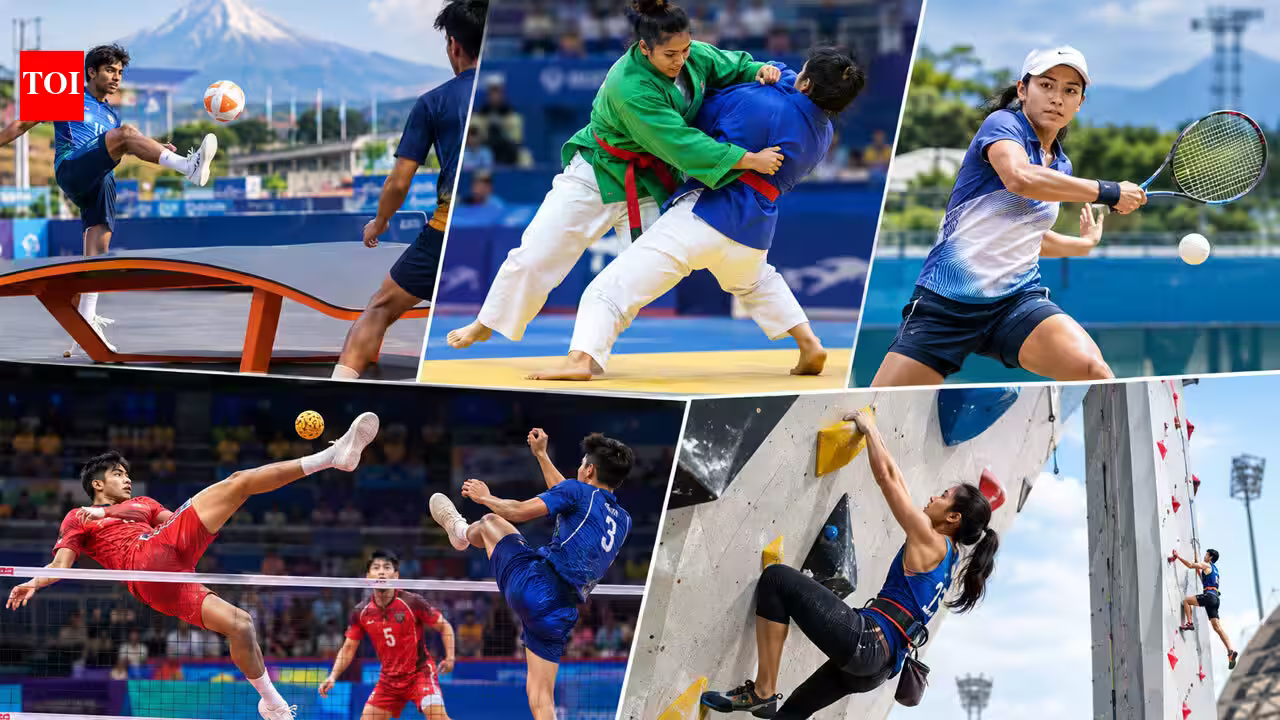
Aichi-Nagoya 2026 is poised to redefine the sporting consciousness of the Indian public. While the roar of the crowd is traditionally reserved for the explosive power of athletics, the strategic brilliance of badminton, or the high-stakes drama of the hockey field, the 20th edition of the Asian Games will cast a necessary spotlight on five disciplines that, while globally vibrant, remain largely outside the Indian mainstream.
From September 19 to October 4, Japan will host approximately 11,000 athletes from 45 nations. Among them, a 503-member Indian contingent will step onto the international stage not only to chase medals in familiar arenas but to make their mark in sports that challenge the very definition of traditional athleticism. As the sporting world pivots toward niche and hybrid disciplines, India’s involvement in Teqball, Kurash, Soft Tennis, Sepak Takraw, and Sport Climbing signals a maturation of its diverse national talent pool.
Teqball: Where football meets table tennis
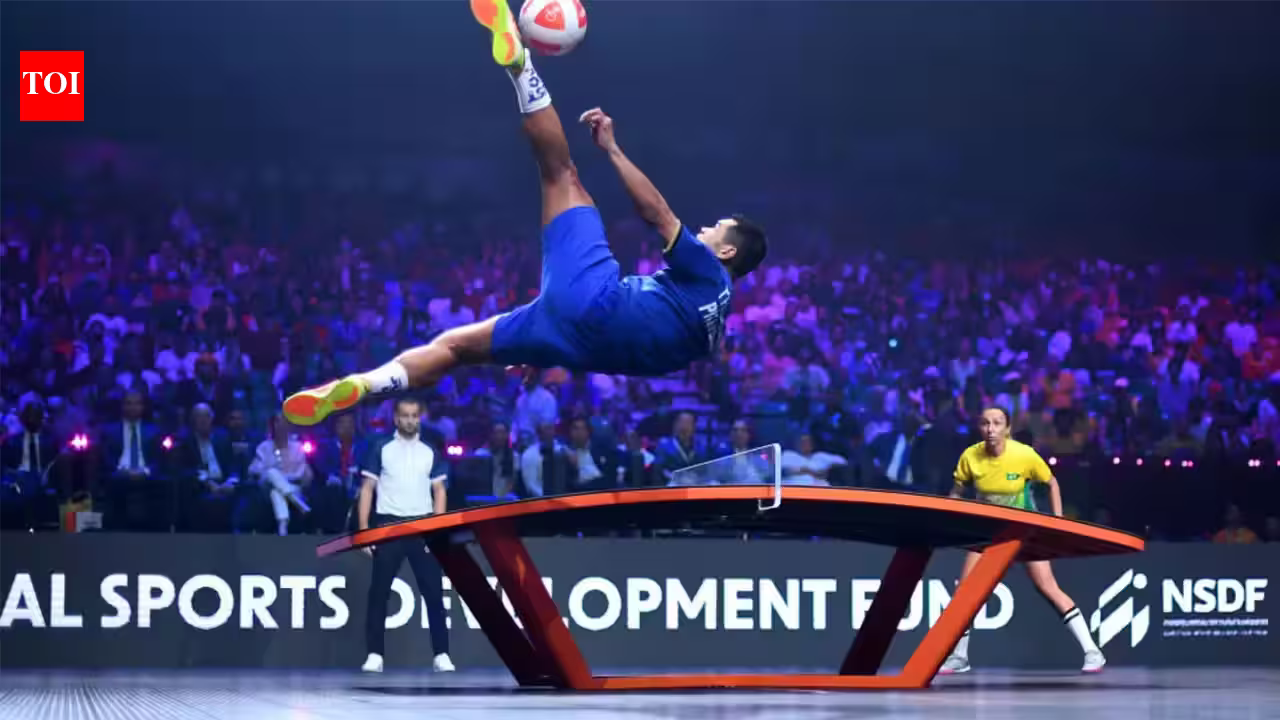
The fusion of two of the world’s most popular pastimes, Teqball, makes its official debut at the Aichi-Nagoya Games. Imagine the precision and tactical rhythm of table tennis colliding with the fluid artistry of football. Played on a uniquely curved table, the sport demands absolute mastery of the ball using only the head, chest, knees, or feet—hands and arms are strictly prohibited.
Developed in Hungary, the sport has seen meteoric growth over the past decade. India will be represented by Mohamed Anas Imran Beg, Declan Marshall Gonsalves, and Quimcy Dsouza, who will navigate the complexities of men’s doubles, mixed doubles, and women’s singles. For the uninitiated, watching a Teqball rally is like witnessing a freestyle football exhibition compressed into a high-intensity, point-based match.
Kurash: A battle of balance and brute strength
While Indian audiences are well-versed in the grappling arts of wrestling, judo, and kabaddi, Kurash offers a refreshing, explosive twist. An ancient jacket-wrestling tradition hailing from Central Asia, specifically Uzbekistan, Kurash centers entirely on standing maneuvers. The objective is elegant yet difficult: throw the opponent onto their back while staying on your own feet. Groundwork, striking, and joint locks are disallowed, resulting in a contest defined by balance, grip, and instantaneous timing.
India has already tasted success here, with Pincky Balhara’s silver and Malaprabha Jadhav’s bronze at the 2018 Jakarta-Palembang Games. Looking to build on that history, the Aichi-Nagoya squad features a robust group, including Vipin Kumar, Vishal, Yash Kumar, Bharti, Sangita Balhara, and Pincky Chauhan.
Soft Tennis: A new spin on a classic
At first glance, Soft Tennis appears identical to the sport played at Wimbledon, but the difference is literally in the ball. Utilizing a lightweight, air-filled rubber ball that weighs barely 30 grams, the game shifts from the raw power of standard tennis to a game of finesse, rhythm, and agility.
Originating in late 19th-century Japan, Soft Tennis has graced the Asian Games since 1994, yet India remains in search of its first medal. The six-member team of Yogesh Choudhary, Om Yadav, Jay Meena, Aniket Chirag Patel, Aryan Thakur, and Aadhya Tiwari will be determined to break that streak in Japan, competing across team events, singles, and mixed doubles.
Sepak Takraw: Aerial acrobatics on the court
Perhaps the most visually stunning sport on the schedule, Sepak Takraw is frequently described as “football on a volleyball court.” With three players forming a “regu” on each side, competitors use their feet, knees, chest, and heads to launch a ball over the net.
What makes it truly legendary are the gravity-defying bicycle kicks and scissor strikes employed to bypass the opponent’s defense. Having already secured bronze medals in 2018 and 2022, India is no longer an amateur in this discipline. With a massive squad of 21 athletes, the Indian teams are signaling that they are ready to push for a podium finish, cementing a legacy for the sport in the country.
Sport Climbing: Racing against gravity
As the most modern inclusion on this list, Sport Climbing has captured the imagination of the youth. Combining raw strength with analytical problem-solving, athletes scale artificial walls covered in colored holds. The three disciplines—Speed, Boulder, and Lead—test distinct facets of human performance: explosive acceleration, technical puzzle-solving, and sheer endurance.
India’s path to the podium in climbing has been challenging, but the focus remains sharp for the 2026 Games. Deepu Mallesh and Joga Purty will represent the nation in the high-octane Speed category, where a fraction of a second is the difference between glory and defeat.
A broader horizon for Indian sport
These five disciplines illustrate the unique ecosystem of the Asian Games, which serves as a vital bridge between traditional regional sports and emerging global trends. For the Indian fan, the coming weeks represent an invitation to expand their horizons. Beyond the traditional focus on track and field or team ball games, these athletes offer a spectacle of niche technical expertise—from a ball bouncing off a curved table to a climber defying gravity. As India’s contingent takes to the field in Aichi-Nagoya, they are not just competing for medals; they are introducing a new generation of excellence to the Indian sporting landscape.
Disclaimer: This content is auto-generated for informational purposes only.
Source: Read Original News