









Catastrophic Flooding Submerges Bihar: Five Million Impacted as Relief Efforts Intensify
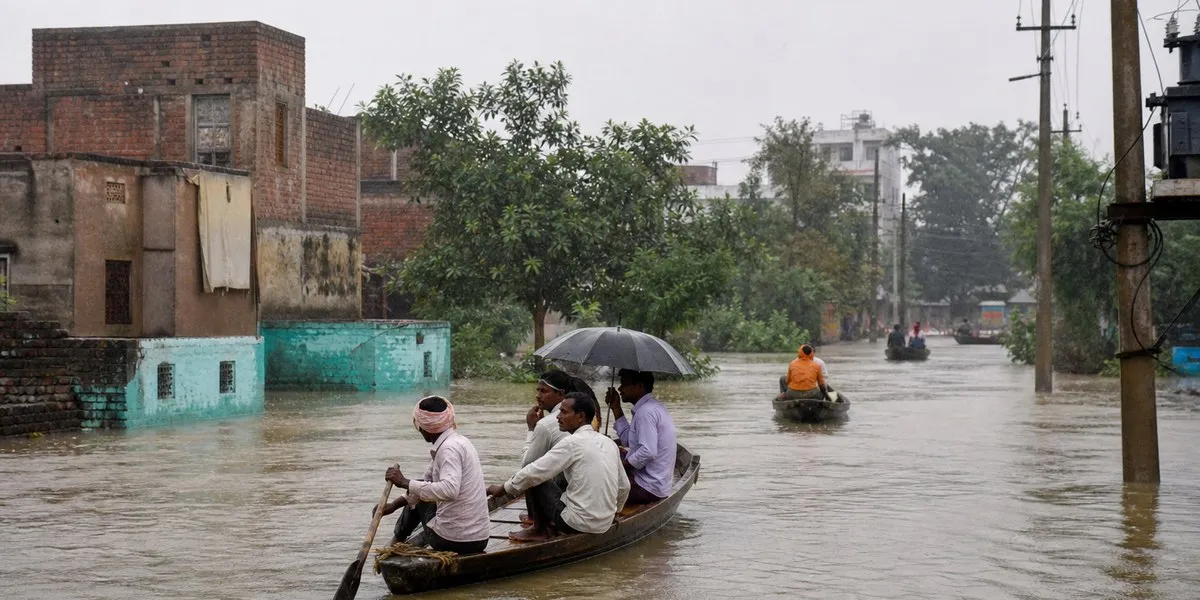
The eastern Indian state of Bihar is currently grappling with a severe humanitarian crisis as massive flooding has left nearly five million people displaced or struggling for basic necessities. Following a spell of relentless rainfall this past Tuesday, the state’s already fragile infrastructure was pushed to a breaking point, resulting in all seven of Bihar’s major river systems breaching their danger marks simultaneously.
The situation has triggered a massive, multi-pronged emergency response from both the state government and federal authorities. As vast swathes of residential land remain underwater, the priority has shifted toward ensuring the survival of the millions caught in the deluge.
Massive Relief and Financial Intervention
State authorities are working around the clock to mitigate the impact of the disaster. According to Deputy Chief Minister Vijay Kumar Choudhary, the government has established an extensive supply chain to provide food, clean drinking water, and emergency medical kits to the most vulnerable families.
In an effort to provide immediate economic relief to those whose livelihoods have been decimated by the rising waters, Chief Minister Samrat Choudhary announced that financial aid is being distributed directly to the affected population. To date, over 827,000 households have received a cash transfer of 7,000 rupees (approximately $72) to cover essential expenses.
Infrastructure support is also being scaled up rapidly. Local administration has deployed nearly 1,800 boats to reach stranded villagers, while the establishment of 13 dedicated relief camps and over 1,000 community kitchens is helping to feed and shelter those who have lost their homes.
A Recurring Seasonal Crisis
Bihar is one of India’s most flood-prone states, frequently suffering from the seasonal overflow of rivers that originate in the Himalayas. This year’s crisis has been compounded by the state’s geographic position downstream from Nepal. Severe flooding in the neighboring country last month created a cascading effect, with excess water flowing into the low-lying plains of Bihar, exacerbating the damage to infrastructure and vast tracts of agricultural land.
While local media reports indicate that the death toll has reached at least 20, authorities fear the numbers could shift as rescue operations reach more remote, inundated regions. The destruction of crops is expected to have a lasting impact on the local economy, which remains heavily reliant on agriculture.
Federal Oversight and Damage Assessment
Recognizing the scale of the destruction, Prime Minister Narendra Modi has intervened to ensure federal cooperation. A central government team has been dispatched to the state to conduct a rigorous, on-the-ground assessment of the damage. This technical evaluation will be critical in determining the extent of the recovery funds and long-term aid packages that the central government will allocate to help Bihar recover.
As the state enters a critical phase of relief and recovery, the focus remains on preventing disease outbreaks and restoring access to hard-to-reach areas. Local officials have urged the public to remain vigilant as the water levels continue to fluctuate, emphasizing that the state remains in a high state of alert until the river currents stabilize.
Disclaimer: This content is auto-generated for informational purposes only.
Source: Read Original News