







Asian markets presented a mixed landscape on Thursday as investors recalibrated their portfolios following the Federal Reserve’s long-anticipated decision to hike interest rates. The move, which pushes the central bank’s key rate to a target range of 3.75%–4.00%, marks a significant attempt to curb persistent U.S. inflation. While Wall Street reacted with a cooling-off period on Wednesday—sending the Dow Jones Industrial Average down 1.2%—the focus for global traders has now shifted toward the long-term impact of heightened borrowing costs and ongoing geopolitical tensions.
Market Volatility and the Inflation Outlook
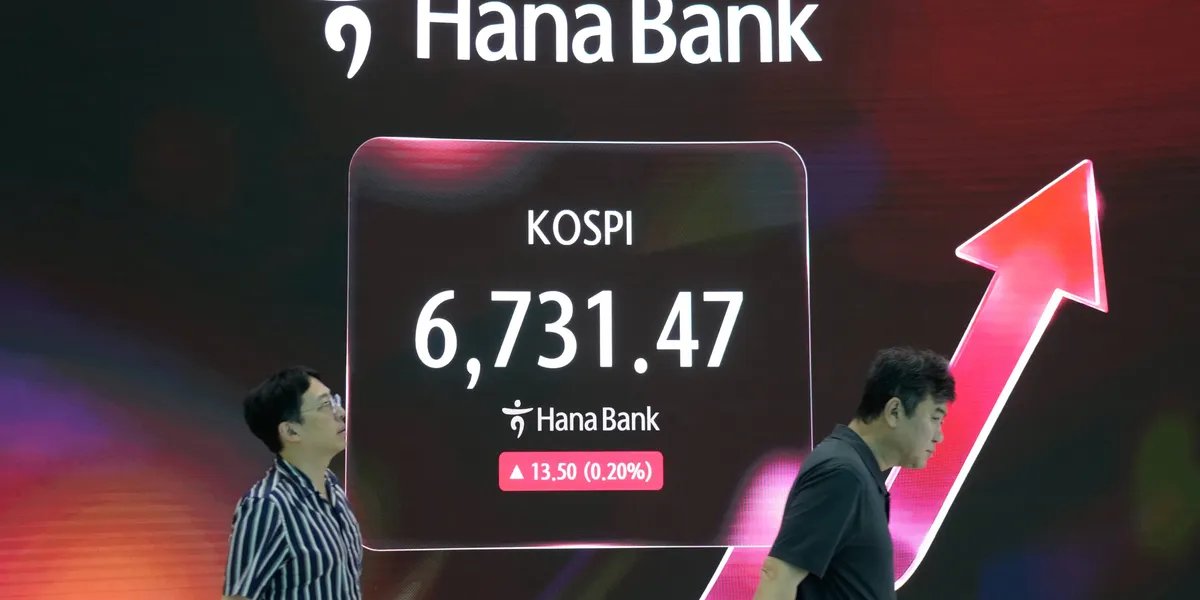
The reaction across Asia was uneven, reflecting a region navigating both domestic growth goals and external shocks. Japan’s Nikkei 225 saw a modest gain of 0.2%, and South Korea’s Kospi climbed 0.9%. Conversely, the Hong Kong Hang Seng dipped 0.7%, and the Shanghai Composite slipped 0.4%, illustrating the divergence in regional sentiment.
Lorraine Tan, director of equity research for Asia at Morningstar, noted that the rate hike was largely baked into market expectations. However, she warned that macroeconomic stability remains fragile. The lingering conflict in Iran continues to fuel fears of an energy supply shock, which complicates the inflation picture for central banks worldwide. As yields on the two-year U.S. Treasury climbed to 4.72%, investors are clearly bracing for a “higher for longer” interest rate environment. This trend is further exacerbated by the ongoing disruption in the Strait of Hormuz, which has kept oil prices hovering near $105.89 per barrel, adding upward pressure on the cost of goods globally.
Tech Industry and Innovation Amid Economic Pressures
Despite the broader economic uncertainty, the tech sector remains a focal point for institutional investors. While the Nasdaq remained largely flat during Wednesday’s session, the sector is under intense scrutiny as firms accelerate their integration of Artificial Intelligence. Companies are increasingly looking to AI to drive operational efficiency as the cost of capital rises.
Big Tech giants, which have been significant drivers of the S&P 500, are currently tasked with balancing high research and development expenditures in generative AI with the need to show investors steady profitability in a high-rate environment. Google and other industry leaders are continuing to roll out cloud-based AI infrastructure and search innovations, aiming to maintain a competitive edge. However, analysts warn that tech stocks may face increased volatility in the coming weeks as markets adjust to the new interest rate reality, which historically places pressure on growth-oriented valuations.
Geopolitics and Future Market Stability
The convergence of federal fiscal policy and international supply chain bottlenecks presents a complex outlook for the remainder of the year. Beyond the immediate impact of interest rates, markets are keeping a close watch on the U.S. national debt and the security of global energy corridors.
The closure of a major Saudi Arabian oil pipeline, currently undergoing repairs, has only tightened an already strained supply chain. As central banks continue to pull the levers of monetary policy to combat inflation, the ability of technology firms to innovate—and sustain consumer demand—will be critical. For now, the sentiment on Wall Street remains cautious, with U.S. futures trending slightly higher as traders look for clarity on whether the latest rate hike will be sufficient to cool the economy without triggering a deeper, systemic slowdown. Investors in the tech and energy sectors are likely to remain on high alert for further updates from the Fed and reports on global oil flow stability in the coming days.
Disclaimer: This content is auto-generated for informational purposes only.
Source: Read Original News