








The Mechanics of Precious Metal Corrections in Global Markets
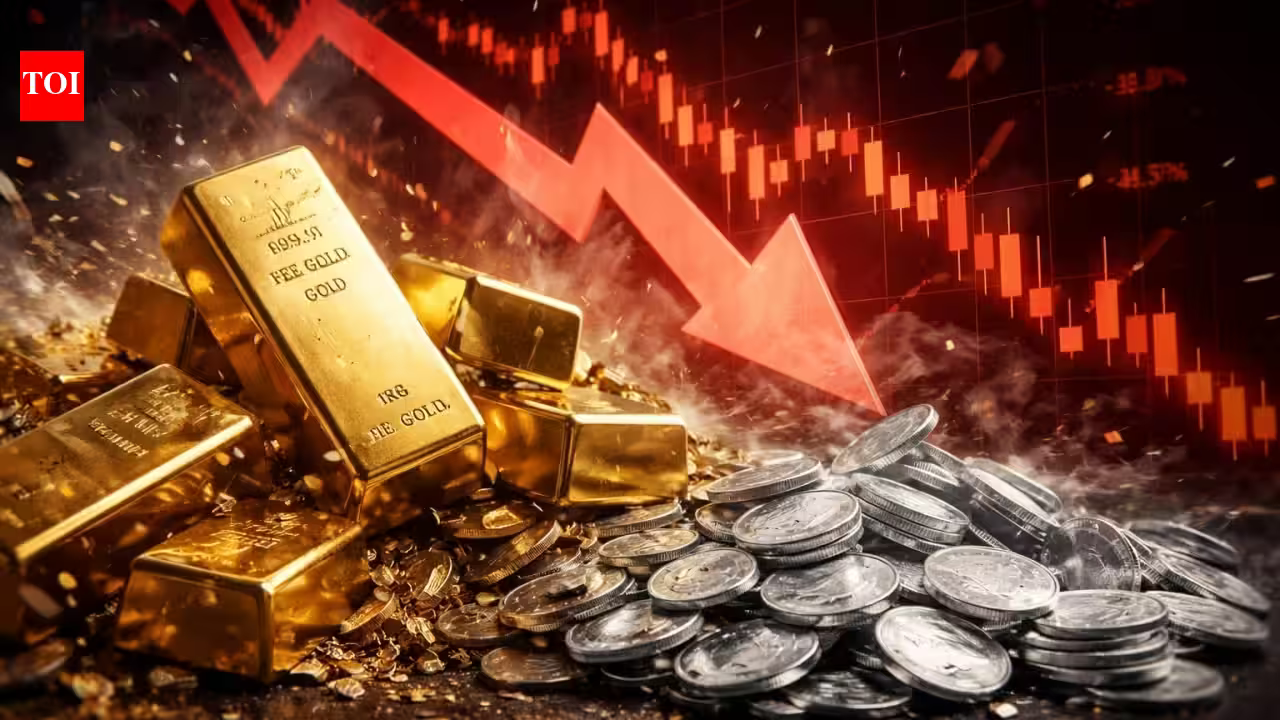
The current performance of precious metals, specifically gold and silver, is undergoing a phase of technical adjustment that reflects the broader complexities of global macroeconomic conditions. As investors navigate the current climate, the narrative surrounding commodities has shifted from aggressive growth to a period of consolidation. The recent price action, characterized by downward pressure and a testing of lower support levels, serves as a testament to the influence of central bank policy—most notably the interest rate trajectory established by the US Federal Reserve.
When interest rates rise, non-yielding assets such as gold and silver typically face structural headwinds. As Treasury yields climb, the opportunity cost of holding precious metals increases, causing capital to rotate toward fixed-income instruments. In the Indian context, where demand for gold is historically inelastic due to cultural and seasonal factors, these global price corrections are often viewed through a dual lens: as a risk to short-term portfolios and as a strategic entry point for long-term investors. Understanding these fluctuations requires a focus on the interplay between technical support levels and the overarching macroeconomic themes that define the commodity cycle.
Evaluating the Gold Price Trajectory
Gold’s performance on the Multi Commodity Exchange (MCX) highlights a distinct trend toward corrective behavior. By trading with lower lows and frequently breaching previous weekly support marks, the asset has signaled that the current momentum is tethered to the downside. However, market analysts distinguish between a total trend reversal and a necessary consolidation phase. While the near-term setup is undoubtedly bearish, the fundamental base remains intact.
For professional participants, the primary concern lies in the identification of key support zones. The current support level at 148,000 serves as a critical buffer. Should the market experience a sustained breakdown below this threshold, the subsequent decline could accelerate, pushing prices toward the 144,000 to 140,000 range. Conversely, resistance is firmly anchored at 155,000. For the bullish trend to reassert itself with conviction, the market requires a daily close above this resistance level. Without such a breakout, the prevailing technical narrative suggests that the market will continue to drift within a consolidation range, testing the resolve of short-term traders while providing potential accumulation windows for institutional players.
Silver: Navigating Industrial and Investment Pressures
Silver occupies a unique position in the commodities landscape, functioning as both a precious metal and an industrial input. This dual nature means that its price performance is dictated not only by monetary policy but also by industrial demand forecasts. The current pressure on silver prices mirrors that of gold, with rising yields serving as the primary catalyst for the recent pullback.
The technical outlook for silver remains cautious. With the metal failing to maintain its previous momentum, it is currently navigating a path toward more stable support foundations. The 225,000 level is the critical technical floor for the week. As long as the price holds above this mark, the broader long-term uptrend remains theoretically unscathed, characterizing the current movement as a temporary corrective phase. However, a failure to defend this support would represent a material shift in market sentiment, potentially triggering further liquidation. On the upward trajectory, resistance is layered at 242,000 and 248,000. Achieving a sustained presence above 248,000 would be the essential signal that the corrective cycle has concluded and that the bullish momentum has returned to the forefront of the market.
Strategic Implications for Indian Market Participants
The Indian bullion market operates under specific constraints and drivers, including currency fluctuations and import duty structures. As the MCX reflects global trends, domestic traders must account for the volatility in the USD-INR exchange rate, which acts as a secondary layer of risk. When global prices fall but the domestic currency weakens, the impact on domestic price points can be mitigated or exacerbated depending on the speed of the currency depreciation.
For those engaging in tactical asset allocation, the current environment necessitates a disciplined approach. The strategy of waiting for consolidation to conclude is gaining traction among institutional desks. Rather than attempting to catch a falling knife, sophisticated investors are focusing on the accumulation of assets at predetermined support levels—specifically 144,000 for gold and 225,000 for silver. This approach prioritizes risk management by utilizing tight stop-loss levels, such as 155,000 for gold and 242,000 for silver, to preserve capital should the expected bounce from support fail to materialize.
The Role of Central Bank Policy in Commodity Valuation
The influence of the US Federal Reserve cannot be overstated in the current valuation of precious metals. Interest rate hikes are the primary mechanism through which the Fed influences market liquidity, and their ripple effects are felt instantly across international commodity exchanges. For precious metals, which do not generate cash flow or interest, the appeal is historically tied to their status as a hedge against inflation and a store of value. When high-interest rates provide competitive real yields on other assets, the rationale for holding precious metals weakens, leading to the corrective phases observed in recent sessions.
Investors should monitor the Federal Reserve’s communication closely, as any hint of a change in tone regarding future rate hikes or a pivot toward a more dovish stance would likely be the immediate catalyst for a reversal in the current corrective trend. In the absence of such a shift, the market is expected to remain range-bound, dictated by technical support and resistance levels.
Conclusion: Managing Risk in a Volatile Commodity Landscape
The current outlook for gold and silver is one of measured caution. The prevalence of negative momentum suggests that the corrective phase is not yet exhausted. However, for those with a professional outlook on market cycles, this period provides a clear framework for decision-making. By focusing on critical support levels and adhering to strict stop-loss protocols, participants can navigate the volatility without succumbing to the market noise that often accompanies sharp price declines.
The ultimate direction of gold and silver will remain contingent on the resolution of the ongoing struggle between central bank policy and the inherent demand for hard assets. As the market works through this consolidation phase, the objective for the disciplined investor remains consistent: to identify structural support, manage exposure through defined trading ranges, and maintain an awareness of the macroeconomic shifts that will eventually dictate the next phase of the commodity cycle. Whether this leads to a prolonged period of sideways movement or a swift recovery will depend on how aggressively the market adjusts to the prevailing interest rate environment in the weeks ahead.
Disclaimer: This content is auto-generated for informational purposes only.
Source: Read Original News