







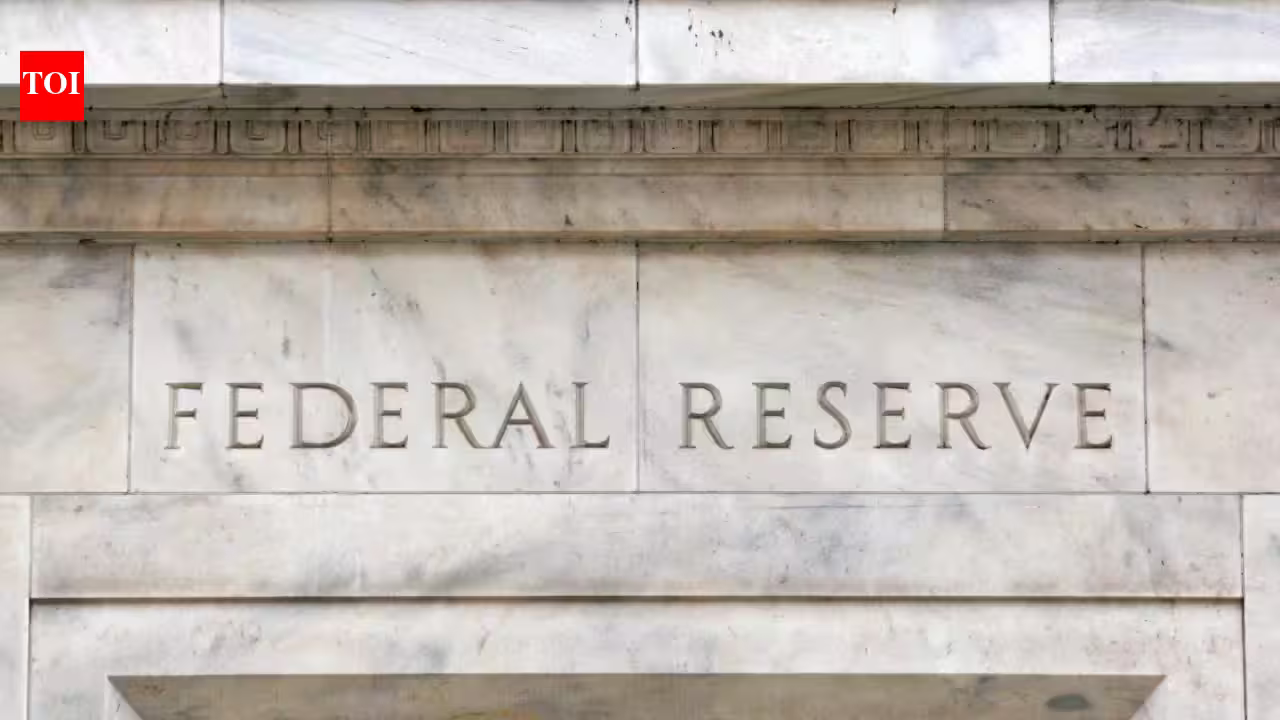
The recent decision by the US Federal Reserve to raise its benchmark interest rate to a range of 3.75%–4% marks a pivotal moment in global monetary policy. By tightening credit conditions, the central bank aims to curb persistent inflation, which has remained above the desired 2% target. While this action is primarily designed to manage the US domestic economy, its repercussions extend far beyond American borders, influencing global capital flows, currency valuations, and the strategic positioning of emerging markets like India.
The Mechanism of Monetary Tightening
The Federal Reserve’s primary objective in raising rates is to dampen demand. When borrowing costs increase, both consumers and corporations naturally reduce their spending and investment activities. By making credit more expensive, the Fed hopes to cool down the overheated segments of the economy. For the average US consumer, this translates into immediate upward pressure on variable-rate debt, such as credit cards, which are typically indexed to the prime rate.
As borrowing becomes more expensive, the cost of servicing existing debt climbs. With US credit card debt nearing record levels of $1.26 trillion, even minor increments in interest rates—such as the recent quarter-point hike—can have a cumulative impact on household cash flow. This creates a challenging environment where discretionary spending power is reduced, potentially slowing down economic activity and softening the housing market, where mortgage rates have already ascended to multi-year highs.
Implications for the Indian Financial Ecosystem
For an economy as interconnected as India’s, the ripple effects of US monetary policy are significant. When the US Federal Reserve raises interest rates, it increases the attractiveness of US-denominated assets. Global investors often move capital out of emerging markets and back into the US to take advantage of higher yields and the perceived safety of the dollar. This phenomenon, often referred to as “capital flight,” exerts downward pressure on the Indian Rupee.
A depreciating Rupee complicates the domestic landscape for the Reserve Bank of India (RBI). As the currency weakens, the cost of importing essential commodities, most notably crude oil, rises. This imported inflation can derail domestic price stability efforts, forcing the RBI to maintain a cautious stance. If the Fed continues on a path of aggressive tightening, the RBI faces the difficult choice of raising domestic interest rates to protect the currency and control inflation, or maintaining them to support local economic growth. This balancing act remains the defining challenge for Indian policymakers in the current cycle.
Impact on Borrowing and Consumer Debt
While the Fed’s direct influence is localized in the US, the trend toward higher interest rates has become a global standard. In the United States, homeowners with fixed-rate mortgages are generally insulated from these fluctuations. However, those holding adjustable-rate mortgages or looking to secure new financing are finding themselves in a high-cost environment.
This environment is not unique to the US. In India, banks are increasingly sensitive to global liquidity conditions. As external borrowing becomes more expensive for large Indian corporations, they may turn to domestic banks for capital, potentially crowding out smaller borrowers or driving up local interest rates. Consumers in India who rely on loans for homes, automobiles, or personal expenses must prepare for a period where credit is not only harder to obtain but significantly more expensive to maintain.
Strategic Opportunities for Savers
One of the few positive aspects of a high-interest-rate environment is the benefit to savers. As banks compete to attract liquidity, the yields on savings accounts, certificates of deposit (CDs), and fixed-income instruments tend to rise. In the US, this has already been observed, with yields on one-year CDs climbing substantially compared to the near-zero rates of previous years.
In the Indian context, the rising rate cycle provides a boost to risk-averse investors. After years of low real returns, fixed deposits and debt-based mutual funds are regaining appeal. Savers are now able to generate more meaningful passive income, provided they navigate the risks associated with inflation. This shift in the interest rate landscape encourages more disciplined financial planning, as the opportunity cost of holding cash in non-interest-bearing accounts becomes more apparent.
Long-Term Economic Outlook and Policy Challenges
The “stacking” effect of multiple rate hikes is what analysts watch most closely. A single quarter-point increase may seem manageable, but when successive hikes are layered over an already strained economic foundation, the cumulative impact can be destabilizing. For the US, the risk is a potential recession caused by an overly aggressive cooling of demand. For global markets, the risk is continued volatility and the tightening of financial conditions that could slow growth in emerging economies.
For India, the focus remains on domestic resilience. While external pressures from the US Fed are unavoidable, the Indian economy has demonstrated a degree of insulation through strong foreign exchange reserves and a robust domestic consumption story. However, the path ahead necessitates a focus on structural reforms that boost manufacturing and reduce dependence on expensive imports. By fostering an environment conducive to internal investment, India can better withstand the volatility introduced by global central bank policies.
Navigating the New Financial Reality
As the Federal Reserve continues to signal its intolerance for elevated inflation, stakeholders across the global market must adjust their expectations. The era of “easy money” has clearly ended, replaced by a climate characterized by higher capital costs and a premium on cash flow management. Businesses must prioritize liquidity, reduce debt-to-equity ratios, and stress-test their operational budgets against a variety of interest rate scenarios.
Similarly, investors should re-evaluate their portfolios. With traditional safe-haven assets now offering more competitive yields, the reliance on high-risk equity for returns may be tempered. The coming months will require a strategic shift toward quality assets and long-term stability. While the Fed’s recent hike is a routine tactical move, it serves as a firm reminder that monetary policy is the engine room of the modern global economy, and every shift in the throttle sends shockwaves throughout the global financial architecture. For those watching the markets, the current cycle is not merely a statistical adjustment but a structural recalibration of how value is created, borrowed, and preserved.
Disclaimer: This content is auto-generated for informational purposes only.
Source: Read Original News