








A New Frontier for Capcom on Nintendo Hardware
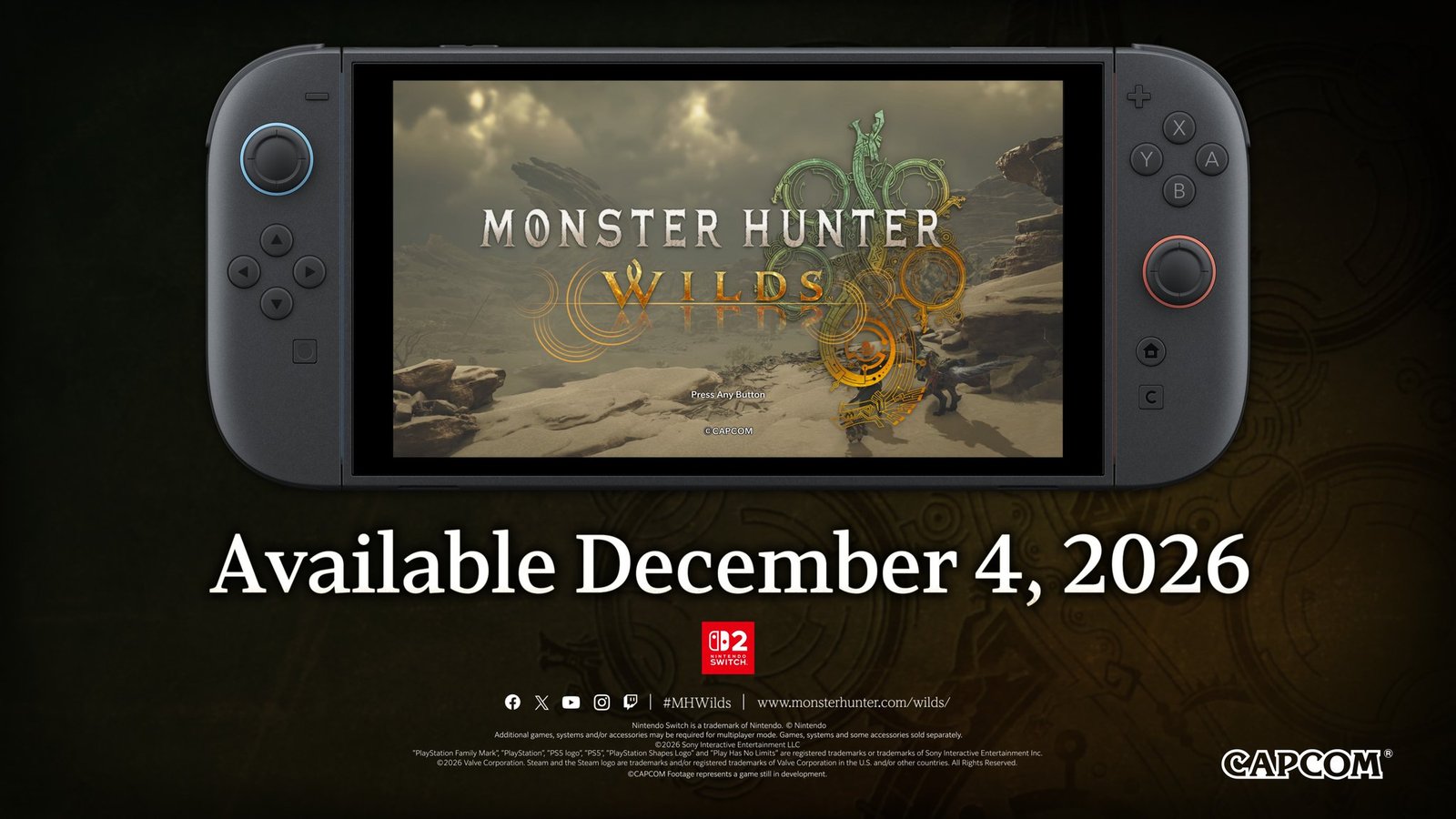
The landscape of portable gaming is undergoing a significant transformation with the emergence of Monster Hunter Wilds on the upcoming Nintendo Switch 2. As Capcom prepares for its major presence at the 2026 Tokyo Game Show, the developer has provided a technical preview of what players can expect from this iteration of their premier action-RPG franchise. The recently unveiled 17 minutes of footage showcases the game running exclusively in handheld mode, offering a glimpse into how the hardware handles the engine’s demanding environmental rendering and complex artificial intelligence systems.
This development marks a notable shift in technical capability for Nintendo-branded hardware. By leveraging the updated architectural features of the Switch 2, Capcom aims to bridge the gap between high-fidelity home console experiences and the convenience of mobile play. The footage confirms that the transition to this new system maintains the visual integrity of the Forbidden Lands, preserving the dynamic lighting and particle effects that define the current generation of Monster Hunter titles.
Dynamic Environmental Simulation and Hardware Scaling
Central to the technical prowess of Monster Hunter Wilds is the simulation of a living, breathing ecosystem. The game utilizes a sophisticated engine capable of managing drastic weather shifts, which trigger transitions between Fallow, Inclemency, and Plenty periods. In technical terms, this requires the hardware to handle real-time asset swapping and lighting recalibration as environments evolve.
On the Switch 2, these environmental changes are rendered with significant detail. The footage reveals that the platform manages the complexity of pack-based monster AI, which reacts to these shifting weather states, without sacrificing frame rate consistency. For players, this means the mechanical depth of the hunting process remains intact. The system successfully calculates the interactions between the player, the diverse fauna, and the reactive terrain, ensuring that the tactical requirements of the hunt—such as utilizing environmental hazards against monsters—function exactly as intended within the handheld form factor.
Refining Hunting Mechanics for Modern Portability
The mechanics of hunting in this iteration have been expanded to accommodate a more reactive world. Players are no longer just tracking targets; they must account for the rapid environmental volatility of the Forbidden Lands. The Switch 2 version retains the full suite of weapon and armor crafting systems that have become synonymous with the series. This version also emphasizes the importance of hunter adaptability, requiring players to interpret monster behavior that shifts in response to the climate.
From a control perspective, the hardware ensures that the nuance of weapon management remains precise. Whether utilizing heavy weaponry or faster, more agile kits, the input latency shown in the handheld demonstrations appears minimal. The integration of improved internal processing allows the game to maintain a stable draw distance, ensuring that critical cues—such as signs of monster aggression or incoming weather shifts—are visible to the player even while navigating the dense, untamed landscapes of the expedition map.
The Technical Significance of the Handheld Experience
The decision to showcase handheld gameplay first is a deliberate move to highlight the thermal and processing efficiency of the Switch 2. Managing an open-world environment with high-density textures and complex lighting models often creates significant thermal strain on mobile chips. However, the performance shown indicates that Capcom has optimized the game code to run effectively within the power constraints of a portable device.
This optimization is critical for the game’s success, as it allows the “ultimate hunting experience” to be realized without tethering the player to a stationary console. The fluidity of the animations and the density of the foliage in the displayed footage suggest that the developers have implemented aggressive occlusion culling and smart level-of-detail management. These techniques allow the hardware to prioritize rendering the immediate vicinity of the hunter, providing a crisp display while maintaining the scale and scope of the Forbidden Lands.
Broadening the Scope of the Forbidden Lands
The narrative structure of Monster Hunter Wilds, which follows the discovery of the young boy Nata and the subsequent Guild expedition, serves as the backbone for the game’s expansive world-building. Beyond the technical achievements, the game represents a narrative expansion for the series. The Forbidden Lands are depicted as an unexplored frontier, a design choice that justifies the use of newer, more expansive map sizes.
As the launch date of December 4, 2026, approaches, the industry is closely observing how these titles perform on Nintendo’s new infrastructure. With titles like the Resident Evil series also seeing ports to the platform, it is clear that Capcom views the Switch 2 as a primary vessel for its high-performance library. The ability of the hardware to handle these demanding titles serves as a proof of concept for the next era of gaming, where the boundary between portable performance and desktop-class graphical fidelity continues to dissolve. Hunters can expect a seamless integration of their favorite systems, backed by hardware that finally possesses the overhead necessary to bring the full scale of the monster-hunting loop to the palms of their hands.
Disclaimer: This content is auto-generated for informational purposes only.
Source: Read Original News