






PM Modi Pitches India as the Global Epicenter for Semiconductor Manufacturing
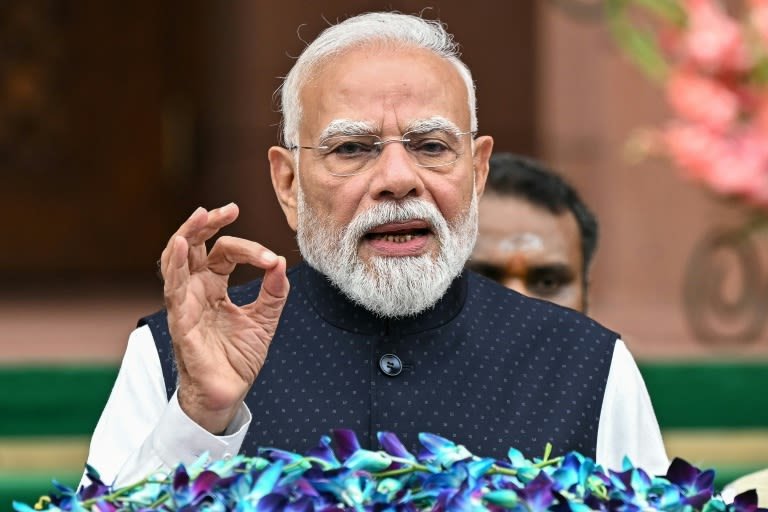
NEW DELHI – Prime Minister Narendra Modi issued a strong rallying cry to the global technology sector on Thursday, positioning India as the world’s most reliable destination for semiconductor manufacturing. Addressing a high-profile summit in the national capital, the Prime Minister emphasized that as global supply chains face increasing geopolitical volatility, India stands ready to fill the vacuum with a secure and scalable manufacturing ecosystem.
“Chips from Indian plants are already reaching customers both domestically and across the globe,” Modi told an audience comprising the world’s leading technology executives. “Amidst the current global challenges, the semiconductor industry requires new, reliable locations, and I can assure you that India is preparing itself to be that partner.”
A Strategic Hub Amid Global Uncertainty
The conference, which hosted representatives from industry titans including Intel, Micron, Foxconn, Applied Materials, ASML, Tata Electronics, and CG Power, underscored the urgency of diversifying the global chip supply chain. With nations increasingly wary of supply chain “weaponization,” the Prime Minister framed India’s emergence as a strategic necessity for the digital age.
While skeptics often point to the head start enjoyed by giants like Taiwan, Japan, and the Netherlands, Modi argued that India’s rapid progress since 2021—when the nation first launched its domestic chipmaking mission—defies conventional timelines. On Thursday, the Prime Minister remotely inaugurated commercial production for two additional sites, bringing the total number of active, high-tech semiconductor projects in the country to five.
“For any nation to reach this stage in such a brief window is no small feat,” Modi noted. “Building technological capability in this sector usually spans decades, but by working on design, manufacturing, material sourcing, and testing simultaneously, we have accelerated our success.”
Leveraging the “Goldmine” of Talent
Central to India’s pitch is the “Semicon 2.0” initiative, a government-backed program that recently greenlit over $13 billion in financial incentives to bolster the entire chip value chain. However, the government’s vision extends beyond mere subsidies; it focuses heavily on human capital.
Modi highlighted an ambitious plan to train 100,000 engineers specifically for semiconductor projects, alongside a massive drive to skill 10 million people in artificial intelligence. “This vast talent pool is a goldmine for your businesses,” he stated, encouraging firms to view India not just as a factory floor, but as an innovation partner.
The Path to a $110 Billion Market
The economic stakes are significant. India’s semiconductor market, which stood at approximately $38 billion in 2023, has surged to an estimated $45–$50 billion for the current fiscal year. The government remains steadfast in its target to scale this sector to between $100 billion and $110 billion by 2030.
By fostering a collaborative environment where foreign expertise meets India’s growing engineering workforce, the government aims to reduce its historical dependence on imported chips. As the conference concluded, the message from New Delhi was clear: India is transitioning from an observer of the semiconductor revolution to a primary architect, inviting global giants to anchor their future operations on Indian soil.
Disclaimer: This content is auto-generated for informational purposes only.
Source: Read Original News