






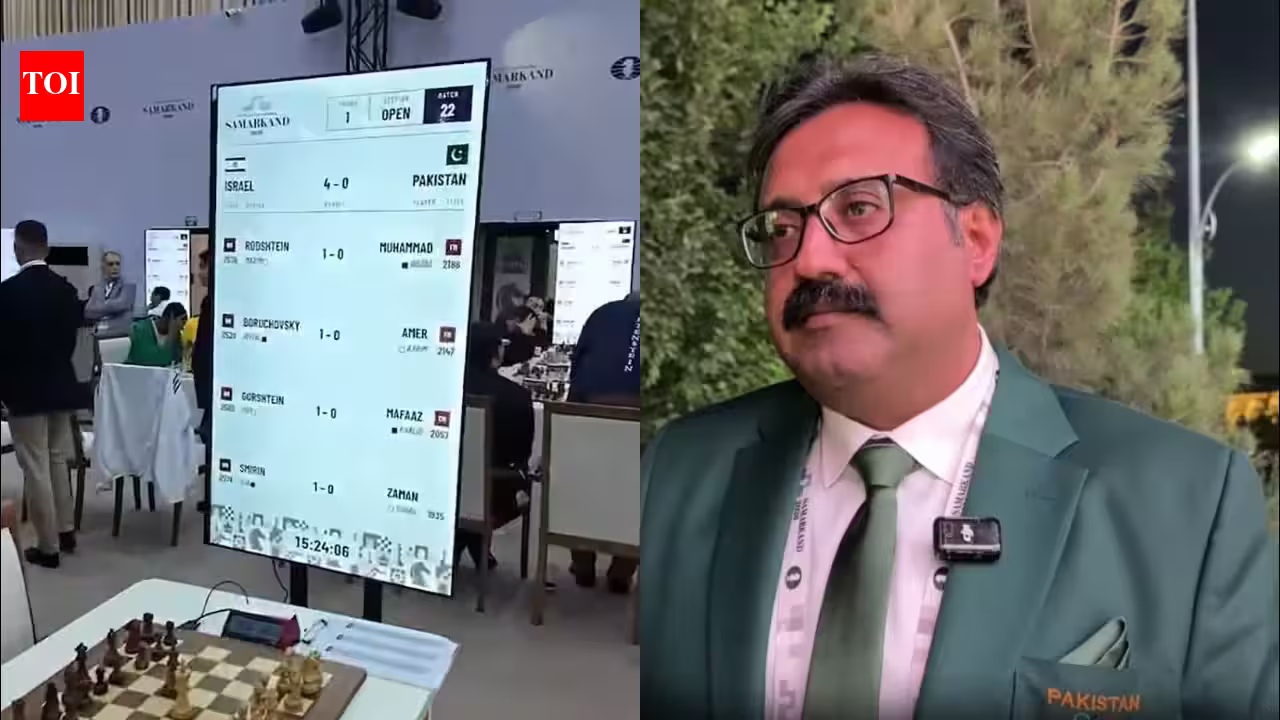
SAMARKAND — The 46th FIDE World Chess Olympiad, one of the most prestigious events on the international sporting calendar, saw its opening round marred by a significant diplomatic incident on Wednesday. In a move that sent shockwaves through the tournament halls in Samarkand, Uzbekistan, the Pakistan national chess team refused to take their seats against Israel, resulting in an automatic 4-0 walkover victory for the Israeli squad.
As the boards were set for the inaugural round, the silence at the tables allocated for the Pakistan versus Israel match-up spoke louder than any move could have. While players from across the globe gathered to compete in what is billed as a celebration of global intellect and camaraderie, Pakistan’s empty chairs highlighted the persistent intersection of international geopolitics and the sporting arena.
A Decision Rooted in State Policy
The decision to withdraw from the match was not made on a whim by the players, but was a coordinated action dictated by the Chess Federation of Pakistan (CFP) in accordance with the country’s longstanding diplomatic stance. Pakistan does not officially recognize the State of Israel, and this lack of diplomatic ties served as the primary justification for the team’s absence.
Gauhar Iqbal, Secretary General of the Pakistan Chess Federation, addressed the controversy in a candid interview with ChessBase India. He emphasized that the decision was a reflection of national duty rather than a reflection of animosity toward individual Israeli athletes.
“It was very obvious that when we do not recognize a state, how can we play or how can we get engaged with that state?” Iqbal stated. “It’s a state policy, and we have to follow the state as we are here to represent Pakistan. So we are here. It is nothing against any player. It is nothing against any sportsman spirit. It’s against the state’s policy, and we have followed that.”
Iqbal’s comments reflect a common scenario in international sports, where delegations are often bound by the sovereign policies of their home nations, regardless of their personal desires to compete against international counterparts.
Solidarity and the Geopolitical Backdrop
While the policy of non-recognition served as the formal legal barrier, the CFP also framed the boycott as a symbolic gesture of support for the Palestinian people. The current geopolitical tensions in the Middle East have cast a long shadow over international sports, and the Chess Olympiad, which brings together teams from over 190 countries, serves as a high-profile stage for nations to air or act upon their political grievances.
Syed Zeeshan Naqvi, President of the CFP, confirmed that the choice to forfeit the match was an intentional act of solidarity. “We have boycotted the match to express solidarity with the Palestinian people,” Naqvi remarked.
By choosing to forfeit, the Pakistan team effectively conceded the match, allowing Israel to move forward with a 4-0 scoreline without a single piece being moved. This marks a difficult start for the Pakistani squad in the tournament standings, but the leadership of the federation remains firm in their commitment to their stated position.
Moving Forward in Samarkand
Despite the controversy surrounding the opening round, officials have clarified that Pakistan intends to continue its participation in the remaining stages of the 46th FIDE World Chess Olympiad. The event, which spans from September 15 to 27, is a massive undertaking featuring more than 390 teams competing in both open and women’s sections.
Naqvi reiterated that while the team would continue to adhere to the government’s official stance regarding Israel, they are fully committed to participating in the tournament’s other scheduled fixtures. The goal for the federation is to represent Pakistan on the world stage while maintaining strict compliance with the directives issued by their government.
For the organizers of the Chess Olympiad, the incident serves as a reminder of the unique challenges of hosting a global event where, despite the aspiration for universal neutrality, the deep-seated political realities of the players’ home countries often inevitably find their way to the board.
As the tournament moves into its second round, the focus now shifts back to the games themselves. However, the empty boards in Samarkand on Wednesday will likely remain a topic of conversation for observers and participants alike, underscoring the complexities of international sportsmanship in an increasingly polarized world. For now, the Pakistani delegation looks ahead, hoping to put the incident behind them and focus on their performance against other nations in the coming days.
Disclaimer: This content is auto-generated for informational purposes only.
Source: Read Original News