







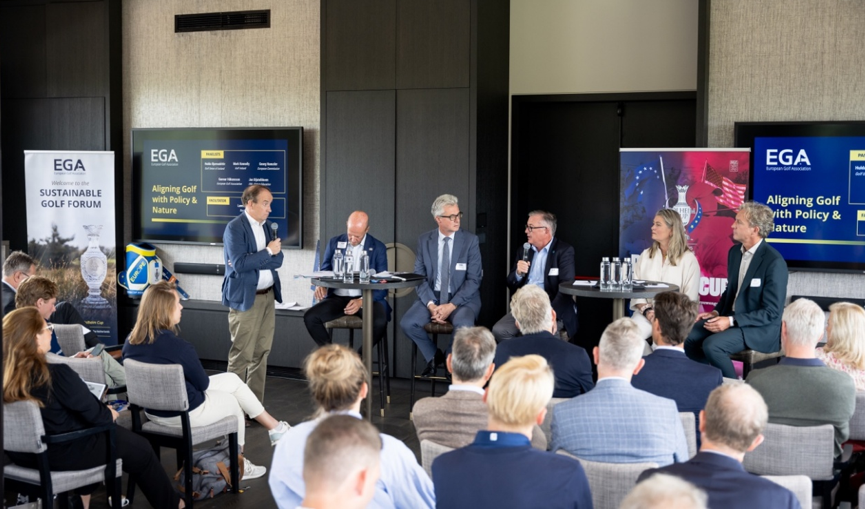
As the world’s attention turned to the fairways of the Solheim Cup, the European Golf Association (EGA) pivoted from the competitive drama of the greens to the pressing realities of the climate crisis. In a high-level summit held alongside the tournament, stakeholders representing golf federations, environmental research bodies, and sports management entities convened to address the sustainability challenges currently facing the sport.
The conference, which featured a diverse panel of industry leaders, served as a critical platform to bridge the gap between traditional golf course management and the increasingly urgent need for climate-resilient operations. As golf courses are uniquely positioned at the intersection of land management, water usage, and local biodiversity, the discussions underscored that the game’s future is inextricably linked to its ability to adapt to a changing environment.
A central theme of the panel was the “water-energy-land” nexus. With many regions across Europe experiencing prolonged droughts and unpredictable rainfall patterns, course managers are under immense pressure to reduce water consumption while maintaining playability. Experts at the summit highlighted that the solution lies not in merely restricting usage, but in systemic innovation. This includes the transition to drought-resistant turfgrasses, the adoption of precision irrigation technologies that utilize soil-moisture sensors, and the integration of sustainable drainage systems that allow courses to serve as water-management assets for their surrounding communities.
“Golf has historically been viewed as a high-input activity,” noted one panelist during the opening remarks. “The goal of this convening is to shift the narrative from consumption to stewardship. We are looking at golf courses not just as sporting venues, but as vital green infrastructure that can sequester carbon, support pollinator populations, and mitigate urban heat islands.”
Beyond technical land management, the conference addressed the operational footprint of major golf events. The logistical demands of the Solheim Cup—and professional golf at large—involve significant carbon emissions stemming from international travel, waste production, and energy-intensive broadcasting requirements. The EGA emphasized that implementing a circular economy model—minimizing single-use plastics, optimizing supply chains, and prioritizing renewable energy for tournament infrastructure—is no longer an optional “green initiative,” but an operational imperative to maintain the social license to host events in a carbon-conscious era.
Regulatory pressure was also a recurring talking point. As the European Union continues to tighten environmental standards regarding pesticide use and biodiversity protection, the golf industry faces a narrowing window to align with regional environmental mandates. The EGA highlighted the importance of data-driven reporting, advocating for a standardized framework that allows clubs to measure, monitor, and report their environmental impact. By creating a unified benchmarking system, the association aims to hold the industry accountable while demonstrating measurable progress to skeptical policymakers and the public.
However, the path forward is not without its hurdles. Participants acknowledged that there is a significant financial gap between ambition and implementation, particularly for smaller, member-owned clubs that lack the resources for large-scale retrofitting. The summit concluded with a commitment to establish collaborative knowledge-sharing networks, ensuring that high-level sustainability breakthroughs are accessible to clubs at all levels of the sport.
The message emerging from the Solheim Cup conference was clear: sustainability is no longer a peripheral concern for golf. It is a fundamental pillar of the game’s long-term viability. By integrating ecological integrity into the core strategy of course design and tournament management, the European golf community is positioning itself to be a leader in the broader sports industry’s transition toward a circular and resilient future. As the tournament drew to a close, the focus remained on the long game—ensuring that the fairways of tomorrow are as lush and accessible as they are environmentally responsible.
Disclaimer: This content is auto-generated for informational purposes only.
Source: Read Original News