





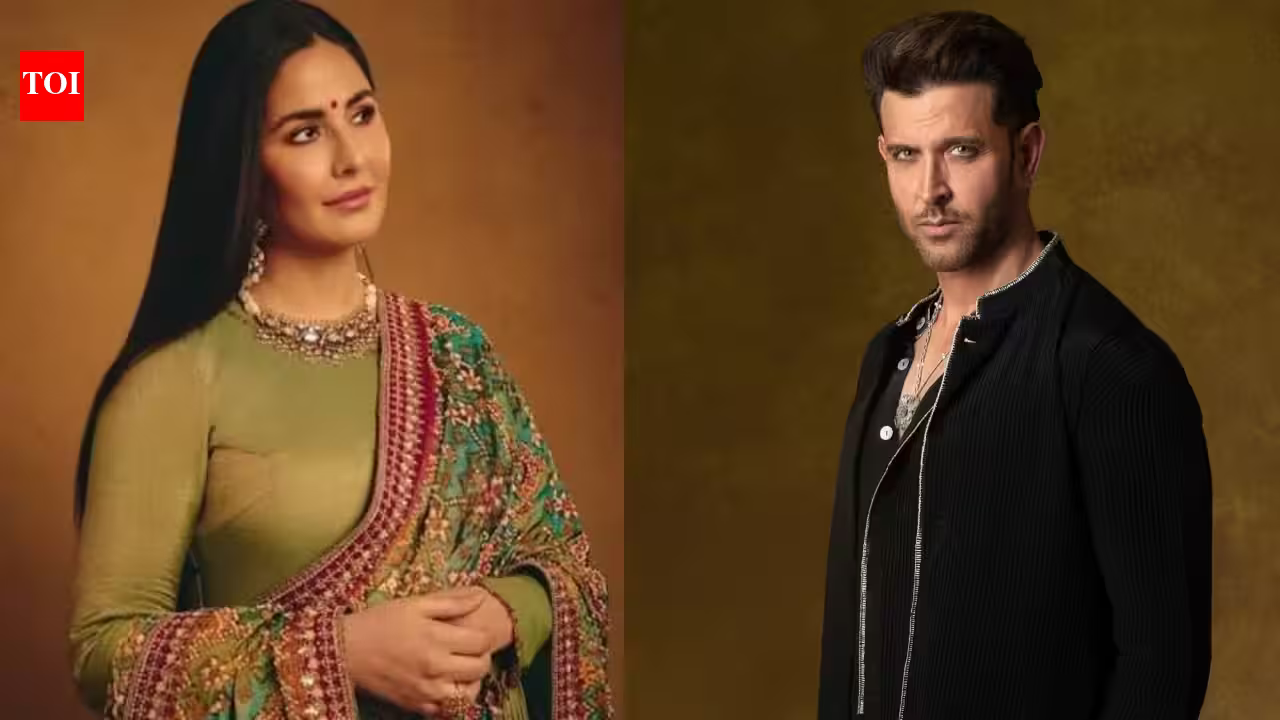
In the unforgiving arena of Bollywood fame, where every inch of a celebrity’s appearance is scrutinized under the harsh glare of high-definition cameras, there exists a particular brand of cruelty reserved for women who step back into the spotlight after becoming mothers. This week, that spotlight turned its laser focus on Katrina Kaif, whose recent appearance at the Ambani family’s Ganesh Chaturthi celebrations triggered a wave of toxic online discourse that serves as a grim reminder of how far we still have to go in respecting the realities of the female body.
The Cost of Visibility: Why We Can’t Look Away
The narrative that unfolded on September 14 was as predictable as it was disheartening. As Katrina Kaif walked alongside her husband, Vicky Kaushal, to celebrate the festivities, the internet did what it does best—and worst. Rather than focusing on the cultural significance of the event or the actor’s long-awaited public appearance, a segment of social media users descended into a frenzy of unsolicited commentary.
The critiques were sharp, shallow, and depressingly standard. Comparisons were drawn to her “older” photographs, with some users going so far as to label the actor “finished” because her physique currently reflects the natural, biological progression of having welcomed a child, Vihaan, in November 2025. It is a recurring nightmare for high-profile women: the expectation to hit a ‘reset’ button on their biology mere months after childbirth.
Hrithik Roshan and the Power of a Silent Endorsement
In the midst of this digital pile-on, a voice of reason emerged from an unexpected quarter. Harshveer Jain, a creator behind storysellercomics, posted a poignant two-slide commentary that dissected the absurdity of the trolls. His message was clear: pointing out a woman’s weight gain after she has brought life into the world is not just rude—it is a pitiable indictment of the troll’s own limited worldview.
Perhaps the most significant development in this saga was the quiet, digital nod from Hrithik Roshan. Having shared the screen with Kaif in hits like Zindagi Na Milegi Dobara and Bang Bang, Roshan is intimately familiar with the pressures of the industry. By liking Jain’s post—which explicitly stated that “your commentary on her won’t affect her” but would define the commenter as a “woman hater”—Roshan used his massive platform to signal that this level of vitriol is no longer acceptable. He didn’t need to issue a press release or pen a manifesto; a simple click was enough to draw a line in the sand.
The Biological Reality Versus the Industry Fantasy
The internet’s obsession with Kaif’s “change” ignores the basic reality of human biology. We are currently witnessing an era where digital filters have distorted the public’s perception of what a 43-year-old woman looks like. When a star like Kaif appears on a red carpet—looking like a human being rather than an airbrushed billboard—the disconnect between reality and expectation sparks a reactionary wave of “concern” that is thinly veiled body shaming.
One X user’s comment, suggesting she “looks older than Rekha ji,” is a masterclass in the misogyny that governs celebrity discourse. It is a desperate reach to invalidate her through an aging narrative, completely bypassing the fact that Kaif has built a 400-crore business empire, maintained a legendary career, and navigated the complexities of motherhood. The irony, pointed out by several defenders, is rich: how many of the keyboard warriors judging her physique have achieved a fraction of the life milestones that Kaif has?
A History of Unreasonable Expectations
Katrina Kaif is far from the first to endure this. The industry has a long, ugly history of policing the postpartum bodies of its female icons. Aishwarya Rai Bachchan was subjected to a grotesque level of scrutiny after the birth of her daughter, Aaradhya, in 2011—a discourse that felt more like a public interrogation than entertainment news. Similarly, actors like Richa Chadha, Swara Bhasker, and Bipasha Basu have had to publicly address the relentless, suffocating expectations placed upon them.
What we are seeing is not just “trolling.” It is a structural failure in how society views the female body. By treating a woman’s weight as a professional performance metric, we reduce human beings to assets that must remain in “mint condition.” When those assets “age” or change, the market demands an apology.
Moving Past the ‘Finished’ Narrative
The term “finished” is tossed around so casually that it loses its sting, yet it remains the ultimate weapon in the troll’s arsenal. But is Katrina Kaif finished? Hardly. She is evolving. After the critical acclaim for her role in 2024’s Merry Christmas, it is clear that her artistic relevance is not tethered to her waistline.
While Kaif has chosen to prioritize her private life and her business ventures over the constant churn of the promotional circuit, the public feels entitled to pull her into the center of the frame against her will. The message from her supporters, and now underscored by figures like Hrithik Roshan, is that this entitlement is becoming increasingly obsolete.
Why the Future of Fandom Must Change
As we move forward, the conversation needs to shift from the aesthetics of the stars to the ethics of the audience. Being a fan does not grant one a license to dissect a human being’s body parts like a forensic investigator. If we want our stars to stay, we must create an environment where they aren’t forced to hide away for fear of being ridiculed for simply existing.
Katrina Kaif doesn’t need the validation of a random user on social media to define her worth. She has her life, her work, and her family. But the rest of us—the observers—need to take a long, hard look at why we are so threatened by the sight of a woman living her life on her own terms. Until we learn to separate the art from the anatomy, we will continue to look like the very things we claim to despise: small, bitter, and entirely irrelevant.
Disclaimer: This content is auto-generated for informational purposes only.
Source: Read Original News