






Beyond the Courtroom: How Amitabh Bachchan Transformed ‘Pink’ into a Cultural Touchstone
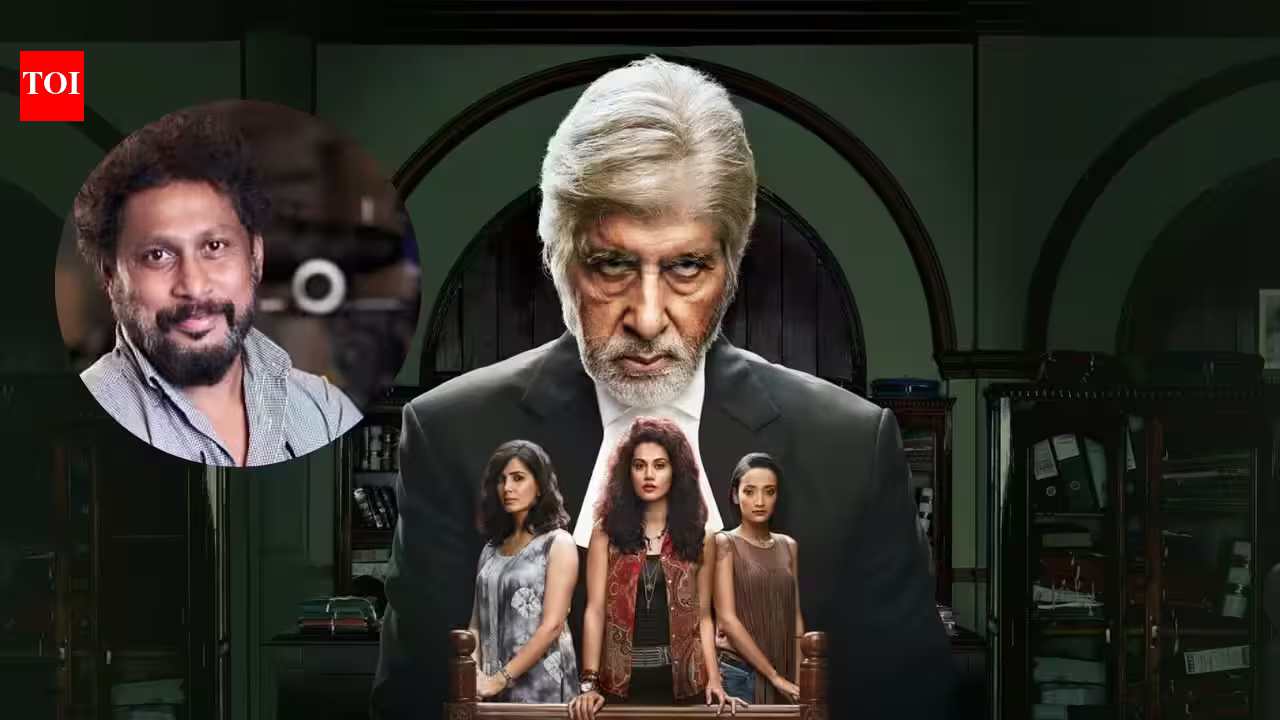
Ten years ago, a legal drama arrived in theaters that shifted the tectonic plates of Indian cinema. Pink, a tense, gritty, and profoundly necessary film, didn’t just tell a story; it started a conversation that the country was long overdue to have. As the film hits its decade milestone, creative producer and co-writer Shoojit Sircar has pulled back the curtain, revealing that the razor-sharp legal thriller we know today was, in many ways, sculpted by the collaborative genius of Amitabh Bachchan.
The Moment Everything Changed
Looking back, Sircar admits that the project underwent a radical transformation the moment the legendary Amitabh Bachchan boarded the film. At the time, the script was still a collection of evolving thoughts—a skeleton awaiting flesh. Sircar recalls the immediate shift in gravity once the veteran star signed on.
“My involvement, especially my focus on the film, began when, unexpectedly, Mr. Bachchan agreed to be part of the film. This completely changed the profile of the project,” Sircar shared in a recent interview. The filmmaker recounts feeling a sudden, intense surge of responsibility. He hadn’t just signed a leading man; he had signed an icon, and he knew the script had to be worthy of that stature. “I told Ronnie Lahiri (producer), Ritesh Shah (writer), and Aniruddha Roy Chaudhury that Mr. Bachchan had agreed. At that time, the script wasn’t ready… it was like suddenly a cloudburst happened because I had a responsibility towards him.”
Collaborative Alchemy in Kolkata
The development phase of Pink was far from a traditional writer’s room experience. Instead, it became a series of intimate, high-stakes workshops. Because Bachchan was shooting another project in Kolkata, the creative team followed him to the Grand Hotel, turning downtime into a creative laboratory.
These sessions were not just about lines on a page; they were a fusion of intellect and art. “Whatever you see or hear in the film is because of those discussions,” Sircar explains. “He would read poetry, and we would listen; he would give certain ideas.” This collaborative spirit extended to the entire cast, including the nuanced performances of Taapsee Pannu, Kirti Kulhari, and Andrea Tariang. Sircar credits the casting of Andrea, who brought an essential perspective regarding the struggles of women from the Northeast, as a prime example of the organic, collective brainstorming that defined the project.
The Birth of the “No Means No” Mantra
The most iconic aspect of Pink—the absolute, non-negotiable weight of the phrase “no means no”—didn’t start as a pre-planned slogan. It emerged as a “penny-drop” moment during those intense script sessions. Sircar recalls the realization hitting him: the core of the film wasn’t just about the courtroom drama; it was about the fundamental misuse of a word that should require no explanation.
“I said that what we play with, ‘no,’ is purely no. I thought of playing around with this concept in the script. We all agreed, and that’s when we started getting a grip,” he says. Once that thematic anchor was set, the creative floodgates opened. The team returned to their office, fueled by this clarity, and managed to map out the first half of the film with a newfound focus that had been missing in the earlier, more abstract stages.
Drafting the Courtroom Drama on the Fly
The second half of Pink, specifically the climactic courtroom sequences, faced a daunting timeline. According to Sircar, they were nearing the end of production while the most crucial scenes were still in progress. “On the last day, we were wrapping, but we had to come back and shoot the court sequence, which was still not written,” he recalls.
Writer Ritesh Shah took on the heavy lifting, staying in Delhi to iron out the dialogue and emotional beats that would eventually lead to Bachchan’s powerhouse monologues. The challenge was massive: how to deliver the “no means no” message without descending into melodrama? The team needed the delivery to be precise, cold, and undeniably logical.
Shaping the Legacy of the Final Sequence
When it came time to film the concluding sequence, the team returned to Bachchan for what proved to be the most critical creative sessions of the production. They were hyper-aware that if the delivery were too stylized, the impact would be lost.
“We came back and sat down with Mr. Bachchan for a couple of sessions, and then we unanimously decided to go with a very matter-of-fact, normal ‘no means no’,” Sircar notes. It was that choice—to strip away the cinematic flourishes and deliver the message as a plain, human truth—that turned the film into a cultural reference point. The result was not just a scene, but a statement that has resonated through Indian society for ten years, forcing a re-evaluation of consent and personal agency in the public consciousness.
A Legacy of Impact
Since its release in September 2016, Pink has remained a gold standard for social-commentary cinema in India. By focusing on the intersection of class, gender, and the law, Sircar, Bachchan, and the rest of the team managed to create something rare: a film that is as academically sound as it is commercially gripping.
As Shoojit Sircar moves forward—most recently seen directing the 2024 film I Want To Talk starring Abhishek Bachchan—the legacy of Pink stands as a testament to what happens when top-tier creative talent decides to stop making “just another movie” and starts making a cultural impact. Ten years later, that “no” still echoes with the same power, proving that when the right voices collide, the results can change the world—one scene at a time.
Disclaimer: This content is auto-generated for informational purposes only.
Source: Read Original News