








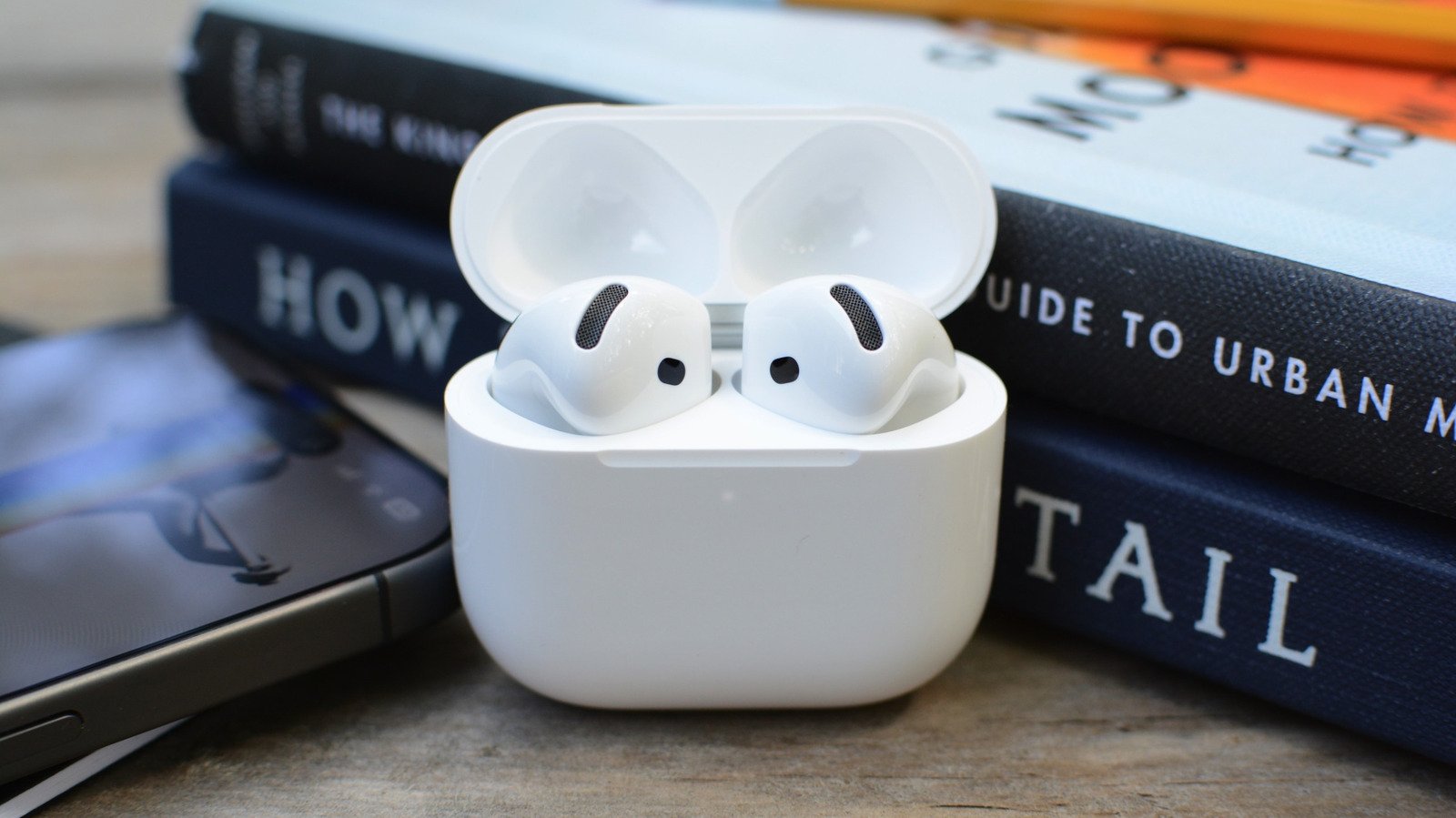
Revolutionizing Open-Ear Audio Engineering
The evolution of portable audio often centers on the struggle between convenience and fidelity. For years, the open-ear design—favored for its comfort and situational awareness—has historically struggled to deliver the robust sound profiles associated with sealed in-ear monitors. The introduction of the AirPods 5 represents a significant technical departure from this limitation. By refining the internal acoustic architecture and leveraging advanced digital signal processing, Apple has managed to deliver a low-end frequency response that was previously absent in non-sealing earbuds.
Upon initial testing, the difference is immediate. Where previous iterations often relied on software-based equalization that could thin out mid-range frequencies, the AirPods 5 utilize a refined driver system to produce clear, textured audio. During high-fidelity playback, instruments maintain individual identity, and the bass response—often the Achilles’ heel of open-ear hardware—is delivered with punch and clarity. This improvement is achieved without the need for forced spatial processing, suggesting that the fundamental hardware upgrades are the primary drivers of this sonic fidelity.
Advancements in Active Noise Cancellation
Integrating Active Noise Cancellation (ANC) into an open-ear form factor presents a unique engineering hurdle. Because the ear canal is not physically blocked, ambient sound constantly infiltrates the acoustic space. The AirPods 5 refine the approach established by their predecessors, focusing on the suppression of constant, low-frequency atmospheric noise.
In real-world environments, such as offices with heavy HVAC infrastructure or commutes characterized by steady drone, the AirPods 5 perform with remarkable efficiency. While the technology cannot entirely eliminate the chaotic fluctuations of human speech, it excels at attenuating the noise floor. The result is a significant reduction in cognitive load for the listener. By effectively lowering the ambient volume, the device allows for a more focused listening experience even in environments that would traditionally require an over-ear headset to achieve peace and quiet. The H2 chip acts as the central processor for this operation, sampling external and internal noise at a high rate to generate precise anti-noise waveforms.
Computational Audio and Live Translation
Perhaps the most significant leap for the AirPods 5 lies in the seamless integration of the H2 chip into cross-functional utilities. The standout feature in this update is the real-time translation capability. This functionality transforms the earbuds from a passive media consumption device into an active communication tool.
When utilizing Live Translation, the hardware performs a complex balancing act. It isolates the voice of the speaker, manages the latency of the translation, and balances the audio levels between the surrounding environment and the synthetic voice of Siri. Users can engage this feature through multiple touchpoints: a physical gesture on the stem of the earbuds, an Action Button trigger on the paired iPhone, or via direct selection within the Translate application. The iPhone remains the hub of the operation, providing a visual transcription that serves as a useful secondary reference. This implementation showcases a shift in how wearable audio is expected to function; it is no longer just about the output of audio, but the intelligent interpretation of the surrounding world.
Energy Management and Power Efficiency
Maintaining high-performance features like ANC and real-time processing requires precise power management. The AirPods 5 manage to provide competitive usage metrics despite the increased computational load placed on the internal H2 architecture. Apple specifies five hours of continuous listening time with ANC enabled, with a potential extension to seven hours when the noise cancellation feature is disengaged.
Field testing aligns closely with these specifications. Under standard usage conditions, including active noise cancellation and standard stereo output, the battery consistently performs at the five-hour mark with a small percentage of charge remaining. The inclusion of a rapid-charging protocol—providing one hour of playback from only five minutes of charging time—mitigates the impact of smaller battery capacities in wireless earbuds. This makes the device viable for long-duration tasks, such as transcribing meetings or participating in extended calls, where reliable power is necessary.
The Practical Impact on Daily Workflow
The cumulative impact of these technical refinements is a device that bridges the gap between casual daily use and professional utility. By optimizing the acoustic output, refining the noise suppression algorithms, and enabling high-level computational features like live language processing, the AirPods 5 serve a wide range of use cases.
For the remote worker, the ability to dampen office noise while maintaining awareness of their immediate surroundings is a notable advantage. For the traveler or the professional navigating international environments, the linguistic integration removes a significant barrier to communication. These features, housed within a form factor that prioritizes comfort for extended wear, represent a shift toward integrated technology that assists in daily cognitive and communicative tasks. As these systems continue to rely on the underlying processing power of the H2 chip, the capacity for future software-based improvements remains high, suggesting that the AirPods 5 will continue to gain utility long after the initial purchase.
Disclaimer: This content is auto-generated for informational purposes only.
Source: Read Original News