







NATO Urged to Rethink Assessment of Russian Military Adaptation
NATO must fundamentally shift how it monitors the Russian military, moving beyond traditional hardware and personnel counts to analyze Moscow’s institutional capacity to rebuild and sustain its forces. That is the warning issued by Roger McDermott, an expert in Russian military strategy, in a new analysis for Breaking Defense.
According to McDermott, the current conflict in Ukraine has granted the Russian military a vast, grueling laboratory for combat experience in drone warfare, electronic countermeasures, reconnaissance, and logistics. However, the expert cautions against assuming that individual successes—such as the high performance of a single specialized brigade—represent the capabilities of the entire Russian army. The true threat, he argues, lies in the Kremlin’s efforts to institutionalize these lessons.
McDermott notes that the Russian Ministry of Defense is actively building an integrated system designed to consolidate, test, and replicate combat experience. This structure involves a complex web of research institutes, military scientific committees, academic institutions, and training centers. By moving away from informal, battlefield-driven innovation, Russia is attempting to turn ad-hoc tactics into standardized, repeatable doctrine.
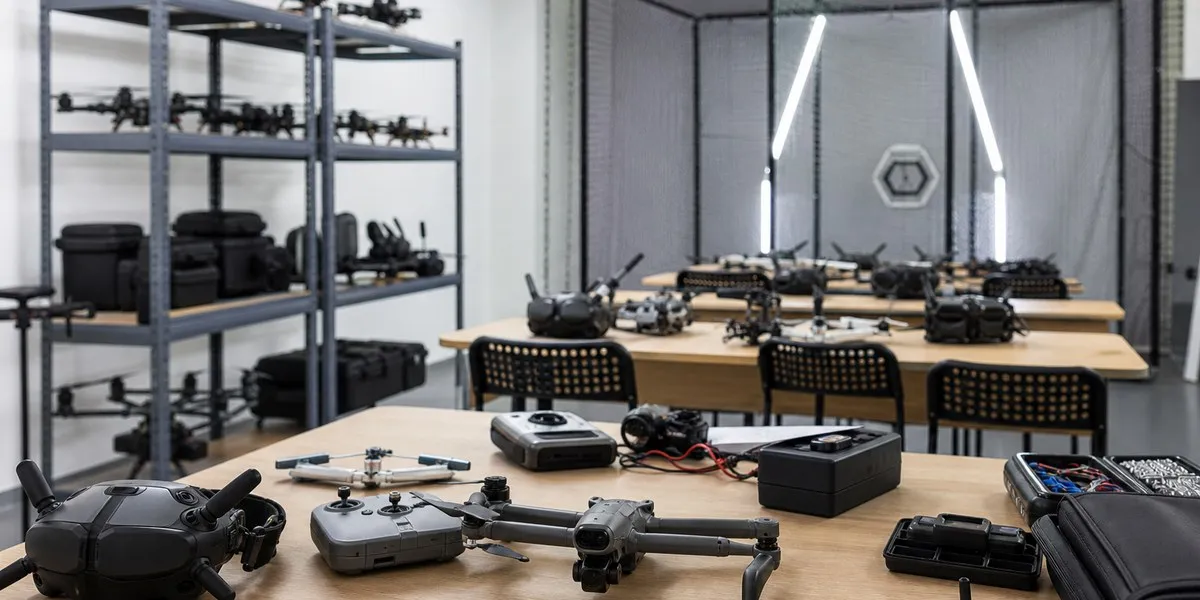
A primary example cited is the evolution of Russia’s unmanned systems. While development began as a fragmented mix of volunteers and commercial entities, Moscow is now transitioning toward permanent command structures, formalized educational curricula, and dedicated repair and supply chains. In July 2026, the Russian Ministry of Defense reported the training of over 8,000 specialists for its Unmanned Systems Forces in a single six-month period, signaling a clear shift toward large-scale, collective unit training.
For NATO, this poses a significant intelligence challenge. McDermott argues that Western analysts must look beyond equipment production rates and force structure numbers. Instead, he calls for a focus on early indicators of Russian institutional agility: the emergence of new military specialties, the expansion of training centers, and the creation of standardized operating procedures.
The goal of this intelligence work should be to measure how quickly Russia can restore disrupted capabilities. “The destruction of a group of experienced specialists can have a significant effect if their experience has not been transferred to others,” McDermott writes. However, if Russia has successfully established a pipeline for trained replacements and logistics, a military setback may result in only a short-lived operational pause rather than a sustained loss of capability.
Despite these warnings, McDermott cautions that Moscow’s push for total institutionalization is not guaranteed to succeed. He notes that the scaling of tactics often leads to a decline in quality, and lessons learned in the specific, high-intensity environment of Ukraine may prove ineffective in other operational theaters. Nonetheless, he maintains that NATO must adapt its planning, ensuring that exercises and strategic projections account for the speed at which Moscow can regenerate, re-train, and re-equip its units for future engagements.
Disclaimer: This content is auto-generated for informational purposes only.
Source: Read Original News