






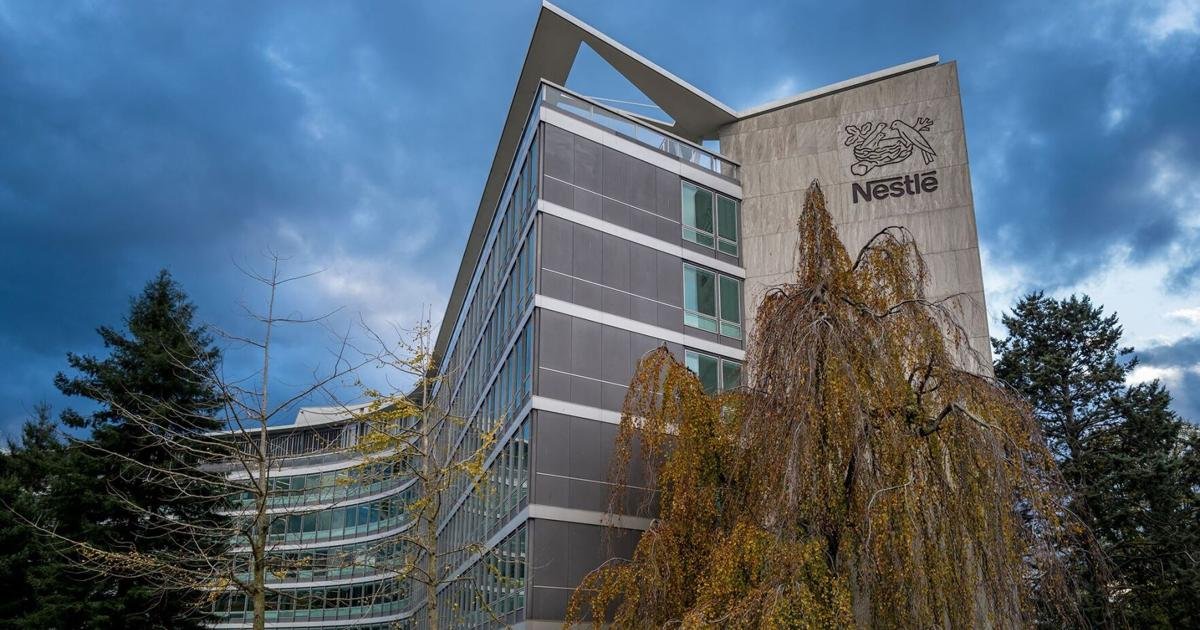
The Kremlin has intensified its campaign to consolidate economic power, signaling a major shift in the Russian corporate landscape by placing the local assets of food giant Nestlé and retail conglomerate Auchan under temporary government control. This move, formalized through a presidential decree, marks a significant escalation in Russia’s “nationalization drive,” which has increasingly targeted foreign entities originating from nations categorized by Moscow as “unfriendly.”
The decision, which places the companies under the management of L.E.V. Management, has left global investors on edge and highlights the growing risks for multinational corporations operating within a volatile geopolitical environment.
The Mounting Pressure on Global Operations
The Kremlin’s justification for the seizures rests on the claim that these European firms are actively supporting hostilities against Russia. For companies like Nestlé, the maker of KitKat and Nescafé, the situation presents a precarious dilemma. The firm, which maintains six manufacturing sites and over 7,000 employees in Russia, has previously attempted to balance its humanitarian responsibilities—supplying essential food goods—with international sanctions and political backlash.
Nestlé stated it is currently evaluating its legal and operational options to protect its rights and its workforce. Meanwhile, Auchan, a major retail force with 230 physical locations and roughly 30,000 employees in the country, remains silent as its leadership faces the prospect of losing its significant retail footprint. Analysts suggest that the seizure of these assets follows a well-established pattern, similar to previous state interventions involving Carlsberg and Danone, effectively erasing the line between private property and state strategy.
The Shifting Landscape of Russian Nationalization
Beyond foreign-owned enterprises, the Russian state is increasingly turning its focus inward. Experts note that the current wave of asset redistribution is the most extensive seen since the dissolution of the Soviet Union. The Prosecutor General’s Office has launched a systematic review of privatization deals dating back to the 1990s, using the lens of “economic sovereignty” to justify reclaiming domestic assets that were once sold to private interests.
This move comes at a critical political juncture, as the United Russia Party looks toward parliamentary elections. By tightening its grip on major industries—ranging from manufacturing to food retail—the government is effectively centralizing control, potentially to insulate its economy against further international isolation or to bolster state-run efforts during the ongoing conflict in Ukraine.
Tech and AI Industry Implications
While the current seizures have primarily focused on consumer goods and physical infrastructure, the broader move toward state-managed capitalism poses indirect but significant challenges for the global tech sector and AI development. Russia’s turn toward autarky and increased state oversight creates a hostile environment for innovation.
For the global technology industry, this shift serves as a stark reminder of the “digital iron curtain.” As major Western companies have already vacated the market, the loss of access to international technical standards, integrated cloud services, and global AI research networks risks pushing Russia toward a fragmented, state-led technology ecosystem. For companies that still rely on regional data or legacy operations, the “temporary control” model set by the Kremlin acts as a major warning sign. As Russia continues to prioritize state-driven resource management, the outlook for foreign investment in any sector—be it physical goods or digital infrastructure—remains exceptionally bleak. With the government viewing private enterprise as a tool of state policy rather than an independent driver of economic growth, the business climate in the region is likely to remain in a state of indefinite flux.
Disclaimer: This content is auto-generated for informational purposes only.
Source: Read Original News