








The Strategic Significance of the NSE Public Offering
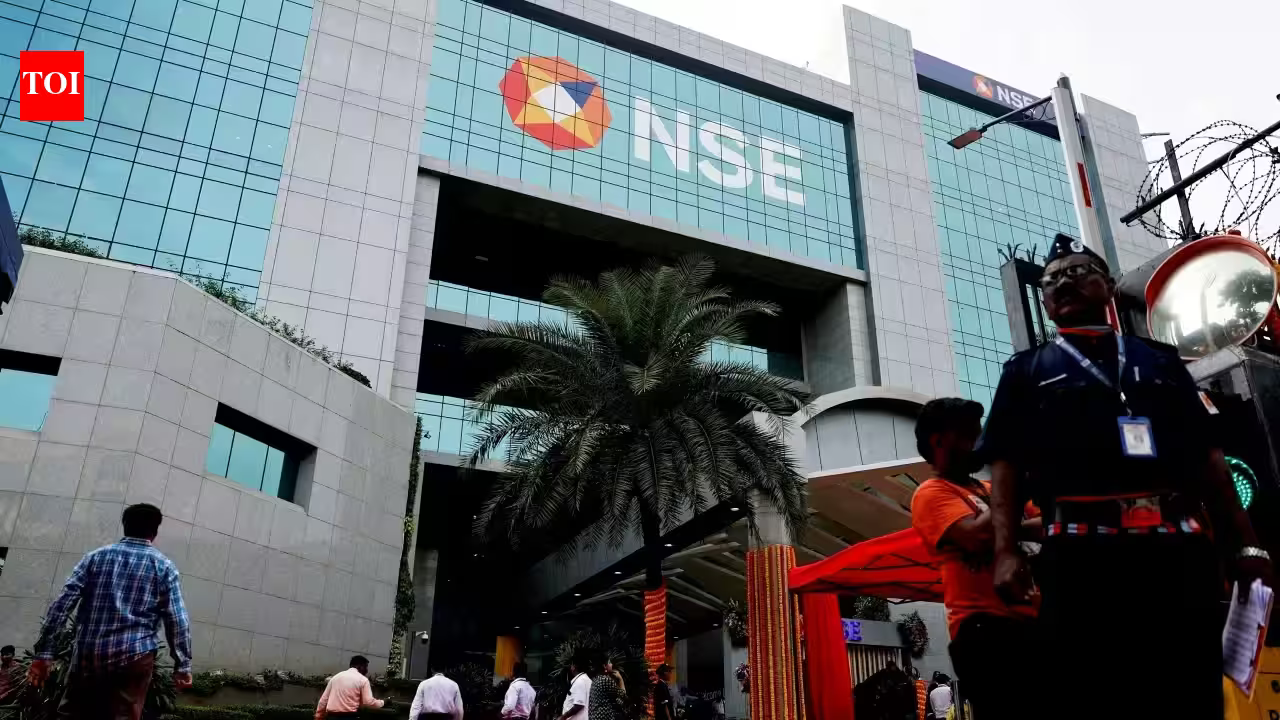
The National Stock Exchange of India (NSE) initiating its initial public offering (IPO) marks a watershed moment for the Indian financial markets. For years, the country’s largest stock exchange operated as a private entity, despite its central role in the national economy. With the IPO reaching full subscription by the second day, the market has signaled a robust appetite for ownership in one of the world’s most high-volume derivatives exchanges.
This Rs 22,569-crore offering stands as the second-largest in Indian market history, trailing only the Hyundai Motor India issue. By surpassing the Life Insurance Corporation of India (LIC) IPO of 2022, the NSE offering reflects a shift in investor confidence toward market infrastructure entities. Unlike traditional manufacturing or service sectors, the NSE represents the plumbing of the Indian financial system. Its transition to a public company brings greater transparency and regulatory scrutiny, which are essential for institutional confidence and long-term governance. The successful subscription pace, led by Qualified Institutional Buyers (QIBs) and non-institutional investors, underscores the professional belief in the sustainability of India’s retail participation boom and the exchange’s dominant market share.
Dynamics of Institutional and Retail Participation
The composition of the subscription data reveals a clear hierarchy of market conviction. The strong turnout from QIBs—who subscribed 1.53 times their quota—demonstrates that global and domestic asset managers view the exchange as a core holding. Anchor investors, including giants like the Abu Dhabi Investment Authority (ADIA), GIC Singapore, and Fidelity, provided a critical foundation before the public issue even commenced. Their involvement acts as a validation of the exchange’s business model, which relies on consistent transaction volumes and technological infrastructure.
Conversely, the 72 percent subscription rate among retail investors suggests a cautious but growing curiosity. While retail participation in Indian equity markets has reached historic highs in terms of direct investing and mutual fund flows, retail investors are increasingly selective with large-scale IPOs. The price band of Rs 1,700–1,785 implies a significant valuation of up to Rs 4.42 lakh crore. For the average individual investor, this price point necessitates a long-term outlook on India’s capital market growth rather than a focus on short-term listing gains. The disparity between institutional and retail enthusiasm is a typical feature of mega-cap IPOs, where the sheer volume of shares often requires a sophisticated institutional strategy to absorb the float.
Overcoming Historical Regulatory Hurdles
The journey to this public listing has been arduous, spanning nearly a decade of regulatory uncertainty. The NSE previously faced significant headwinds, most notably the co-location controversy, which centered on allegations of unfair access to trading servers for certain brokers. These challenges prompted intensive investigations by the Securities and Exchange Board of India (SEBI) and led to governance reforms that effectively paused the exchange’s plans for a stock market debut.
The resolution of these issues and the subsequent green light for the IPO suggest that the exchange has undergone significant internal restructuring. For prospective shareholders, the listing is more than just an acquisition of equity; it is an endorsement of the exchange’s modern operational integrity. The reduction of the issue size from the earlier proposed 14.9 crore shares to the current 12.64 crore shares also indicates a strategic recalibration to ensure the issue remains attractive in current market conditions. This reduction, which brought the total value down from an estimated Rs 30,000 crore to approximately Rs 22,569 crore, was a necessary step to align the offering with prevailing liquidity levels and investor sentiment.
Economic Implications for the Indian Capital Market
Because this IPO is structured entirely as an Offer for Sale (OFS), the proceeds do not go toward capital expenditure or operational expansion of the exchange. Instead, the liquidity generated provides an exit mechanism for existing shareholders. While critics may argue that the lack of primary fund infusion limits the exchange’s ability to use the IPO for direct growth, the primary benefit of this listing is the public price discovery and the transition to a more disciplined reporting structure.
A listed NSE aligns the interests of shareholders with the efficiency of the market. As a publicly traded company, the NSE will be required to disclose financial results, executive compensation, and strategic roadmaps with greater frequency and detail. This level of accountability is expected to drive further technological upgrades and service improvements. In the broader Indian context, the listing of a primary market infrastructure company is a signal to global investors that India’s financial architecture is maturing. It provides an avenue for international funds to gain exposure to the growth of India’s middle class and the increasing financialization of household savings without having to bet on a single corporate house or sector.
Future Outlook and Competitive Positioning
Looking ahead to the listing on September 24, the market will be closely monitoring how the share price holds up against the broader indices. The NSE operates in a sector with high barriers to entry, benefiting from a near-monopoly on derivatives trading in India. Its business model is high-margin, asset-light, and inherently scalable. As long as trading volumes remain elevated and the Indian economy continues to deepen its engagement with equity markets, the exchange is positioned to maintain strong free cash flows.
However, the exchange faces the dual challenge of technological obsolescence and rising competition from alternative trading platforms. Keeping the platform robust against cybersecurity threats and scaling infrastructure to handle record-breaking order books during volatile trading days will remain the primary operational focus for management. Investors should view this listing as a proxy for the Indian financial sector’s health. If the NSE continues to capture the value of the vast number of new Demat accounts being opened across the country, it will likely reward its shareholders. The IPO is not merely a transfer of shares from early backers to the public; it is the formalization of the exchange’s role as the engine of India’s economic narrative. As the listing date approaches, the focus will shift from subscription statistics to the long-term value creation potential of an entity that is now, finally, accountable to the public it serves.
Disclaimer: This content is auto-generated for informational purposes only.
Source: Read Original News