





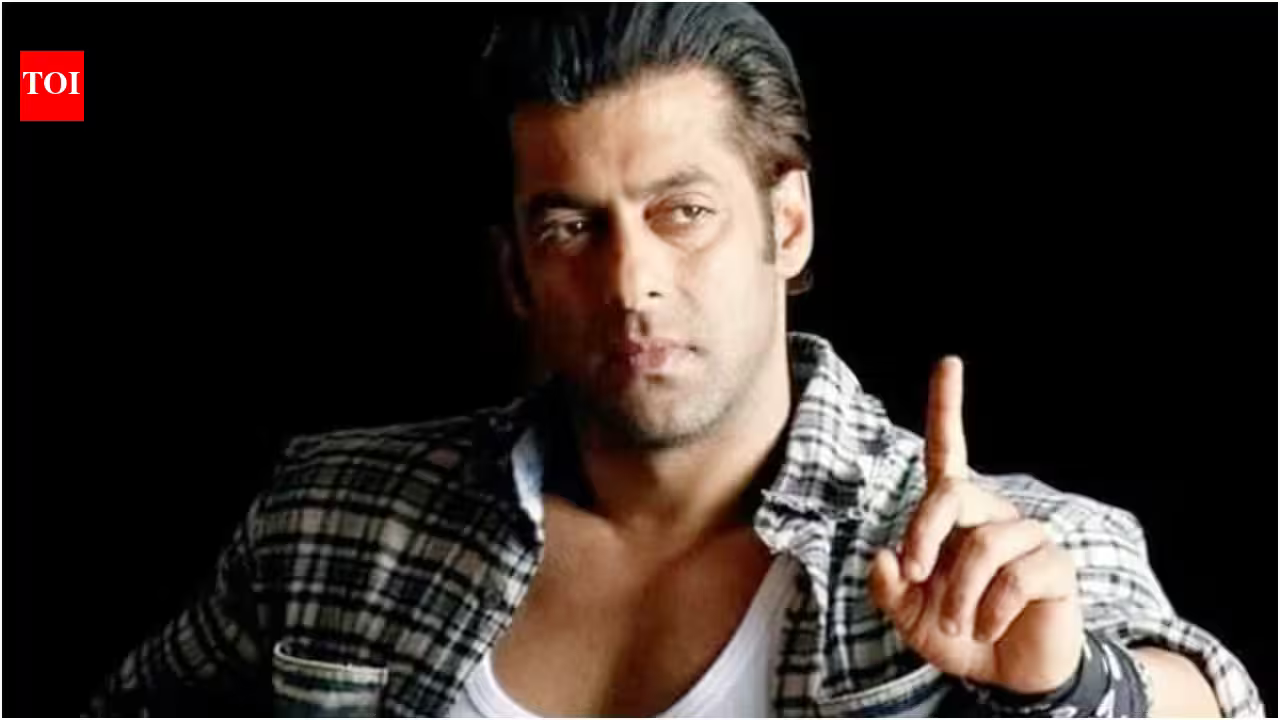

Seventeen years. In the fast-moving, often fickle landscape of Bollywood, that’s a lifetime. Yet, mention the name “Radhe” to any fan of Hindi cinema, and the reflex is immediate: they hear the whistle of a crowd, see a silhouette in a leather jacket, and remember a specific brand of swagger that hadn’t quite been perfected until September 2009.
This week, producer Boney Kapoor took a nostalgic trip down memory lane, celebrating the 17th anniversary of Wanted. By sharing a vintage shot of a single-screen theatre—a dying breed that served as the original temple for this particular brand of cinematic worship—Kapoor reminded us that Wanted wasn’t just a hit; it was a tectonic shift. It was the moment the “Bhai” phenomenon officially ignited into the unstoppable firestorm we know today.
A Career Resurrection and the Birth of a Legend
To understand the weight of Boney Kapoor’s tribute, one has to revisit the landscape of 2008-2009. Salman Khan, while always a superstar, was navigating a turbulent professional phase. His films were underperforming, and the industry’s perception of his box-office viability was flickering. Enter Prabhu Deva, the South Indian choreographer-turned-director, and a remake of his own Tamil blockbuster, Pokkiri.
When Wanted hit the screens, it did more than sell tickets—it recalibrated the expectations for a Salman Khan vehicle. As Kapoor rightly pointed out in his social media tribute, the film was a “landmark.” It fused the raw, visceral intensity of South Indian action cinema with the magnetic, larger-than-life persona that Khan was uniquely suited to inhabit. Radhe wasn’t just a character; he was an archetype. That single line, “Ek baar jo maine commitment kar di, toh phir main khud ki bhi nahi sunta,” didn’t just become a dialogue; it became a personal brand identity that redefined Khan’s stardom for the next decade and beyond.
The Prabhu Deva Effect and the ‘Masala’ Renaissance
Before Wanted, the industry was leaning into the urban multiplex boom, experimenting with niche subjects and “realistic” dramas. Wanted acted as a defiant course correction. It proved that the appetite for high-octane, whistle-worthy, unapologetic “masala” cinema had never actually gone away—it had just been starved of quality content.
Prabhu Deva brought a kinetic energy to the screen that was previously unseen in Bollywood action. The choreography of the fight sequences wasn’t just about the physical hit; it was about the style, the rhythm, and the attitude. Kapoor’s production choices—pairing Khan with the grounded Ayesha Takia and providing a menacing foil in Prakash Raj—created a perfect ecosystem. It was an entertainer in every sense of the word, and it forced the industry to take a long, hard look at the “mass” audience they had been ignoring in favor of urban trends.
Beyond the Action: The Cultural Ripple Effect
Looking back seventeen years later, the “cultural impact” that Boney Kapoor highlights is undeniable. Wanted created a blueprint that dozens of films have tried to replicate since. It revitalized the single-screen experience, with fans literally throwing coins at the screen during the climax—a fan-driven ritual that had become a rarity in the digital age.
The music, particularly tracks like “Le Le Mazaa Le,” became anthems that bridged the gap between the rural heartland and the metropolitan clubs. For Kapoor, who has produced a diverse array of films, Wanted stands out as a defining moment in his career because it proved that commercial viability and artistic conviction, when mixed correctly, can shift the trajectory of an entire industry. It was the film that taught a generation of producers that if you give the audience a hero they can believe in and action that keeps them on the edge of their seats, they will turn up in droves.
A Blueprint for Modern Mass Cinema
While critics at the time might have categorized the film as “escapist,” in retrospect, Wanted holds up as a masterclass in pacing and character arc. Radhe wasn’t a hero in the traditional sense; he was a gray-shaded operative, a man of few words and decisive actions.
Kapoor’s reflection on the film as a “game-changer” is historically accurate. The post-Wanted era saw a massive influx of South Indian remakes and a pivot toward the “Mass-Action” genre that now dominates the Indian box office. From Dabangg to the recent surge of pan-India films, the DNA of Wanted is woven into the fabric of modern Hindi cinema. It gave Salman Khan the foundation to become the most bankable star in the country for the following decade.
The Enduring Legacy of Radhe
Seventeen years later, as Kapoor celebrates the milestone, the question remains: why does Wanted still resonate? Perhaps it’s because it was the last time we saw a genuine “event” movie that relied on pure star charisma over heavy VFX. There was a human, tactile quality to the violence and the humor that feels distinct from the CGI-heavy spectacles of today.
Boney Kapoor’s heartfelt post isn’t just an act of corporate PR; it’s a recognition of a watershed moment. As the industry currently faces its own cycle of reinvention and fluctuation, looking back at Wanted serves as a reminder that the heartbeat of Indian cinema often lies in its ability to tell big, bold stories that don’t apologize for their scale.
Radhe may have arrived seventeen years ago, but in the annals of Bollywood history, he never really left. The dialogue, the swagger, and that iconic “Wanted” title card remain etched in the collective consciousness of fans who, even today, wouldn’t mind seeing a bit more of that original, unfiltered, 2009-era energy back on the big screen. Happy anniversary, Radhe. The commitment is still holding strong.
Disclaimer: This content is auto-generated for informational purposes only.
Source: Read Original News