





The New Guard: Why Ricky Kej’s Appointment to the CBFC Signals a Shift Toward Maturity in Indian Cinema
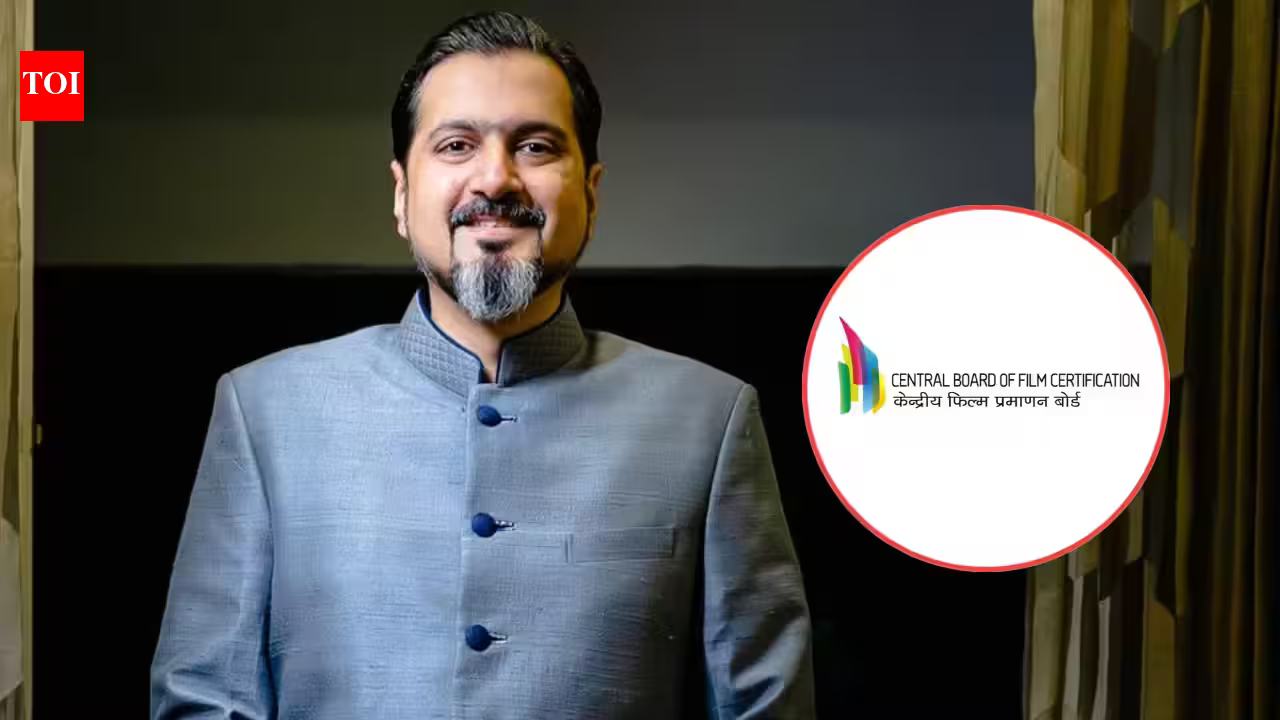
The Central Board of Film Certification (CBFC) has long been the site of a perennial tug-of-war in Indian culture. It is the gatekeeper, the arbiter of morality, and, depending on who you ask, the blunt instrument that often leaves the heart of a film bleeding on the cutting room floor. With the recent reconstitution of the board—a star-studded list featuring luminaries like Preity Zinta, Pankaj Tripathi, Suniel Shetty, and musical maestro Ricky Kej—the discourse has shifted. Among the new faces, it is arguably the Grammy-winning composer Ricky Kej who has offered the most compelling vision for the future of Indian censorship.
A Fresh Perspective in the Screening Room
When the Ministry of Information and Broadcasting announced the 18-member panel to serve for the next three years, the industry’s reaction was a mix of skepticism and curiosity. The inclusion of names like Priyadarshan, Manoj Joshi, and Prosenjit Chatterjee suggests a move toward bringing industry veterans into the fold, rather than relying solely on bureaucratic appointments. However, it is Ricky Kej’s perspective that stands out as distinctly modern.
Kej, a global figure in music and a staunch environmentalist, admits that his initial reaction to the appointment was one of “pleasant surprise.” Yet, he is quick to frame his role not as a power position, but as a heavy “responsibility.” Self-described as a “Wikipedia of films,” Kej leans on his deep-seated appreciation for global cinema history. He approaches the mandate of certification through a lens of “artistic reverence,” a term that feels like a breath of fresh air in an office often associated with red pens and heavy-handed edits.
The “Age-Appropriate” Philosophy
The core of Kej’s mission statement is as practical as it is progressive: the accurate application of age-based classifications. The current framework—which includes U, UA 7+, UA 13+, and UA 16+—is theoretically robust. However, in practice, the board has historically leaned toward cutting content rather than simply assigning a higher age restriction.
Kej intends to change the internal temperature of those screenings. “My personal priority on the board will be to ensure that these classifications are applied accurately,” he explained in a recent interview. The logic is simple yet revolutionary for Indian regulation: if a film is mature, label it as such. By empowering parents with more granular, specific information about what their children are watching, Kej hopes to reduce the industry-wide obsession with “sanitizing” films. His argument suggests that we should trust the audience—and the parents—to make informed choices, rather than forcing the filmmaker to dilute their vision to fit a ‘UA’ bucket that the board deems “safe for all.”
The “50% Sound” Argument
One of the most intriguing aspects of Kej’s appointment is that he is a composer, not a filmmaker or a producer. In an industry where everyone has a professional stake in someone else’s success or failure, Kej occupies a unique, neutral space. He frames his background in sound as his greatest asset.
“I always believe that cinema is 50% visual and 50% sound,” he notes. By experiencing films through rhythm, pacing, and emotional resonance rather than just through the lens of a director or studio head, he claims to bring an “unbiased, nonpartisan vantage point.” He enters the screening room free from the baggage of industry rivalries or personal biases, looking at the craft rather than the pedigree of the person who made it. It is a refreshing departure from the usual insular nature of film regulation, suggesting that an outsider’s ears might be exactly what the CBFC needs to stop “hearing” offense where none was intended.
Protecting Kids Without Muzzling Artists
Perhaps the most significant line from Kej’s recent commentary is his blunt, declarative stance: “Protecting children does not mean sanitising cinema for adults.” It is a sentiment that has been echoed by creators for years but rarely heard from the chairs of the board itself.
Kej’s pedigree as a UNICEF celebrity supporter and a UN Goodwill Ambassador gives him moral authority on the subject of child welfare. He isn’t dismissing the need for caution, but he is drawing a line in the sand between content for the developing mind and content for the mature adult. The nuance here is crucial: for too long, the CBFC has operated under the assumption that if a film is problematic for a ten-year-old, it must be problematic for everyone. Kej’s presence suggests a move toward a more nuanced, tiered system where adult cinema is allowed to exist as adult cinema, without the demand that it adhere to the sensitivity of a PG-rated audience.
Can the New Board Make a Tangible Difference?
The backdrop to this appointment is one of immense tension. The history of the CBFC is littered with high-profile conflicts: the “Spider-Man” kissing cuts, the grueling 125-plus cuts demanded from the film Punjab ’95 (now titled Satluj), and the constant ping-pong matches between studios and the censor board. These are not just administrative hiccups; they represent a fundamental disconnect between the creative community and the state.
Ricky Kej, alongside his distinguished peers, now finds himself in the firing line of this historic tension. Whether he can effectively shift the board’s culture toward “artistic reverence” or whether he will be absorbed into the systemic inertia of the institution remains to be seen. However, the tone of his early declarations is promising. By focusing on precision in labeling rather than the blunt trauma of censorship, he is proposing a modern standard for Indian film.
For the audience, the stakes are high. We are looking for a system that treats us as adults—a system that protects the vulnerable without insulting the mature. If Ricky Kej can hold the line on the distinction between “sanitizing” and “certifying,” he may just be the catalyst for the most significant evolution in Indian film regulation in decades. The industry is watching, the creators are hopeful, and for once, the person in the chair seems to be listening to more than just the complaints of the moral police.
Disclaimer: This content is auto-generated for informational purposes only.
Source: Read Original News