







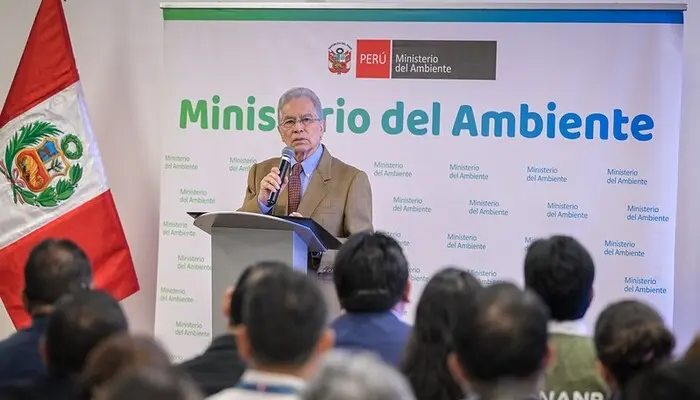
The Peruvian Executive Branch has signaled a major shift in national environmental governance with the issuance of Supreme Decree No. 012-2026-MINAM. The decree mandates the “modernization and reorganization” of the Ministry of the Environment (MINAM), including its associated programs, special projects, and attached public agencies, for a period of 120 calendar days. While the administration frames this as an administrative overhaul, environmentalists, civil society organizations, and Indigenous leaders have reacted with alarm, questioning whether the move is a prelude to the further dismantling of environmental protections in favor of rapid industrial expansion.
This structural reorganization arrives at a precarious moment for the nation’s ecological landscape, reviving fears rooted in a history of legislative “environmental packages.” Public skepticism is bolstered by the precedent of Law 30230, enacted in 2014, which systematically curtailed the mandate of the Agency for Environmental Assessment and Enforcement (OEFA). That legislation stripped the OEFA of its primary sanctioning authority, limiting it to “corrective measures,” and dismantled its influence over National Territorial Planning. Consequently, these earlier reforms created regulatory loopholes that have hampered ecological zoning efforts for over a decade.
More recently, the legislative landscape has been dominated by the so-called “Anti-Forest Law” (2024–2025). Championed by the current majority in Congress, this law effectively legalized illegal deforestation by relaxing land-use conversion requirements for agricultural development. The law was pushed through without the constitutionally mandated prior consultation with Indigenous peoples, who remain the primary guardians of the Amazonian forest and the first victims of uncontrolled land parceling.
The current government, led by President Keiko Fujimori, appears poised to build upon this trajectory. By requesting expanded legislative powers alongside the recent decree, the administration has signaled its intent to significantly reduce the timelines for environmental impact assessments (EIAs), aiming to compress what are currently multi-year evaluation processes into just a few months. Furthermore, the proposed reforms suggest that productive economic activities may soon be permitted within designated buffer zones of protected natural areas. Observers warn that these changes place the territorial rights of native communities at immediate risk, favoring industrial throughput over the rigorous oversight of biological assets.
The timing of this reorganization is particularly concerning given the escalating environmental crisis across the Amazonian region. Illegal mining continues to ravage forest ecosystems, with the uncontrolled use of mercury poisoning critical water sources and creating toxic, artificial pools that threaten both biodiversity and human health. Compounding these man-made disasters are the dual threats of climate change and extreme weather: the country is currently facing severe water shortages and a critical resurgence in forest fires fueled by record-breaking temperatures.
Since its inception in 2008, MINAM has been tasked with the preservation of natural resources and the promotion of environmental quality within the framework of “green growth.” However, the ministry has faced a recurring pattern of institutional weakening under successive administrations. Each attempt at “modernization” has historically functioned as a mechanism to centralize control or expedite commercial interests at the expense of independent technical oversight.
As the 120-day reorganization window begins, the fundamental question remains: will the Peruvian government prioritize long-term biological conservation and the protection of Indigenous sovereignty, or will it succumb to the pressure of immediate industrial reactivation? If past “reforms” serve as any indication, the Amazon—and the millions who depend on its stability—may once again find themselves bearing the cost of administrative convenience. For now, the scientific community and environmental advocates are bracing for a period of intense institutional volatility, waiting to see if MINAM will be empowered to fulfill its mandate or effectively sidelined to make way for industry.
Disclaimer: This content is auto-generated for informational purposes only.
Source: Read Original News