







California is on the cusp of formalizing a groundbreaking approach to environmental justice. A new state law, AB 1661, is awaiting the signature of Governor Gavin Newsom and is expected to be enacted by October. The legislation mandates that $5 million, collected through penalties levied on oil operators in Inglewood, be distributed as direct cash assistance to 1,000 local households that have suffered respiratory or reproductive health issues linked to proximity to the oil field.
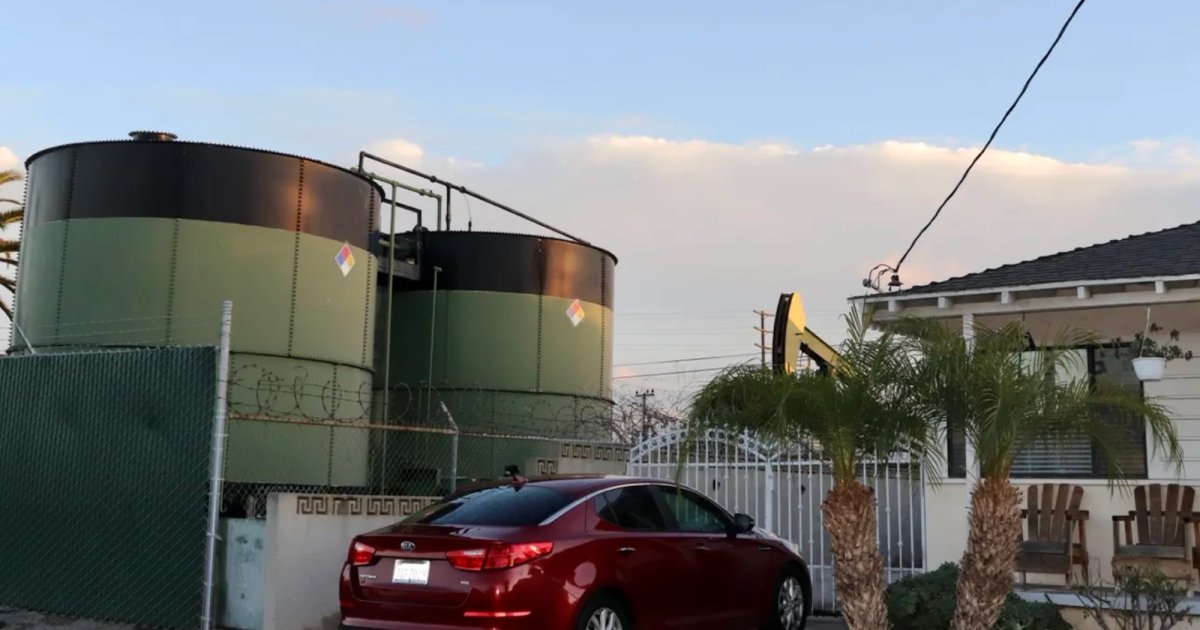
For decades, residents in Los Angeles suburbs—including Inglewood, Ladera Heights, and Baldwin Hills—have lived in the shadow of the nation’s largest urban oil drilling site. For many, like Regina Martin, who grew up in the area during the 1950s and 60s, the constant smell of sulfur and the presence of pumpjacks were part of daily life. It was only later that the connection between that industrial environment and a community-wide prevalence of asthma, cancer, and developmental complications became clear.
Assemblymember Isaac G. Bryan, the first Black legislator to chair the California Assembly’s Natural Resources Committee, championed the bill as a necessary step toward “environmental reparations.” The initiative aims to address a legacy of extraction where companies profited while local communities bore the long-term costs of medical bills, diminished property values, and curtailed life expectancies.
“The company has essentially just been extracting from the community with no investments in the community, no care in the community, and what feels like no regard at times for the broader community,” Bryan stated. “The community is due this repair, and it’s been long overdue.”
The funding for this pilot program stems from a prior legislative victory, AB 2716, which requires the Inglewood Oil Field to cease operations by 2030 and imposes a $10,000-per-well monthly penalty on low-producing, leaky wells. The revenue generated from these penalties is specifically earmarked for a community repair fund restricted to projects within a 2.5-mile radius of the site. While the fund may eventually support green spaces or affordable housing, the new cash-assistance program is designed to provide immediate, tangible relief to 1,000 of the most affected households, with payments of up to $5,000 each.
The program represents a shift in how state governments address industrial harm, moving beyond merely preventing future pollution to actively compensating those who have already lived with the consequences. Recognizing the unique nature of these payments, the state has also passed legislation to shield these reparation funds from taxation, ensuring recipients retain the full value of the assistance.
However, the program’s implementation remains a point of intense scrutiny. With thousands of households residing in the vicinity of the oil field, local advocates are concerned about the logistical hurdles of the application process. Tianna Shaw-Wakeman, the environmental justice program director with Black Women for Wellness, has stressed that the process must not be overly burdensome. She and other activists are pushing for the use of self-attestation rather than requiring residents to produce potentially costly or inaccessible medical records to prove their health status.
“Community members who have been deeply impacted, whose health has been deeply impacted, have never gotten restitution for that in any sort of way,” said Shaw-Wakeman. “We deserve more than we have been getting.”
Beyond the immediate relief of the cash aid, the legislation highlights a broader, unresolved struggle regarding the future of urban industrial zones. Advocates warn that closing oil wells is only the first step. There is a pressing concern that the removal of industrial sites could lead to gentrification, further displacing the longtime Black residents who endured the pollution.
“We can’t replace toxic oil extraction with gentrification,” Shaw-Wakeman added. “There is still a lot more to address beyond those 1,000 households. We’re trying to address the ways in which community members are still being harmed every day.”
As the state moves forward, the Inglewood project is being closely watched as a potential national model. By forcing industry to pay for the documented health impacts of their operations, California is testing whether direct economic restitution can serve as a viable framework for rectifying historical environmental injustice.
Disclaimer: This content is auto-generated for informational purposes only.
Source: Read Original News