







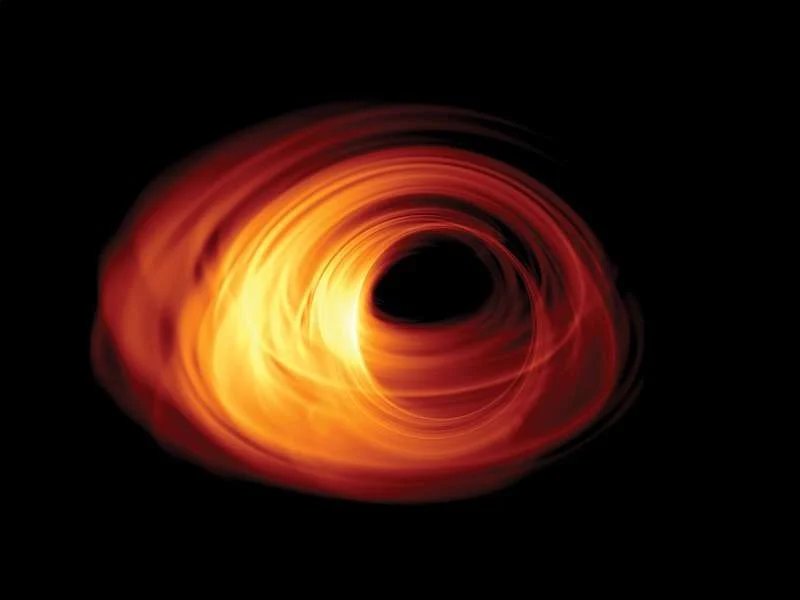
The James Webb Space Telescope (JWST) has fundamentally reshaped our understanding of the early Universe by unveiling a startling abundance of supermassive black holes (SMBHs) existing less than one billion years after the Big Bang. This discovery presents a significant challenge to classical astrophysical models, which traditionally suggested that black holes grew gradually from the remnants of collapsed stars. To bridge the gap between theory and observation, an international team of astronomers has proposed a robust framework focusing on the “Direct-Collapse Black Hole” (DCBH) scenario.
Led by Alessandro Trinca, a Postdoctoral Research Associate at the University of Edinburgh’s Institute for Astronomy and Royal Observatory, the study investigates how massive clouds of cold gas at the centers of primordial galaxies could collapse directly into black holes. This process would bypass the slower, stepwise growth of stellar-mass black hole mergers, allowing for the rapid formation of the massive seeds observed by JWST. The team’s findings, recently published in the Monthly Notices of the Royal Astronomical Society (MNRAS), suggest that specific environmental conditions—namely cosmic overdensities and the complex history of dark matter—are essential for this rapid development.
The research utilized a sophisticated synthesis of computational methods to simulate the first billion years of cosmic evolution. Central to their work were “dark matter merger trees,” which trace how smaller clumps of matter coalesced under the influence of gravity, as dictated by the Lambda Cold Dark Matter (ΛCDM) model. By integrating high-resolution N-body simulations—conducted via the GIZMO particle-based code—with the “Cosmic Archaeology Tool” (CAT), the researchers were able to model the visible, baryonic matter within these halos. This dual approach allowed them to map the spatial distribution and environmental prerequisites of halos capable of sustaining DCBH formation.
The study indicates that massive black hole seeds could have formed through direct collapse as early as 13.64 billion years ago. This mechanism likely persisted until roughly 13.5 to 13.4 billion years ago. Beyond this point, the researchers suggest that the “metal enrichment” of the intergalactic medium—a byproduct of the first generation of stars (Population III) exploding as supernovae—likely inhibited further direct collapse, fundamentally changing the physics of the early Universe.
The environmental context of these black holes is perhaps the most critical takeaway from the study. Trinca and his colleagues emphasize that heavy seed formation appears to be a localized phenomenon, occurring preferentially in highly clustered, overdense regions of space. These dense environments provided the necessary concentrations of gas, dust, and stars to fuel the direct collapse process.
This theoretical framework provides a clear roadmap for future observational campaigns. By identifying the predicted population of quasar-companion active galactic nuclei (AGN) at high redshift, astronomers now have a benchmark to validate the DCBH model. The researchers conclude that the existence of these systems in future deep-field surveys would provide strong empirical support for the idea that our Universe’s most massive black holes were born in the most crowded corners of the cosmos, setting the stage for the massive galactic structures we observe today.
Disclaimer: This content is auto-generated for informational purposes only.
Source: Read Original News