






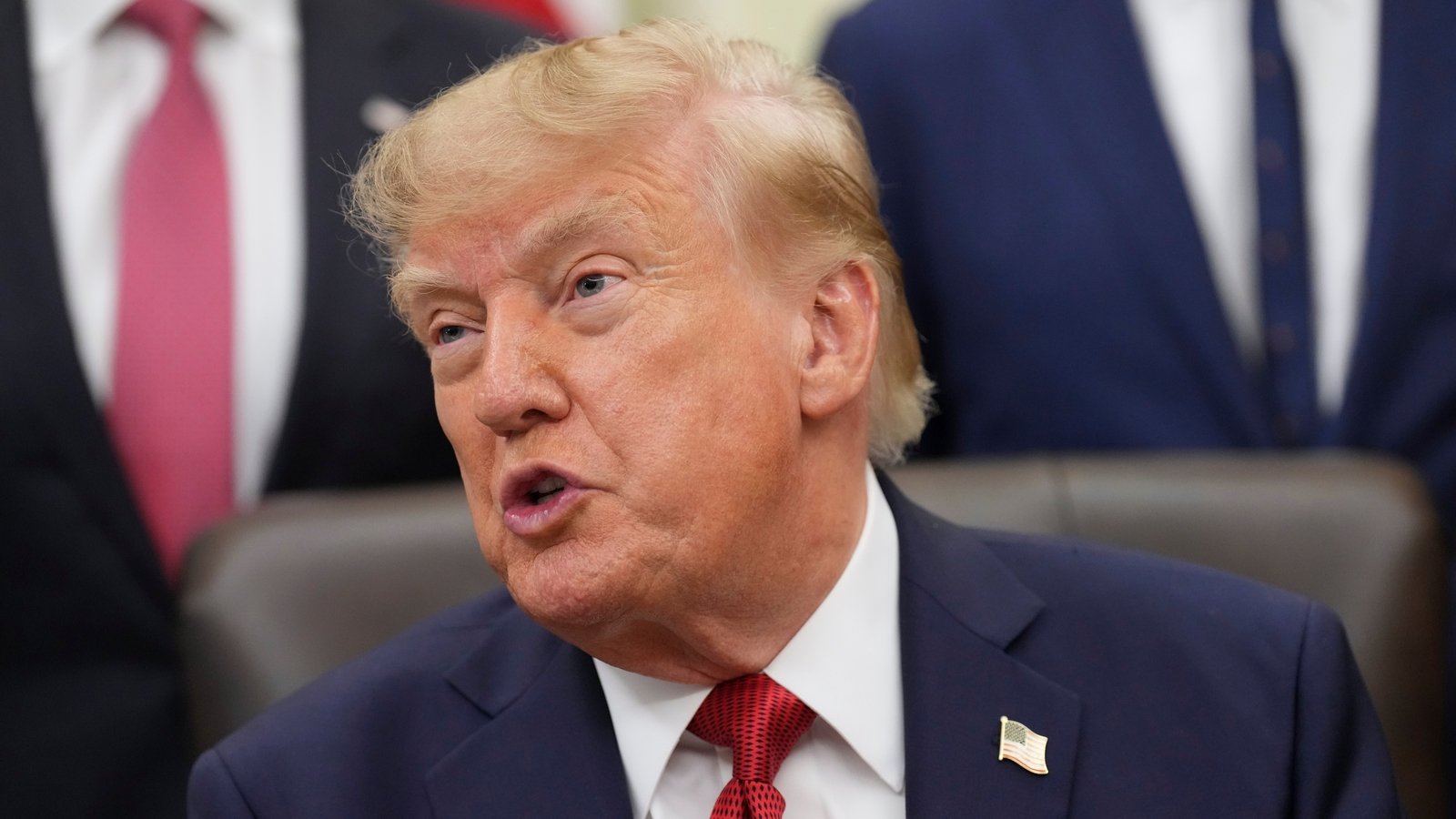
WASHINGTON — President Donald Trump announced on Saturday that he intends to establish a new “AI Force” and appoint an AI czar, signaling a shift in how the federal government approaches the rapidly evolving artificial intelligence sector.
The announcement, delivered via social media, marks the latest development in the President’s vocal defense of the AI industry. Trump dismissed growing concerns from Silicon Valley leaders regarding the safety and “alignment” of advanced AI models as a “hoax,” asserting that the government’s priority should be fostering growth rather than imposing restrictive guardrails.
“We will not in any way hinder or stifle the growth of this incredible industry,” Trump wrote. “Rather, we will cherish it, help it, and watch over it, as it grows!”
To address potential risks, the President proposed the creation of an “AI Force,” drawing a parallel to the establishment of the U.S. Space Force during his first term. However, the proposal faces immediate procedural hurdles. Unlike an executive agency, the Space Force was established as a sixth branch of the U.S. Armed Forces through an act of Congress. Experts note that formalizing an “AI Force” as a similar entity would require extensive legislative action, though the President’s exact vision for the unit’s mandate—or its placement within the existing federal bureaucracy—remains unclear.
The President’s stance comes at a time of deep polarization over AI safety. Last week, leaders from major tech firms, including Anthropic CEO Dario Amodei and OpenAI CEO Sam Altman, publicly advocated for a slower pace of development to ensure that safety and monitoring protocols can keep up with technical capabilities. Trump previously characterized these warnings as a “sick conspiracy” and continues to maintain that no new regulations are necessary.
“We will also be looking for ‘BAD,’ and we can do that, very easily, with our already existing Criminal and Civil Justice System,” Trump stated, arguing that current legal frameworks are sufficient to manage any threats posed by the technology.
This philosophy aligns with the views of David Sacks, co-chair of the President’s science and technology council. During a recent Politico conference, Sacks, a former White House AI and crypto czar, argued that the administrative state is already well-equipped to oversee AI. “We have a highly regulated administrative state, and we already have a lot of laws and regulations that pertain to AI,” Sacks noted.
The White House has yet to provide further details regarding the appointment of an AI czar or the legislative timeline for the proposed “AI Force.” As the tech industry navigates a period of intense innovation and skepticism, the President’s strategy appears aimed at securing American dominance in the sector by prioritizing deregulation and executive-led oversight over legislative constraints.
Disclaimer: This content is auto-generated for informational purposes only.
Source: Read Original News