







Erratic Weather Impacts Delhi’s Dragonfly Population; Two New Species Spotted in Biodiversity Parks
New Delhi: A recent assessment of Delhi’s ecological health has revealed a marginal decline in the numbers of dragonflies and damselflies across the city’s network of seven biodiversity parks. The three-day survey, conducted between September 17 and 19, recorded 11,154 specimens, a decrease from the 13,253 individuals counted during the same period in 2025.
Experts attribute this dip primarily to the national capital’s volatile weather patterns, which have been characterized by erratic rainfall and prolonged dry spells.
Changing Weather, Changing Habitats
The survey, which involved experts and students from the University of Delhi, spanned the Yamuna, Aravalli, Neela Hauz, Tilpath Valley, Kamla Nehru Ridge, Tughlaqabad, and Kalindi biodiversity parks. Entomologist Mohd. Faisal explained that the adverse weather conditions hindered the formation of essential water pools, which are critical for the survival and breeding of these insects.
“The lack of stable water bodies, combined with an increase in arid patches within the parks, has resulted in a minor reduction in both the diversity and density of the dragonfly population,” Faisal noted.
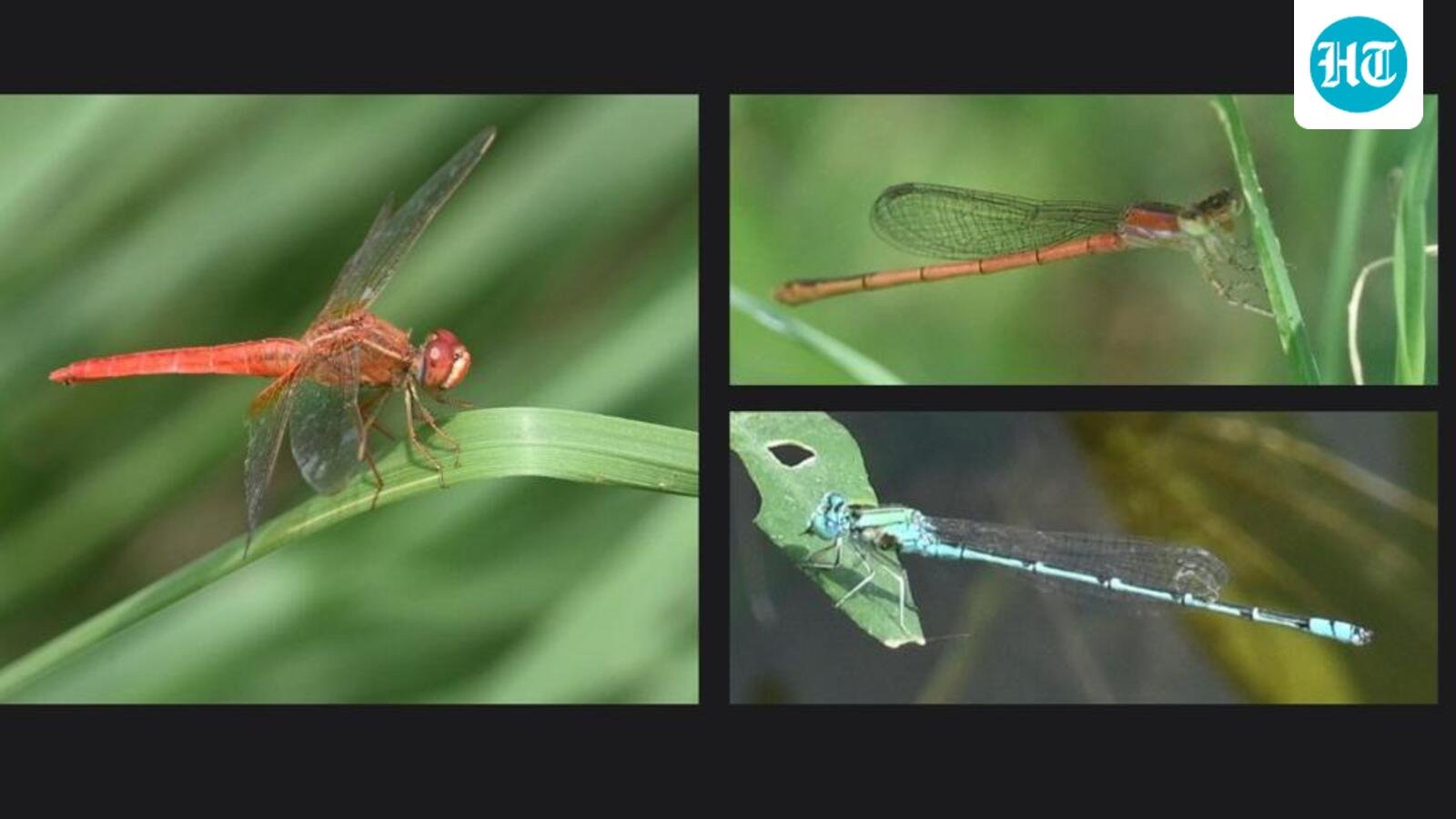
Despite the overall decline in numbers, the survey yielded positive findings regarding habitat expansion. Researchers identified the Yellow-tailed Ashy Skimmer (Potamarcha congener) at the Aravalli Biodiversity Park, marking an expansion of its range after its initial sighting in the Yamuna Biodiversity Park last year. Additionally, the Blue Grass Dart was documented for the first time at the Yamuna Biodiversity Park, signaling that specific micro-habitats within the city continue to support unique biodiversity.
The Role of Wetlands in Natural Pest Control
The presence of dragonflies and damselflies—members of the Odonata order—is often viewed as a barometer for environmental health. Characterized by their distinct compound eyes and elongated abdomens, these insects act as natural regulators for mosquito populations.
Faiyaz Khudsar, the scientist-in-charge of the Delhi Development Authority’s (DDA) biodiversity programme, emphasized the complexity of these insects’ life cycles. He cautioned against viewing dragonflies as a simple solution for artificial pest control, noting that they cannot be easily mass-reared.
“Dragonflies spend the majority of their lives as aquatic nymphs, requiring stable, clean, and healthy wetland environments,” Khudsar stated. “They are territorial and highly predatory. Therefore, it is only through the conservation of our restored wetland ecosystems that we can sustain these populations, which in turn perform the essential service of mosquito control in the surrounding urban areas.”
Signs of a Resilient Ecosystem
While the overall count experienced a slight downward trend, the biodiversity parks continue to serve as a refuge for common species, including the Scarlet Skimmer, Ditch Jewel, Wandering Glider, Coromandel Marsh Dart, and Ruddy Marsh Skimmer.
The appearance of new species such as the Yellow-tailed Ashy Skimmer—which prefers the margins of ephemeral ponds—and the Blue Grass Dart—which thrives in marshes with robust vegetation—highlights the importance of maintaining diverse wetland structures. As Delhi faces increasing climate unpredictability, conservationists stress that protecting the structural integrity of these parks remains the most effective strategy for preserving the city’s natural insect corridors.
Disclaimer: This content is auto-generated for informational purposes only.
Source: Read Original News