

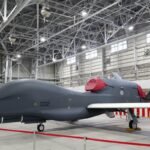




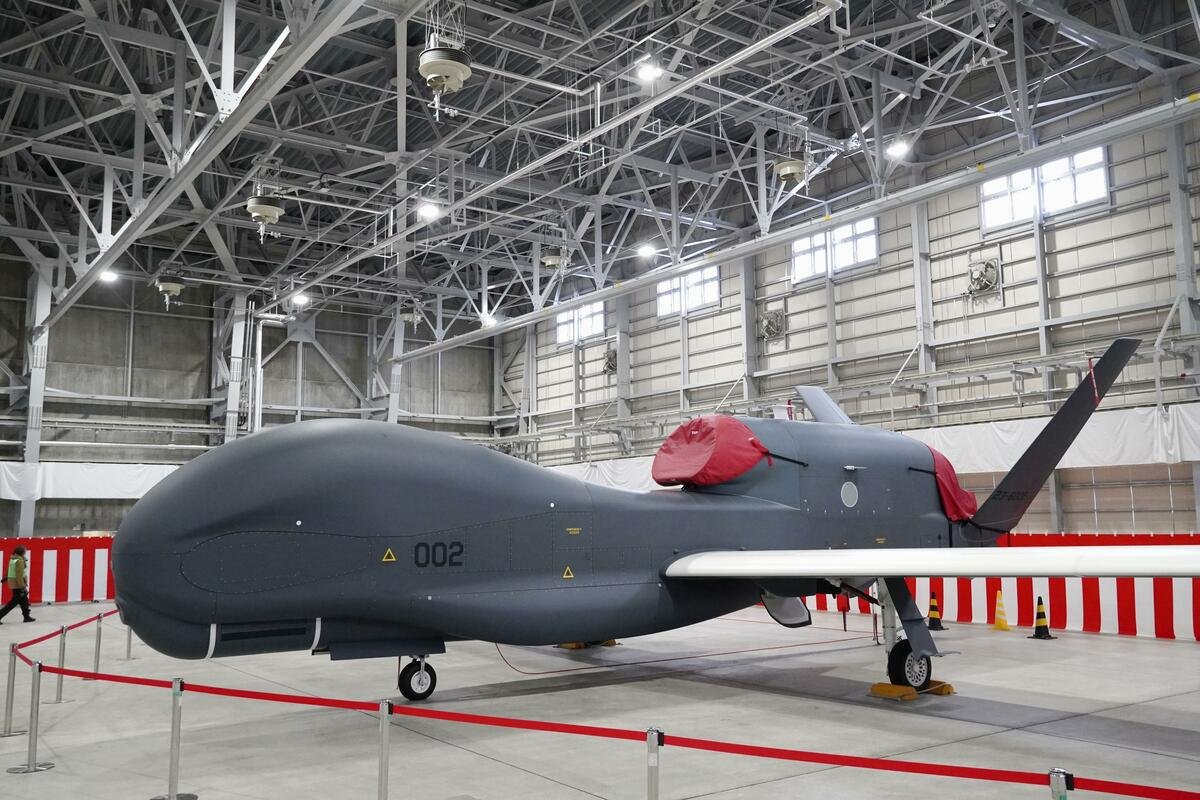
TOTTORI, Japan — The Japan Air Self-Defense Force (ASDF) confirmed on Sunday that search teams have successfully recovered a piece of debris from the RQ-4B Global Hawk unmanned reconnaissance aircraft that vanished from radar earlier this week.
The recovered component, measuring 1.5 meters by 1.4 meters, was discovered after drifting ashore along the coastline of Tottori Prefecture. While the ASDF has not provided specific details regarding which section of the drone the fragment originated from, officials stated that the find marks the first physical evidence located since the aircraft went missing during a routine flight off the coast of western Japan this past Tuesday.
The incident has triggered an ongoing, high-priority search operation involving air and maritime assets. The missing aircraft is one of only three advanced Global Hawk drones operated by the ASDF, all of which are based at the Misawa Air Base in Aomori Prefecture. These sophisticated, high-altitude surveillance platforms are critical to Japan’s regional intelligence-gathering capabilities.
According to military officials, the drone was being operated via remote command from the Aomori facility at the time of the disappearance. The ASDF disclosed that a technical failure occurred, resulting in a loss of connection between the unmanned aircraft and the ground control equipment at the base. Shortly after the link was severed, the drone vanished from tracking monitors.
A significant challenge for investigators is the lack of a traditional flight data recorder. Unlike manned military aircraft, this specific model of the Global Hawk is not equipped with a “black box,” meaning recovery of the remaining wreckage is essential to determining the precise cause of the malfunction. Without a recorder, the ASDF must rely entirely on forensic analysis of the debris and the telemetry data captured prior to the connection failure to reconstruct the final moments of the flight.
As search efforts intensify, the ASDF has not commented on whether the remaining two Global Hawks in its fleet have been grounded as a precautionary measure. The incident has raised questions regarding the reliability of the communication links that tether these remotely piloted systems to their home bases.
Defense analysts suggest that the loss of such a high-value asset could influence Japan’s broader strategy for monitoring regional threats. As the search for the remainder of the wreckage continues, the ASDF remains under pressure to provide answers regarding how a routine mission resulted in the catastrophic loss of one of the military’s most advanced aerial surveillance tools. Authorities have urged local residents along the Tottori coastline to report any further sightings of debris to the police or nearest military installation, warning the public not to touch any recovered items that may be sensitive in nature.
Disclaimer: This content is auto-generated for informational purposes only.
Source: Read Original News