







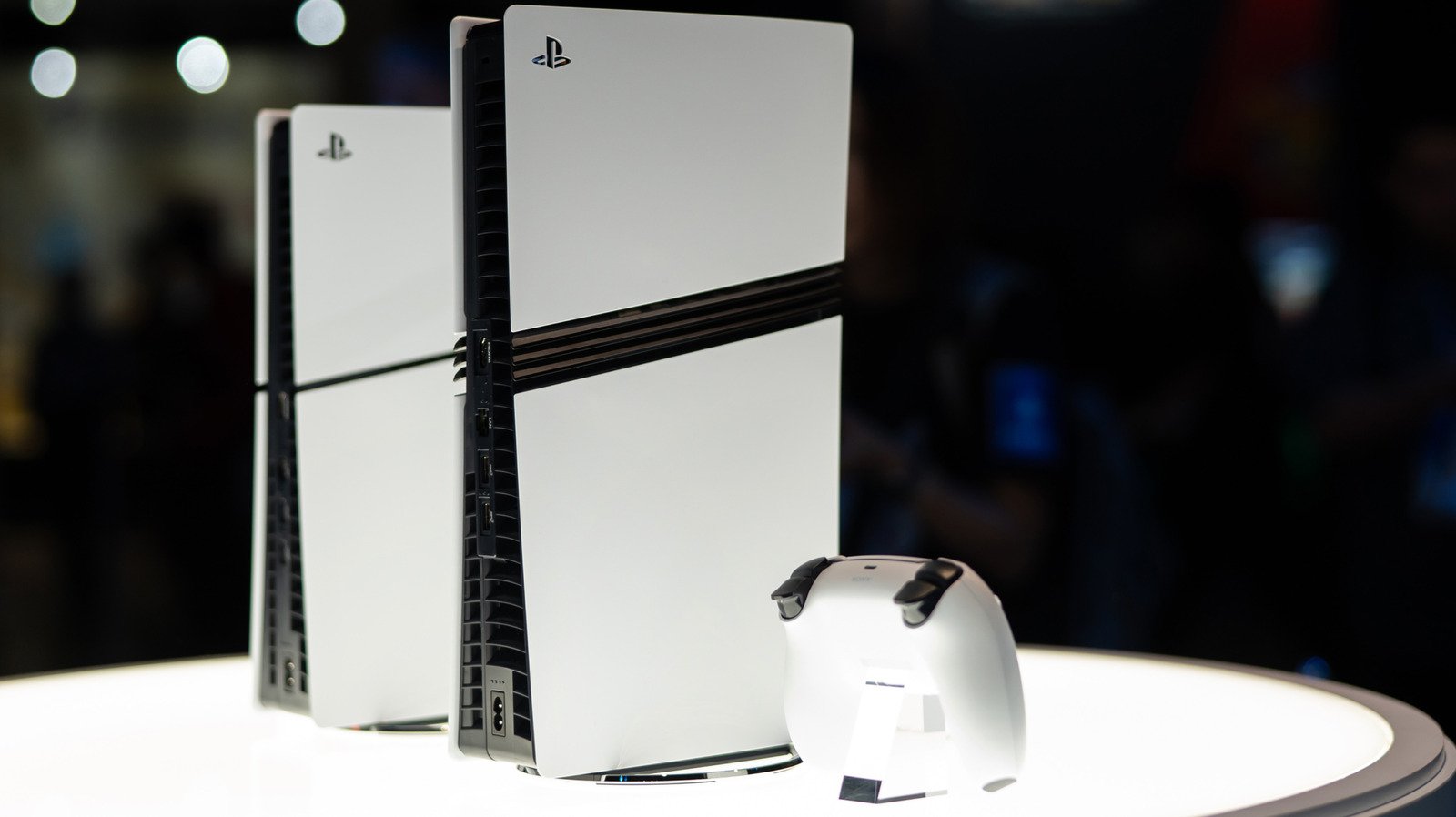
The PlayStation 5 Pro represents the current pinnacle of console gaming performance, designed to bridge the gap between traditional living-room hardware and high-end PC capabilities. By focusing on elevated frame rates and enhanced resolution, it seeks to eliminate the compromise between visual fidelity and fluid performance. However, because the system utilizes custom AMD architecture, drawing direct comparisons to PC components requires an analysis of raw compute power, clock speeds, and real-world rendering benchmarks.
Technical Parity: Defining the Benchmark
When evaluating the PlayStation 5 Pro against the landscape of Nvidia graphics cards, the RTX 5060 Ti emerges as the most accurate counterpart. While the PS5 Pro features a highly integrated system-on-a-chip (SoC) design that manages memory and processing differently than a discrete desktop graphics card, the RTX 5060 Ti shares a similar performance ceiling in modern gaming environments.
In terms of raw throughput and rasterization capabilities, both units are designed to handle demanding AAA titles at target resolutions of 1440p or 4K. The PS5 Pro benefits from Sony’s custom optimization, which allows developers to extract more efficiency from the hardware than might be expected from its theoretical specs. Conversely, the RTX 5060 Ti leverages Nvidia’s mature driver ecosystem and advanced software features to maintain competitive performance across a wider variety of display configurations and titles.
In-Game Performance and Upscaling Technologies
The true measure of a GPU’s capability is found in how it manages intense graphical loads, such as ray tracing and complex lighting effects found in modern titles like Black Myth: Wukong or Alan Wake 2. In these instances, the RTX 5060 Ti frequently stands shoulder to shoulder with the PS5 Pro, often providing a similar experience in quality modes.
A critical factor in this comparison is upscaling technology. The PS5 Pro relies on PlayStation Spectral Super Resolution (PSSR) to maintain high visual fidelity while boosting frame rates. The RTX 5060 Ti, meanwhile, utilizes Nvidia’s Deep Learning Super Sampling (DLSS). Both technologies perform the same essential function: rendering at a lower native resolution and using machine learning to reconstruct the image to 4K. Because DLSS is highly optimized and widely supported, the RTX 5060 Ti can occasionally surpass the console by maintaining higher frame rates in titles that are poorly optimized for console hardware, demonstrating the flexibility inherent in the PC platform.
Hardware Advantages and Ecosystem Differences
While the PS5 Pro dominates the console sector—boasting a GPU roughly 45% faster than the base PS5—it operates within a closed ecosystem. The advantages of the PS5 Pro include its simplicity and the unified development environment, which ensures that games are tailored specifically to the console’s capabilities. However, this also limits the user’s ability to adjust performance.
In contrast, the PC ecosystem, centered around cards like the RTX 5060 Ti, offers granular control. PC users can adjust individual graphics settings, field of view, and resolution scaling to suit their specific hardware configurations. Furthermore, Nvidia 5000 series cards provide features such as multi-frame generation, which can significantly push frame rates beyond the capabilities of current console technology. This capability creates a ceiling for PC gaming that remains higher than what is currently achievable on the PS5 Pro, provided the user has a balanced system with a capable CPU and sufficient RAM.
The Practical Use Case for Gamers
Deciding between a PS5 Pro and an RTX 5060 Ti-based PC depends heavily on user priorities. The PS5 Pro is intended for gamers who prefer a “plug-and-play” experience. It removes the necessity of managing driver updates, hardware compatibility, or complex graphical settings, offering a reliable, high-performance experience out of the box.
The RTX 5060 Ti target audience is the enthusiast who values modularity and control. Beyond gaming, a PC equipped with this level of GPU is a versatile tool for productivity, video editing, and 3D rendering. Because a PC is an open system, players can also upgrade components incrementally over time. If a specific game faces performance issues on a console, users are at the mercy of the developers for a patch. A PC user, however, can often mitigate these issues by adjusting in-game settings or upgrading drivers, offering a layer of troubleshooting independence that consoles do not provide.
Impact on the Future of Gaming Hardware
The existence of the PS5 Pro highlights a shift in the console market toward mid-cycle refreshes that prioritize high-resolution, high-framerate gaming. By narrowing the performance gap between consoles and mid-range PC GPUs, Sony is attempting to sustain the relevancy of the PS5 platform in an era of rapid technological advancement.
While the RTX 5060 Ti may serve as a functional equivalent in a laboratory benchmark, the divergence between the two platforms serves as a reminder of the different philosophies in hardware design. The console remains a specialized machine optimized for a singular purpose, while the Nvidia GPU represents a component in a broader, more customizable computing ecosystem. Both paths currently provide excellent results for modern gaming, and the rivalry between the two serves to push both Sony and Nvidia to improve their respective upscaling and performance-delivery technologies.
Disclaimer: This content is auto-generated for informational purposes only.
Source: Read Original News