








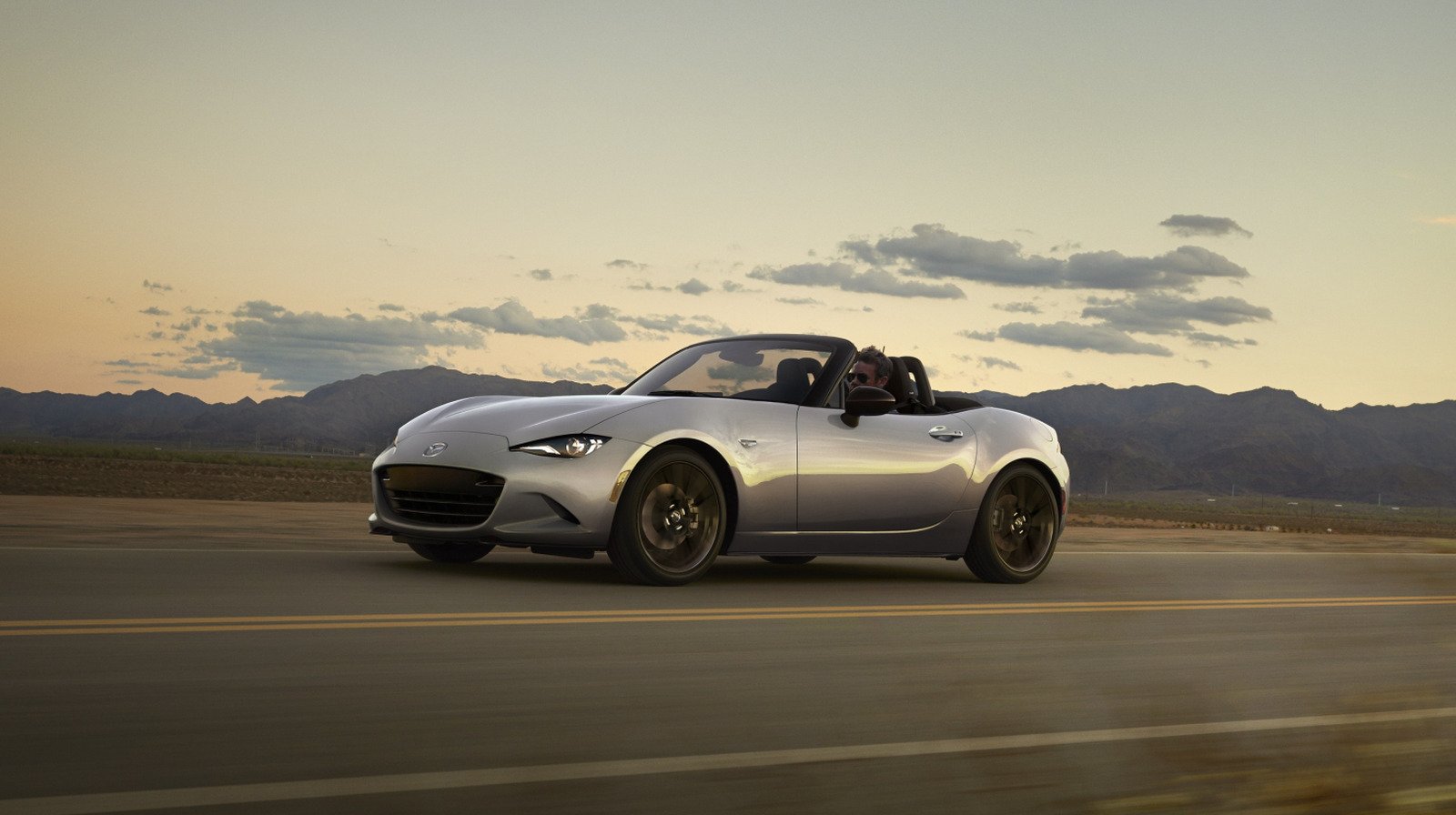
The Mazda MX-5 Miata remains the definitive benchmark for the lightweight roadster. By prioritizing mechanical simplicity and agility over raw power, it has secured its status as a foundational sports car for decades. However, its uncompromising design philosophy results in significant limitations regarding daily utility, particularly concerning cabin storage and cargo capacity. While the MX-5 is affordable, efficient, and exceptionally fun to drive, it is often a difficult primary vehicle for those who require more than a minimal amount of space for errands, travel, or commuting.
For drivers who admire the spirit of a two-door sports car but find the Miata’s tight confines too restrictive, several alternatives exist. These vehicles offer enhanced practicality while maintaining the performance dynamics expected of the segment.
The Balanced Performance of the Toyota GR86
The 2027 Toyota GR86 serves as a compelling bridge between track-focused capability and daily livability. Developed in partnership with Subaru, the current generation refines the formula of a balanced, front-engine, rear-wheel-drive coupe. While the MX-5 is a dedicated roadster, the GR86 provides a fixed-roof environment with a slightly more substantial footprint.
The GR86 offers 6.26 cubic feet of trunk space, which, while not massive, provides noticeably more utility than the specialized configuration of the Mazda. Powered by a 2.4-liter naturally aspirated boxer engine producing 228 horsepower, it offers a distinct power advantage over the Miata’s powertrain. With a curb weight of approximately 2,811 pounds, the GR86 retains a nimble feel while providing a more accessible cockpit for drivers who prefer a conventional coupe layout.
Hybrid Efficiency and Capacity in the Honda Prelude
Returning to the market after a 25-year absence, the 2027 Honda Prelude marks a significant technological shift for the storied nameplate. By incorporating a sophisticated hybrid powertrain—pairing a 2.0-liter four-cylinder engine with dual electric motors—Honda has prioritized efficiency without sacrificing the vehicle’s identity. The system delivers a combined 200 horsepower, creating a balanced driving experience.
The most practical advantage of the new Prelude is its cargo capacity, rated at 15.1 cubic feet. This volume is exceptional for the segment and makes it a viable candidate for longer trips that would otherwise require multiple vehicles. Furthermore, the hybrid architecture achieves an impressive 44 MPG combined, providing a distinct economic advantage for those who prioritize fuel economy alongside sports-car styling.
Utility in Legacy and Performance Platforms
When considering retired or recently discontinued models, the 2023 Audi TT remains a high-value prospect. Despite Audi’s move toward a new, electrification-focused fleet, the final iteration of the TT offers a refined, turbocharged experience. The coupe variant provides 12 cubic feet of cargo space, effectively doubling the utility found in the Mazda. With 228 horsepower in the base model and 288 horsepower in the TT S, it offers a more powerful, premium alternative that remains competitive in the used market.
Similarly, the 2026 BMW Z4 stands out as a unique roadster option that leans closer to the grand tourer category. By prioritizing comfort and torque—producing 295 pound-feet from its 2.0-liter turbocharged engine—the Z4 provides a more relaxed, long-distance driving experience than the raw feedback of the Miata. Its 9.9 cubic feet of cargo space allows for significantly more luggage, making it a functional choice for those who still desire an open-top experience but need to carry more than just a gym bag.
Power and Engineering at the High End
For those who view the Miata as the entry point but desire higher output and greater utility, the market offers several high-performance options. The 2027 Nissan Z brings a twin-turbocharged 3.0-liter V6 to the table, delivering 400 horsepower. While it remains a two-door coupe, it offers 6.9 cubic feet of space, and its aggressive aesthetic provides a stark contrast to the minimalist Miata.
At the upper echelon of this segment, the 2025 Porsche 718 and the 2027 BMW M2 redefine the limits of space. The Porsche 718 Cayman offers a class-leading 15 cubic feet of cargo space thanks to its mid-engine architecture, which utilizes both front and rear storage areas. Meanwhile, the BMW M2 utilizes a larger, wider chassis to accommodate 13.8 cubic feet of trunk volume. Both vehicles cater to enthusiasts who demand high-level dynamics but refuse to compromise on the ability to haul gear, provided they are willing to accept the higher price points and increased fuel consumption inherent to such high-output engines.
Methodology and Selection
The selection criteria for these alternatives focused on two-door performance vehicles that maintain the spirit of the sports car segment while improving upon the specific limitations of the Mazda MX-5. Specifically, priority was placed on vehicles with higher cargo volume ratings and increased cabin space. While these models vary significantly in price, power output, and powertrain configuration, they all satisfy the fundamental requirement of providing a more practical experience for the daily driver while remaining firmly planted in the enthusiast-focused market.
Disclaimer: This content is auto-generated for informational purposes only.
Source: Read Original News