






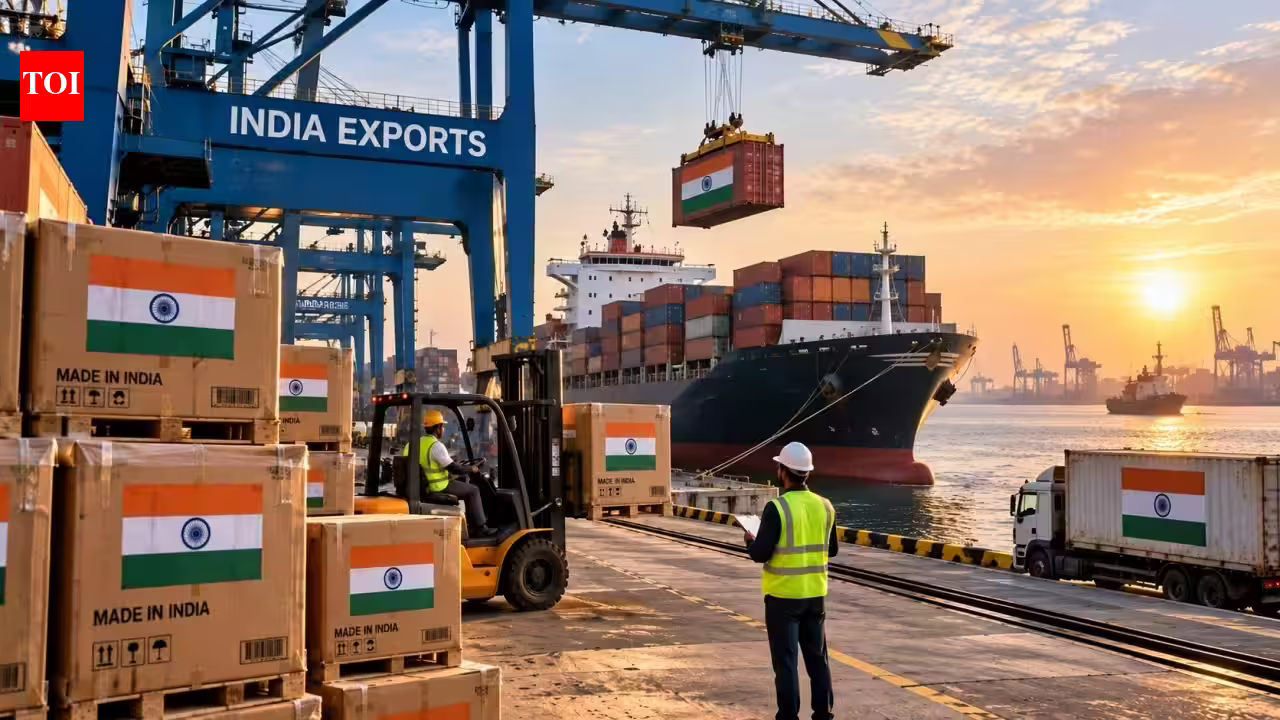


The Strategic Imperative of India’s Trade Policy
In the contemporary global landscape, the discourse surrounding India’s economic trajectory often falls into a binary trap: the pursuit of self-reliance, or Atmanirbharta, versus the embrace of unfettered globalization. However, recent shifts in international trade dynamics—marked by supply chain realignments, the resurgence of industrial policy, and a fragmented WTO environment—suggest that this dichotomy is obsolete. The path forward for India lies not in choosing one over the other, but in mastering the art of strategic integration.
The WTO’s 2026 World Trade Report underscores a fundamental reality: while protectionism may seem tempting in an era of geopolitical uncertainty, the global trading system remains the primary conduit for productivity gains and technological advancement. For India, the challenge is to navigate this environment by using trade as a catalyst for industrial maturity. This requires moving beyond a passive stance, where the country simply accepts its current position in the global value chain, toward an active strategy that utilizes global markets to cultivate domestic capabilities.
Learning from the History of Industrial Development
The intellectual foundation for a sophisticated trade strategy can be found in the historical analysis of successful economies. As economist Ha-Joon Chang famously argued in his work on development, few of today’s advanced nations reached their current status through pure, unadulterated free trade. Rather, countries like Germany, Japan, and the United States employed nuanced industrial policies—including tariffs, subsidies, and government procurement—to provide infant industries the necessary time to learn, achieve scale, and eventually compete on the global stage.
Applying this lesson to India requires a clear understanding of the difference between protecting an industry to prevent competition and protecting an industry to foster development. Comparative advantage is not merely a static endowment that a country discovers; it is a dynamic asset that can be created. For instance, while India has made strides in mobile-phone assembly, reaching this milestone is only the beginning. True economic transformation will not occur if the country remains a hub for assembly while the high-value components, intellectual property, and design functions remain concentrated abroad. The objective of industrial policy, therefore, must be the cultivation of an entire ecosystem—spanning R&D, specialized tooling, and precision engineering—that supports assembly and adds value at every stage.
Disciplining Industrial Support for Competitive Growth
The danger of industrial policy is the risk of creating long-term dependency rather than competitiveness. If protective measures like tariffs and production-linked incentives are treated as permanent fixtures, they tend to benefit incumbent firms at the expense of innovation and efficiency. To avoid this, India’s approach must be guided by rigorous, outcome-based discipline. Any government support—be it financial, regulatory, or fiscal—should be contingent upon measurable progress in productivity, export performance, and technological mastery.
If these outcomes fail to materialize within a stipulated timeline, support mechanisms should be adjusted or withdrawn. Protection should function as a temporary greenhouse: a controlled environment that allows an industry to grow, but eventually requires the plant to withstand the climate of global competition. Furthermore, policymakers must recognize that not all imports represent a threat. Machinery, high-end components, and advanced intermediate goods are often essential inputs that sharpen the competitiveness of Indian manufacturers. Penalizing these imports through high tariffs can backfire, inflating costs for domestic producers and ultimately weakening their standing in international markets.
Refining Trade Agreements and Regulatory Standards
As traditional border tariffs have declined globally, the focus of trade policy has shifted toward behind-the-border barriers, such as technical standards, certification processes, and complex regulatory environments. India’s next phase of trade reform must address these bottlenecks. Transitioning from a permission-based administrative system to a transparent, rules-based framework is essential for attracting high-quality investment.
Businesses require certainty. Investors are often deterred not by the existence of regulations, but by the volatility and administrative discretion associated with them. By streamlining customs procedures, ensuring predictable standards, and adopting time-bound digital processing, India can significantly improve its ease of doing business. This shift is particularly critical for the services and digital trade sectors. As Artificial Intelligence and digitally delivered services in healthcare, finance, and software engineering take center stage, India’s future depends on aligning its regulatory architecture with international norms. Without this alignment, the country may struggle to fully capitalize on its human capital and global demand.
When negotiating Free Trade Agreements (FTAs), the priority should be access to large, mature markets that can integrate Indian companies into global supply chains. However, this pursuit must be balanced with caution. Policymakers must evaluate whether domestic sectors are prepared for the influx of competition and whether transition periods are necessary to allow nascent industries to develop. There is little wisdom in exposing infant industries to global markets before they are capable of competing, just as there is no virtue in protecting inefficient sectors indefinitely.
Moving Toward Strategic Integration
The ultimate goal for India is to leverage the world to strengthen its own industrial foundations. This involves a fundamental shift in mindset: moving from a policy of protectionism to one of “strategic openness.” In this model, openness is the tool used to acquire technology, capital, and market intelligence, while protection is a precise instrument used only when there is a credible, time-bound plan to develop a new, internationally competitive capability.
The WTO report and the developmental lessons from successful economies are not as contradictory as they appear. The former provides the rationale for why India must remain engaged in the global trading system, while the latter provides the framework for why integration must be managed to drive technological upgrading. By focusing on capabilities rather than mere output, and by insisting on accountability for those who receive state support, India can steer its economy toward higher-value activities.
India stands at a unique juncture where it can either drift with the currents of global trade or actively steer its industrial ship toward a more prosperous future. A demanding trade strategy—one that balances openness with strategic protection—is the only way to ensure that India does not just participate in global trade, but truly trades its way up the value chain. This necessitates a move away from the binary choice of isolationism versus submission, toward a future where Indian industries are not just protected, but empowered to conquer global markets through superior capability, innovation, and strategic positioning. By fostering an environment that rewards excellence and demands efficiency, India can transform its industrial policy into a powerful engine for long-term growth and global economic relevance.
Disclaimer: This content is auto-generated for informational purposes only.
Source: Read Original News