








SANO — In a contest that defied logic, form, and expectation, India narrowly avoided a historic embarrassment on Tuesday, scraping past Japan by a mere two runs in a rain-shortened, high-tension T20 International at Sano.
The match, which will go down in the annals of cricket history as a landmark moment for the sport’s global expansion, served as a stark reminder that even the titans of the game are not immune to the unpredictable nature of short-format cricket. While the narrow victory secured India’s position in the record books as the first team to reach 200 men’s T20I wins, the fashion in which it was achieved left even the most seasoned observers breathless.
A Spin-Dominated Nightmare
With persistent rain forcing a significant delay and shortening the encounter to a frantic five-over sprint, the conditions at Sano proved to be a minefield for the Indian batting order. The pitch, damp and tacky from the earlier weather, offered immense turn, and Japan’s spin-heavy attack exploited it with surgical precision.
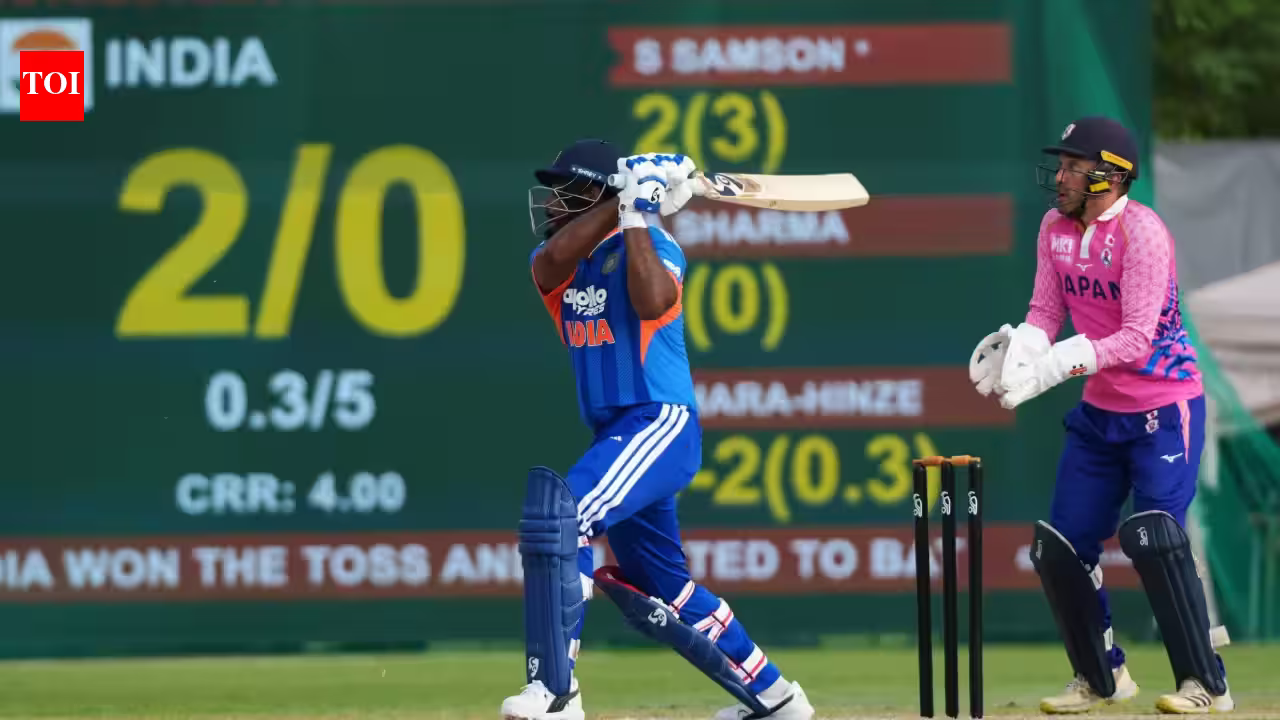
From the opening delivery, India’s top order looked visibly uncomfortable. The collapse was rapid: Abhishek Sharma fell for a golden duck, setting a precarious tone that the visitors never truly escaped. Sanju Samson, expected to be the anchor, followed shortly thereafter, and the dangerous Ishan Kishan was unable to find his rhythm before being sent back to the pavilion.
At 32 for four, India was reeling. Only a gritty 16-run contribution from Shreyas Iyer prevented the score from becoming completely non-competitive. As India walked off the field with a total of just 32, the atmosphere in Sano shifted. For the first time, a historic upset against one of the world’s premier cricketing nations seemed not just possible, but probable.
The Response: India’s Spinners Silence the Crowd
Japan entered the second innings needing just 33 runs to record what would have been the greatest result in their nation’s history. With an asking rate of just over six runs per over, the hosts held all the cards. However, the surface that had stifled India’s power-hitters was equally punishing for the Japanese batters.
Axar Patel, Washington Sundar, and Ravi Bishnoi took the mantle, orchestrating a masterclass in defensive spin bowling. By utilizing the same turn and low bounce that had previously rattled their own teammates, the Indian trio choked the life out of the Japanese chase. Boundaries were non-existent, and the pressure mounted with every dot ball. Japan, unable to find the gaps or rotate the strike effectively, saw their required run rate climb as the tension inside the ground reached a fever pitch.
Drama at the Death
The final over was a microcosm of the entire chaotic afternoon. With the game firmly in the balance, a high-stakes moment occurred when Axar Patel delivered a ball down the leg side to Alexander Shirai-Patmore, who was attempting a reverse sweep. The umpire initially signaled a wide, a decision that would have gifted Japan a crucial run and an extra ball—a potential game-changer in a match of such fine margins.
The reaction from the Indian contingent was immediate. Axar Patel and Sanju Samson expressed intense frustration, prompting Shreyas Iyer to consult with square-leg umpire Chris Brown. In an unusual and dramatic sequence, the officiating crew held an on-field discussion to review the circumstances surrounding the batter’s movement.
Ultimately, the umpires reversed the call, ruling the delivery legal. The reversal was monumental; had the extra run and the additional ball been awarded, the trajectory of the final moments could have easily tipped in Japan’s favor. As it stood, India held their nerve in the final deliveries to restrict Japan to 30 for nine, clinching a two-run win.
A Historic Milestone Amidst the Chaos
While the scorecard will officially reflect a narrow victory for the visitors, the performance in Sano provided a masterclass in the growing parity of the international game. For India, the win marks the 200th time they have triumphed in the T20I format, a testament to their longevity and consistency at the top of the world stage.
Yet, for the home side, the takeaway is far more significant. Japan proved that with the right conditions and disciplined bowling, the gap between the traditional superpowers and the emerging nations can be narrowed significantly.
As the dust settles on this historic encounter, questions will remain regarding the conditions and the intensity of the five-over format. However, for those in attendance, it was a day where history was made—not just by the scoreboard, but by the sheer, unscripted drama of a game that came down to the very last ball. India survives, but in Sano, cricket was the true winner.
Disclaimer: This content is auto-generated for informational purposes only.
Source: Read Original News