







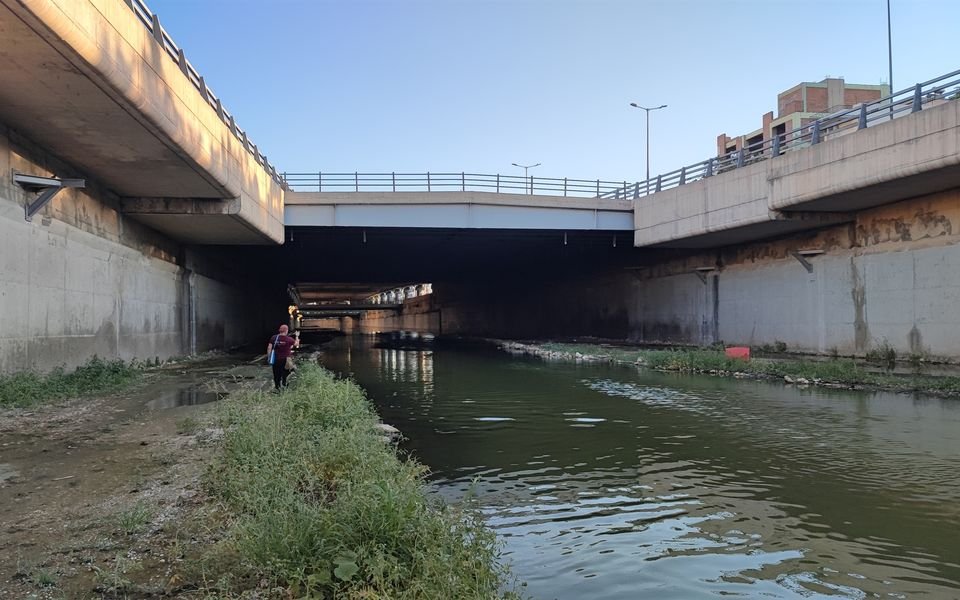
The Kifissos River, a waterway that cuts through the heart of Athens, has long been a subject of concern, but a comprehensive four-year research initiative has now provided definitive scientific evidence of systemic contamination. According to findings from the National Technical University of Athens’ (NTUA) Laboratory of Engineering Geology and Hydrogeology, the river and its underlying aquifer are suffering from chronic pollution driven by both illegal industrial dumping and unchecked urban wastewater discharge.
The NTUA research program, which commenced monitoring in 2016 under the leadership of Professor Andreas Kallioras, utilized a network of five specialized stations to track the river’s health. A critical discovery made by the team was that the volume of water flowing through the Kifissos significantly exceeds what could be attributed to rainfall alone. This discrepancy confirms that the riverbed has effectively become a conduit for illegal wastewater discharges and polluted storm drain runoff from across the metropolitan area.
Between 2022 and 2026, the lab entered into a strategic partnership with the Athens water utility, EYDAP, as part of an EU-funded initiative. This collaboration marked the first instance of real-time, quantitative, and qualitative monitoring of the river’s hydrological system. The data collected paint a grim picture of the chemical cocktail currently flowing into the Saronic Gulf. Researchers identified a wide array of hazardous substances, including heavy metals, organic solvents, pharmaceutical compounds, and PFAS—often referred to as “forever chemicals.” These findings were punctuated by high concentrations of nitrogen compounds, which serve as clear indicators of untreated urban sewage infiltration.
The scientific findings are now being corroborated by tangible enforcement actions. Recently, authorities uncovered a sophisticated scheme in which a local company used a gas station shaft to divert industrial waste directly into the municipal storm drain network. Through the use of specialized cameras and colored tracers, an EYDAP inspection team successfully tracked the waste as it traveled through the utility’s pipes, emptied into the Kifissos, and ultimately entered the coastal waters off Athens. The operation resulted in the arrest of four individuals, with investigations revealing that the company had performed at least four such illegal discharges within a 20-day window.
Dimitris Theodosopoulos, a speleologist with Geomythiki, praised the inter-agency cooperation that led to the arrests, citing it as a rare example of institutional efficiency. However, he cautioned that the problem is far more widespread than a single source. “Illegal dumping occurs at multiple points, including the Kokkinaras stream, the Podoniftis, the Ilisos, and the Pikrodafni,” Theodosopoulos noted. He argued that while EYDAP possesses the necessary technical expertise to monitor and mitigate these environmental crimes, the responsibility for broader regional oversight often remains fragmented or deferred, leaving the waterways vulnerable.
Professor Kallioras emphasized that the pollution of the Kifissos is not an isolated Greek phenomenon, but rather a structural challenge facing many European urban centers. Nevertheless, the combination of industrial negligence and aging infrastructure poses a unique threat to the Athens basin’s water quality. As the research concludes, the data provides a stark baseline for authorities: without a more robust, integrated approach to wastewater management and a crackdown on illegal discharge, the Kifissos will remain an industrial waste artery, threatening both the local ecosystem and the health of the Athenian coastline. Moving forward, the scientific community and public utility officials are calling for stricter enforcement and a permanent, transparent monitoring infrastructure to ensure that the river is no longer treated as a convenient dumping ground for the city’s industrial and urban waste.
Disclaimer: This content is auto-generated for informational purposes only.
Source: Read Original News